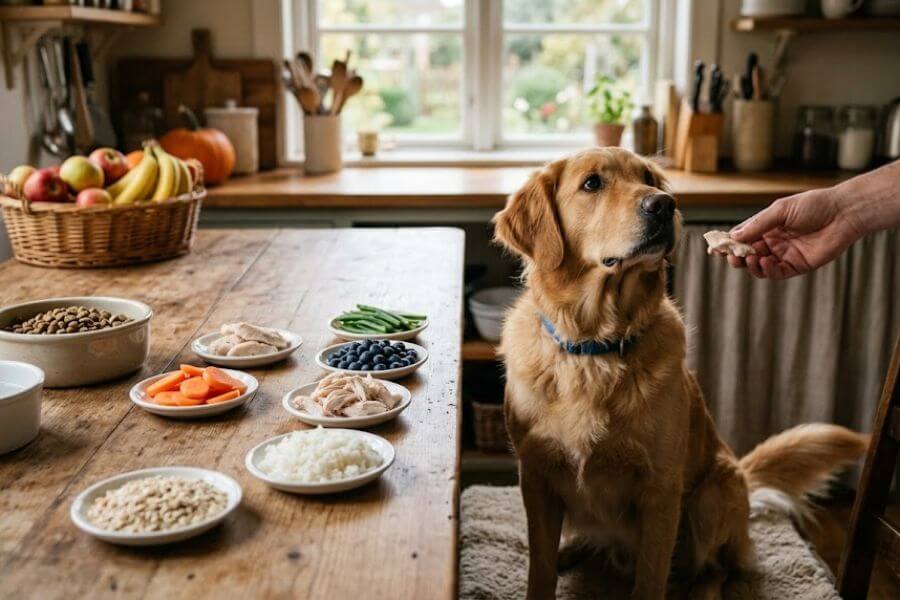
We all know that look. You are sitting down to enjoy a meal, and suddenly a pair of big, soulful eyes is staring at you from under the table. It is hard to resist sharing a bite of your food with your best friend, but not everything on your plate is healthy or safe for a canine digestive system. Feeding your dog table scraps can be a great way to bond, provided you know exactly what is safe. The key to sharing your food is simple: keep it plain, unseasoned, and served in moderation. Here are eleven of the safest human foods you can safely offer your pup.
Quick Summary of Safe Foods
| Food Item | Why It Is Great |
| Carrots | Crunchy, low-calorie, and great for teeth. |
| Plain Chicken | High-quality protein that is easy on the stomach. |
| Blueberries | Packed with antioxidants and vitamins. |
| White Rice | Gentle for digestion during tummy troubles. |
| Green Beans | High in fiber and very satisfying. |
| Pumpkin | Excellent for supporting digestive health. |
| Bananas | Rich in potassium and energy. |
| Eggs | A fantastic source of easy-to-digest protein. |
| Oatmeal | Provides steady energy and fiber. |
| Apples | A sweet treat full of essential vitamins. |
| Plain Yogurt | Good for probiotics and gut health. |
How We Ranked These
We selected these foods based on their nutritional profile, safety for the average dog, and how easy they are to prepare without dangerous additives. Our ranking criteria include the following factors:
- Digestibility: Can a dog process this food without significant stomach upset?
- Nutrient Density: Does the food provide vitamins or minerals that actually benefit your pet?
- Preparation Ease: Is it simple to prepare the food in a plain, safe way?
- Veterinary Consensus: Is this food widely recommended by pet health experts as a safe treat?
1. Carrots
Carrots are a fantastic snack for dogs because they are low in calories and high in fiber and beta-carotene. You can feed them raw as a crunchy, teeth-cleaning treat or steam them to make them softer. Just make sure to cut them into bite-sized pieces to prevent any choking hazards, especially for smaller dogs who might try to gulp them down without chewing.
2. Plain Chicken
Chicken is a staple protein that most dogs absolutely love. To serve it safely, you must ensure it is cooked thoroughly without any salt, onions, garlic, or oils. Boiling or poaching the chicken is the best way to keep it lean and healthy. Always remove the skin and ensure there are absolutely no bones in the meat, as cooked bones can splinter and cause severe internal damage.
3. Blueberries
These tiny berries are considered a superfood for both humans and dogs. They are loaded with antioxidants, which help support your dog’s immune system. Because of their small size, they make the perfect low-calorie training reward. You can serve them fresh or frozen for a cool, refreshing summer treat that your dog will find fun to eat.
4. White Rice
If your dog is experiencing an upset stomach, plain white rice is a veterinarian favorite for a reason. It is very easy to digest and helps firm up their stool. Always serve it plain and boiled with water, with no butter or seasonings added. It should be used as a temporary digestive aid rather than a daily meal supplement.
5. Green Beans
Green beans are a healthy way to help your dog feel full without adding excess calories. They are rich in fiber, which can help with weight management if you have a pup who always seems hungry. You can serve them raw, steamed, or even canned, as long as you make sure there is no added salt or seasoning in the can.
6. Pumpkin
Pureed, plain pumpkin is a nutritional powerhouse for canine digestion. It is helpful for dogs dealing with both constipation and diarrhea due to its high fiber content. When buying canned pumpkin, always double-check the label to ensure it is 100% pure pumpkin and not pumpkin pie filling, which often contains dangerous spices and sugars.
7. Bananas
Bananas are a great source of potassium, vitamins, and fiber for your dog. They are sweet and soft, making them an easy snack for most pups to enjoy. Because they are higher in sugar than some of the other options on this list, it is best to provide them in moderation as an occasional treat rather than a large part of their daily diet.
8. Eggs
Cooked eggs are a highly digestible protein source that provides many essential amino acids. Whether you scramble or boil them, the key is to serve them completely plain without butter, salt, or oil. Avoid feeding raw eggs to your dog, as there is a risk of bacteria like Salmonella and potential issues with biotin absorption.
9. Oatmeal
Plain cooked oatmeal is a wonderful source of fiber, especially for older dogs who might have trouble with their regular bowel movements. It also contains plenty of beneficial vitamins and minerals. Make sure you use plain oats cooked with water rather than milk, as many dogs are lactose intolerant and struggle to digest dairy products.
10. Apples
Apples are a sweet, crunchy, and refreshing treat that provides vitamins A and C. Always slice the apple and remove the core and all the seeds first, as apple seeds contain small amounts of cyanide and the core can be a choking hazard. A few thin slices are plenty for a healthy and satisfying snack.
11. Plain Yogurt
Plain yogurt provides probiotics that can support your dog’s gut health and digestive system. Ensure you choose a yogurt that contains no added sugar, no artificial sweeteners like xylitol, and no flavorings. If your dog has a sensitive stomach or a known history of dairy sensitivity, it is best to start with a very small amount to see how they react.
Conclusion
Sharing a healthy snack with your dog is a wonderful way to brighten their day, but your dog’s primary nutrition should always come from a balanced, commercial dog food designed specifically for their needs. Whenever you decide to share a bit of your table food, remember to keep portions small and ingredients simple. When in doubt, it is always a good idea to consult your veterinarian before introducing a new item to your dog’s diet. By sticking to these safe and natural options, you can treat your furry friend while keeping them happy and healthy for years to come.
Frequently Asked Questions
Is it safe to feed my dog leftovers from a restaurant meal?
Generally, no. Restaurant food is often cooked with high amounts of salt, garlic, onion, butter, and various spices that can be toxic or cause severe digestive distress to dogs. It is best to stick to home-prepared plain foods where you have total control over the ingredients.
What should I do if my dog accidentally eats something toxic?
If you suspect your dog has eaten something dangerous like chocolate, grapes, onions, or anything containing xylitol, contact your veterinarian or an animal poison control center immediately. Do not wait for symptoms to appear, as early intervention is critical for the best outcome.
Can dogs eat these foods every day?
These foods are intended to be treats, not replacements for a balanced, complete canine diet. Treats should ideally make up no more than 10% of your dog’s total daily caloric intake to prevent nutritional imbalances or unhealthy weight gain.
Are there any specific vegetables that are always dangerous for dogs?
Yes. Onions, garlic, chives, and leeks are part of the Allium family and are highly toxic to dogs because they can damage red blood cells. Always keep these away from your pet, even in powdered form.
Does the age of my dog change how I should feed them these treats?
Yes. Puppies have more sensitive digestive systems and developing nutritional needs, so you should be extra cautious. Senior dogs may have different caloric needs or dental issues that make softer treats like cooked pumpkin or mashed banana more appropriate than hard, raw vegetables.