Welcoming a new puppy into your home is an incredibly exciting time, but it also comes with big responsibilities. If you work a full-time job or have a packed daily calendar, teaching your new furry friend where to go to the bathroom can feel overwhelming.
The good news is that puppies thrive on routines. Even if you have a packed routine yourself, you can raise a successfully trained dog by using a structured, time-based plan. This guide breaks down exactly how to build a predictable routine that fits into a packed life.
Understanding Your Puppy’s Internal Clock
Before diving into the hourly breakdown, it helps to understand how long a young dog can actually hold their bladder. A great general rule to remember is the age-in-months formula. A two-month-old puppy can generally hold it for about two hours. A three-month-old puppy can hold it for about three hours.
However, this rule only applies when your dog is resting quietly. When they are active, playing, eating, or drinking, they will need to go much more frequently. For busy people, this means maximizing the time your dog spends resting in a safe space while you are working, and being fully present during their active windows.
The Essential Training Tools
To make this plan work without causing extra stress, you need a few basic supplies ready to go. Having these items on hand will save you time and prevent cleanup frustration.
- A properly sized crate: The crate should be just large enough for your puppy to stand up, turn around, and lie down. If it is too big, they might use one side as a bedroom and the other side as a bathroom.
- An exercise pen: If you have to leave for more than a few hours, attaching an exercise pen to the crate gives your puppy a bit more room to stretch while keeping them away from your carpets.
- High-quality treats: Keep a pouch of small, tasty treats right by the door so you can reward your pup within three seconds of them finishing their business outside.
- Enzyme-based cleaner: Normal household cleaners do not completely remove the scent of an accident. An enzyme-based spray breaks down the odor completely so your dog does not return to the same indoor spot.
The Busy Owner Daily Routine
This hourly plan is designed for a typical work-from-home or office-commute schedule. You can shift the hours forward or backward to match your own life, but keep the spacing between the steps the same.
Morning Active Window (6:00 AM – 8:00 AM)
Your alarm goes off, and your puppy is likely already awake and waiting. This is your most critical window of the day to set up success.
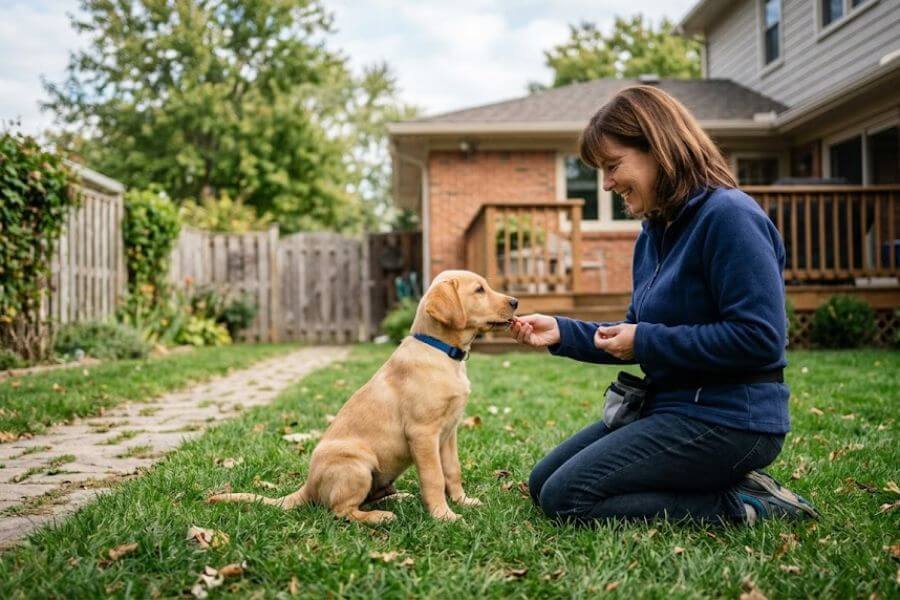
At 6:00 AM, carry your puppy directly from their crate to the outdoor potty spot. Carrying them prevents them from having an accident on the floor the moment their paws hit the ground. Give a simple verbal cue like “go potty” and give them five minutes of quiet time to do their business. When they succeed, throw a mini-party with praise and a treat.
At 6:15 AM, head inside for breakfast. Feed your puppy their morning meal and leave the water bowl down for twenty minutes.
By 6:45 AM, your puppy will need to go outside again. The act of eating stimulates a dog’s digestive system. Take them back to the exact same outdoor spot.
From 7:00 AM to 7:45 AM, enjoy some supervised playtime, training, or a short walk. This burns energy so they are ready to rest when you start your workday.
At 7:45 AM, offer one final quick trip outside before you place them in their crate or exercise pen at 8:00 AM.
Midday Check-In Window (12:00 PM – 1:00 PM)
If you work away from home, this is the time when you will need to return for a lunch break or hire a local dog-walker to visit. A young puppy cannot stay crated from morning until evening without an accident.
At 12:00 PM, head straight to the crate and carry your pup outside immediately. Keep things calm and focused until they relieve themselves.
At 12:15 PM, offer a small mid-day lunch if your veterinarian recommends three meals a day, along with fresh water.
At 12:45 PM, take them out for their second midday bathroom break. Spend a few minutes letting them sniff around or play gently.
At 1:00 PM, settle your puppy back into their secure area with a safe chew toy to keep them occupied as the afternoon resting period begins.
Evening Active Window (5:00 PM – 11:00 PM)
When your workday ends, your puppy will be bursting with energy and ready to see you.
At 5:00 PM, let your pup out of their crate and walk them straight outside. Once they succeed, enjoy an extended walk or a fun training session in the living room to strengthen your bond.
At 6:00 PM, serve dinner. Just like the morning routine, remove any leftover food after twenty minutes to keep their digestive cycle predictable.
At 6:30 PM, take them outside for their post-dinner break.
From 6:45 PM to 9:30 PM, you can relax together, but keep a close eye on them. If they start sniffing the floor, circling, or walking toward the door, interrupt them gently and carry them outside immediately.
At 9:30 PM, pick up the water bowl for the night. Removing water a few hours before bedtime gives their bladder a break and helps everyone sleep through the night.
At 11:00 PM, complete one final late-night bathroom trip right before everyone goes to sleep for the night.
Managing Mistakes Without Stress
Accidents are a normal part of the learning process. If you come home and find a mess that happened while you were away, do not punish your puppy. They cannot connect a past action with current anger, and punishing them will only make them afraid of you. Simply clean the area thoroughly with your enzyme spray and resolve to adjust the schedule tomorrow.
If you catch your puppy in the middle of an indoor accident, make a sudden but gentle sound like “oops!” to pause them. Pick them up smoothly and carry them out to their designated spot to finish. When they finish outside, reward them just like normal.
Frequently Asked Questions
How long does the entire training process take?
Most puppies can grasp the basic concept of going outside within a few weeks of strict routine management. However, a dog is not truly fully trained until they have gone several months without a single indoor accident. Many dogs reach total reliability around six months of age.
Should I use pee pads if I am away for long hours?
Pee pads can be helpful if you must leave your puppy alone for longer than their physical bladder limit allows. However, be aware that pads can teach your dog that going on soft, fabric-like surfaces inside the house is acceptable. If you use them, place them inside an exercise pen far away from their bed.
Why does my puppy cry when placed in the crate?
Crying is a natural response to being separated from the pack. To help them feel secure, practice putting them in the crate for very short periods while you are still in the room. Give them a special toy that they only get while inside the crate so they learn to view the space as a positive, rewarding lounge area.