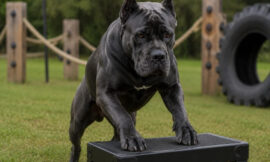
Quick Summary Table
| Fact or Myth | Statement About Cane Corso | Reality Check |
| Myth | They have a special locking jaw mechanism. | Their jaws are structurally identical to other dogs but have massive muscles. |
| Fact | Their head shape naturally multiplies biting force. | Their broad, short skulls create short lever arms for maximum pressure. |
| Myth | They possess a verified 700 PSI bite force. | The 700 PSI claim is an unverified internet number; actual force is lower. |
| Fact | They bite harder than domestic cats and humans. | A human bites at 120 PSI, whereas a Cane Corso easily triples that number. |
| Myth | High bite force makes them naturally aggressive. | Bite strength is a physical trait, whereas aggression is a behavioral trait. |
| Fact | Large body mass directly increases jaw pressure. | Bigger chest, neck, and shoulder muscles allow the dog to clamp harder. |
| Myth | Their bite force matches a wild crocodile. | Crocodiles bite at 2,500 to 5,000 PSI, which completely dwarfs any dog. |
| Fact | Early socialization softens their biting behavior. | Proper training teaches them bite inhibition so they use their mouth safely. |
| Myth | They have the strongest bite of all dog breeds. | The Turkish Kangal holds the record with a verified bite force. |
| Fact | They were bred to hold down large wild boars. | Their historical job as catch dogs required a deep, relentless grip. |
| Myth | Puppies can bite with adult-level force. | Puppy skull bones are soft and lack the dense muscle mass of adults. |
| Fact | The bite force varies significantly between individual dogs. | Gender, health, age, and individual size change the actual biting numbers. |
How We Ranked These
We selected and analyzed these twelve points using specific guidelines to separate truth from internet fiction. Many online articles repeat the same unverified numbers without looking at real animal biology. To give you the most accurate view of this Italian mastiff, we measured each claim against the following core parameters:
- Anatomical Accuracy: We analyzed the skull shape, jaw bone leverages, and muscle attachments of large mastiff breeds.
- Scientific Verification: We checked field tests, veterinary data, and studies conducted by wildlife experts using specialized bite meters.
- Historical Context: We evaluated what these dogs were originally bred to do, including big-game hunting and property protection.
- Comparative Analysis: We measured the claims against verified data from other domestic dog breeds and wild animals.
- Behavioral Science: We looked at how physical capabilities relate to actual canine temperament and training results.
1. The 700 PSI Internet Number Is a Major Myth
You will see the number 700 pounds per square inch, or PSI, on almost every website about guard dogs. Many articles claim that the Cane Corso can bite with 700 PSI of pressure, which would make it match the strength of some wild predators. This number is a classic internet myth that has been repeated so many times that people accept it as a hard fact.
In reality, there is no official scientific study that shows a Cane Corso hitting exactly 700 PSI on a calibrated bite meter. When scientists or expert trainers use specialized digital pressure sleeves, most large domestic dogs score well below this mark. While their bite is incredibly powerful, the 700 PSI claim is an exaggeration created by online enthusiast groups and popular blogs.
2. Head Shape Acts as a Natural Force Multiplier
The physical structure of a Cane Corso head is the real reason behind their jaw strength. They belong to the brachycephalic or mastiff-type head groups, meaning they have a broad, relatively short muzzle and a massive skull. This shape works like a simple tool from physics class, acting like a short, thick lever.
When a dog with a long muzzle, like a German Shepherd, bites down, the force is distributed across a longer bone distance. When a Cane Corso bites down, the distance from the jaw hinge to the front teeth is much shorter. This short distance allows the muscle contraction to concentrate massive pressure into a small area. The wide skull also provides a huge surface area for the masseter muscles, which are the primary muscles used for chewing and clamping.
3. The Myth of the Physical Locking Jaw
A very common myth about the Cane Corso, and other protective breeds like Pit Bulls, is that they have a locking jaw. People often believe that once these dogs bite down, a physical mechanism inside the bones clicks into place, making it impossible for the dog to open its mouth until it decides to let go.
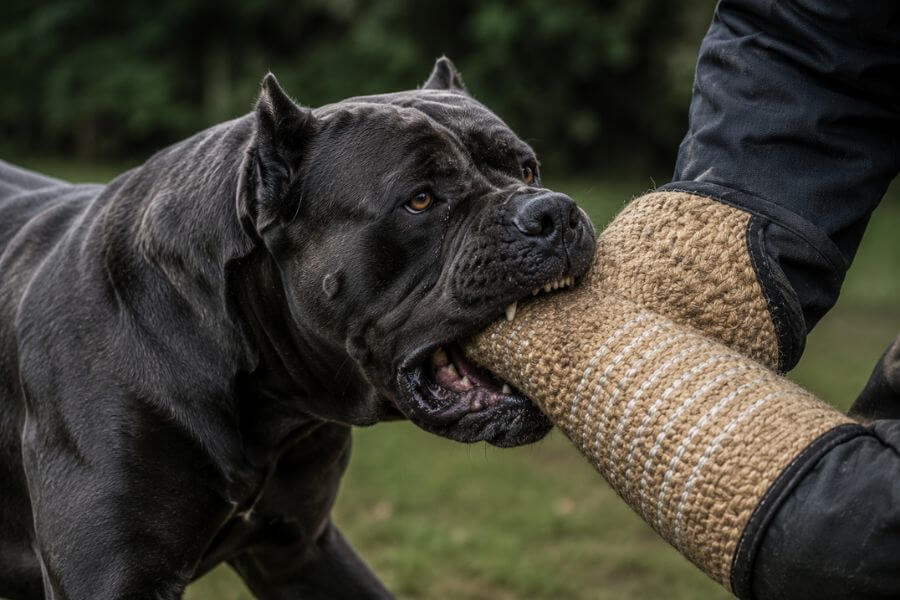
This is anatomically impossible. No dog breed in the world possesses a locking jaw mechanism. The jaw structure of a Cane Corso is identical to that of a tiny Chihuahua or a wild wolf. They have the same joints, bones, and ligaments. The reason people think their jaws lock is purely due to their determination and muscle strength. When they decide to hold onto something, their immense muscle tone allows them to maintain a firm grip without getting tired.
4. They Outbite Humans and Average Household Pets
To understand how strong a big dog can bite, you must compare them to things you experience every day. The average human being bites down with a force of about 120 to 140 PSI when chewing tough food. Small to medium household pets, like domestic cats or small terriers, usually generate less than 80 PSI of pressure.
A healthy, full-grown Cane Corso can easily triple or quadruple the biting power of an adult human. Even if we use conservative scientific estimates instead of the exaggerated online numbers, their jaw pressure is massive. This comparison shows why it is so important to respect their physical power. A simple, playful bite from a dog of this size carries a completely different level of energy than a bite from a standard family dog.
5. High Bite Force Does Not Mean High Aggression
Many people look at a high bite force ranking and immediately assume the Cane Corso is a dangerous, aggressive animal. This is a harmful myth that confuses physical capability with behavioral traits. Bite force is simply a measurement of muscle mass and bone structure, just like a person’s ability to lift heavy weights.
The Cane Corso is generally a calm, stable, and deeply loyal companion when raised correctly. They were bred to be silent protectors that watch over their family property. They do not typically search for conflict or act erratically. A dog can have a massive bite force but possess a very gentle soul, while a tiny dog can have a low bite force but display high levels of daily aggression.
6. Total Body Mass Directly Impacts Jaw Pressure
A dog cannot generate extreme jaw pressure if the rest of its body is small and weak. The biting action does not happen just inside the mouth; it utilizes the muscles of the entire head, neck, shoulders, and chest. Because the Cane Corso is a heavy, muscular breed, its body mass acts as a base for its jaw power.
An adult male Cane Corso can easily weigh between 100 and 110 pounds of pure muscle. When they bite down and pull, they use their thick neck muscles and broad chest to anchor themselves. This extra body weight adds kinetic energy to the bite. A lighter dog with a similar head size would not be able to generate the same level of sustained pressure because its neck and shoulders would tire out much faster.
7. Their Biting Power Is Nowhere Near a Crocodile
Another common exaggeration found on online forums is that a large mastiff can bite as hard as a wild alligator or a crocodile. People see the damage a large dog can do to a heavy chew toy and assume their power rivals the most dangerous predators in nature.
This is a massive myth. Wild crocodiles have been measured biting at forces ranging from 2,500 to over 5,000 PSI. Their jaws are designed to crush turtle shells and large animal bones instantly. Even the strongest dog breeds in human history do not come close to this level of power. Dogs are mammals with flexible jaw movements for chewing, whereas crocodiles have highly specialized, rigid crushing tools.
8. Early Socialization Teaches Bite Inhibition
A fascinating fact about canine biology is that dogs can control exactly how hard they bite. This is known as bite inhibition. A Cane Corso is fully capable of using its mouth to gently carry a soft egg without breaking it, or using that same mouth to crush a heavy piece of wood.
This control is not automatic; it must be learned during the first few months of life. Through positive play with their mother, littermates, and human owners, puppies learn that biting too hard makes the fun stop. If you socialize your dog properly from a young age, they learn to keep their jaw pressure completely turned down around humans, making their high physical bite force a non-issue in daily life.
9. The Turkish Kangal Holds the Top Dog Record
While the Cane Corso is incredibly strong, it is a myth that they possess the absolute strongest bite force in the entire canine kingdom. That specific crown belongs to a different livestock guardian breed from Turkey called the Kangal.
The Kangal is a massive dog bred to protect sheep from wolves and bears. In controlled scientific tests, the Kangal has achieved a verified bite force of around 743 PSI. Their heads are larger, and their bodies are taller and heavier than the average Italian mastiff. The Cane Corso sits comfortably near the top of the list, usually ranking in the top five strongest breeds, but it does not hold the ultimate record.
10. They Were Originally Bred as Historical Catch Dogs
The reason the Cane Corso developed such an impressive bite force goes back hundreds of years to ancient Italy. They worked as rural farm dogs, property guardians, and catch dogs. A catch dog is a specific type of hunting dog used to track down and hold massive, dangerous wild game like wild boars or wild bulls.
When a wild boar is running through the brush, it can easily injure human hunters with its sharp tusks. The Cane Corso was bred to run out, grab the large animal by the ear or neck, and hold it completely still using its powerful jaws until the hunter arrived. This specific job required a dog that could clamp down with massive force and refuse to let go, even while the wild animal fought back.
11. Puppy Skull Bones Cannot Generate High Force
Some people worry that a young Cane Corso puppy is already dangerous because of the breed’s reputation for strength. This is a common myth. A puppy under the age of six months does not have the bone structure or the muscle development to create dangerous levels of jaw pressure.
A puppy’s skull is still growing, and the bone joints are flexible and soft. Furthermore, they have small, sharp baby teeth that are meant for learning, not crushing. While a puppy bite can feel like a sharp needle scratch, they do not possess the structural density required to create true crushing force. The real power only develops after their adult teeth come in and their skull bones fuse together into a solid structure.
12. Individual Health and Gender Change the Numbers
When you read about dog statistics, the numbers you see are always general averages. It is a fact that two different Cane Corso dogs can have completely different levels of biting power based on their individual health, gender, age, and lifestyle.
An adult male dog that weighs 115 pounds and exercises every day by chewing heavy materials will have much denser jaw muscles than a senior female dog that weighs 85 pounds and prefers soft food. Factors like dental health, jaw alignment, and arthritis also play a major role. You cannot look at one single number and apply it perfectly to every single dog you meet within the breed.
Frequently Asked Questions
Does the coat color of a Cane Corso affect its jaw strength?
The color of a dog’s coat has absolutely no relationship with its skeletal structure or muscle mass. A black, brachycephalic mastiff has the exact same jaw mechanics and genetic muscle potential as a grey or fawn colored dog from the same litter. Coat color is determined by separate pigment genes that do not control the development of the masseter muscles or skull bones.
Can specific chew toys increase a dog’s natural biting force?
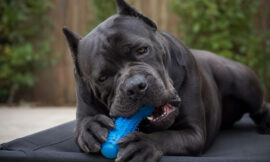
Chew toys cannot change the fundamental bone structure or the genetically determined maximum size of a dog’s skull. However, chewing on heavy, durable rubber toys acts like weightlifting for the jaw. It exercises the masseter muscles and keeps them at peak tone. A dog that actively chews will have healthier, firmer muscle engagement than an inactive dog, but it will still stay within its natural genetic limits.
Do ear cropping practices alter the way these dogs use their jaws?
Ear cropping is a cosmetic surgical procedure that changes the shape of the outer ear flap. It does not touch any of the muscles, nerves, or bones involved in the biting mechanism. A dog with cropped ears moves its jaw in the exact same manner and with the exact same amount of potential pressure as a dog with natural, floppy ears.
Does a raw diet create a stronger bite than a standard dry kibble diet?
The type of food does not directly affect a dog’s physical jaw capability, but nutrition does matter for overall muscle growth. A high-quality diet rich in proteins and healthy fats helps a growing puppy develop strong bones and dense muscle tissue. However, a dog eating dry kibble can achieve the same muscle mass and biting power as a dog eating raw meat, provided the nutritional profiles are balanced and high in quality.
Is the bite force of this breed different when they are angry versus when they are playing?
Dogs utilize different levels of muscle engagement based on their emotional state and intent. During casual play or fetch, a dog consciously restrains its power to avoid hurting its human companion or damaging a favorite toy. In a high-stress defense situation where the animal feels its life is threatened, adrenaline rushes through the body, allowing the muscles to contract with their absolute maximum physical force.