Quick Summary Table
| Strategy Number | Core Focus Area | Primary Benefit |
| Strategy 1 | Early Socialization | Reduces fear-based reactions |
| Strategy 2 | Flirt Pole Training | Provides a safe outlet for chasing |
| Strategy 3 | The Leave-It Command | Stops the chase before it starts |
| Strategy 4 | Impulse-Control Games | Builds patience and self-control |
| Strategy 5 | High-Value Treats | Keeps your dog focused on you |
| Strategy 6 | Controlled Leash Walks | Maintains safety in public spaces |
| Strategy 7 | Mental Stimulation | Burns energy without high excitement |
| Strategy 8 | Predatory Drain | Channels instincts into daily chores |
| Strategy 9 | Strict Boundaries | Keeps small pets safe at home |
| Strategy 10 | Professional Help | Provides expert guidance for safety |
How We Ranked These
Managing a heavy and powerful dog like the Cane Corso requires methods that actually work in real life. We picked and ranked these ten steps based on specific things that keep you, your dog, and other animals safe. Here are the key factors we used to order these ideas:
- Safety Level: We prioritize steps that prevent dangerous situations before they can happen.
- Ease of Use: We look at how quickly a regular dog owner can learn and use the method daily.
- Long-Term Success: We rank methods higher if they change your dog’s deep habits over time instead of just fixing a problem for one day.
- Dog Happiness: We choose strategies that let your dog act like a dog without causing harm to other creatures.
1. Start Heavy Socialization at a Young Age
You must introduce your Cane Corso puppy to many different sights, sounds, and animals as early as possible. When a puppy grows up around small animals, those animals become a normal part of life rather than things to hunt.
Take your puppy to places where they can see cats, birds, and small dogs from a safe distance. Keep your dog on a short leash and give them treats when they look at the small animal calmly. If your dog stays relaxed, they learn that small moving things are not toys or food.
This early training creates a strong mental base. It stops the wild chasing habit from growing big as your dog grows big. You want your dog to feel neutral when they see a squirrel or a cat. Neutral means your dog looks at the animal, feels bored, and turns back to you.
2. Use a Flirt Pole for Safe Chasing
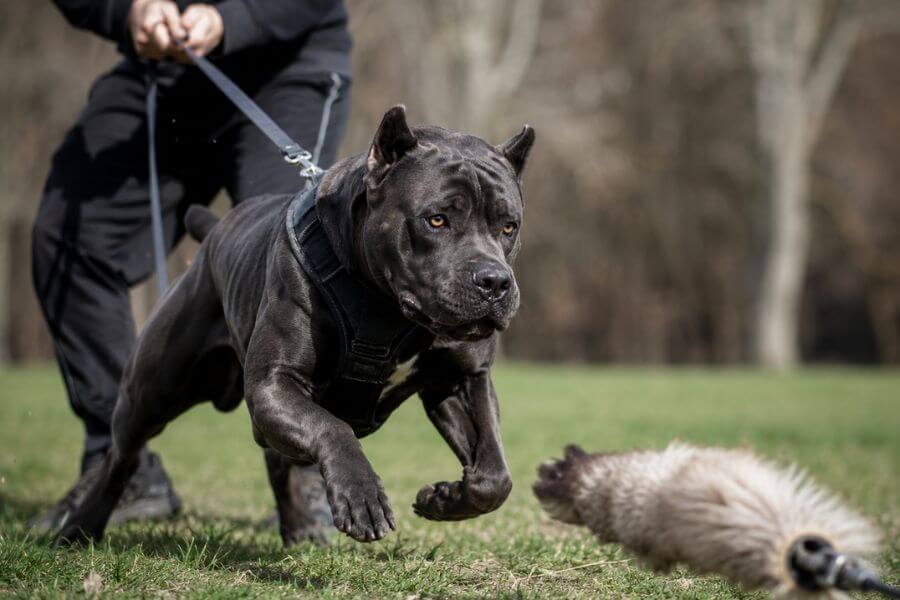
A flirt pole is a long stick with a rope attached, and a toy sits at the end of the rope. You drag the toy on the ground so your dog can chase it. This tool lets your dog use their natural hunting habits in a safe way that you control.
Before you let your dog chase the toy, make them sit and stay. Say a specific word like “go” to let them hunt the toy. While they chase it, you change the speed and direction.
The most important part of this exercise happens when you tell your dog to stop. You must command them to drop the toy and sit down mid-chase. This teaches your powerful dog to listen to your voice even when their heart beats fast and they feel excited.
3. Teach a Rock-Solid Leave-It Command
The leave-it command is a lifesaver when you walk a big dog with a high hunting drive. This command tells your dog that they can never have the item they want to look at or touch.
Start practicing inside your home with low-value dog food on the floor. Cover the food with your foot and say the words clearly. When your dog stops sniffing your foot, give them a much better treat from your hand.
Gradually move this practice outside where real distractions live. You want your dog to turn away from a running rabbit the exact second you say the words. Consistent practice ensures that your voice becomes more important than the moving animal.
4. Play Structured Impulse-Control Games
Impulse-control means your dog can stop themselves from doing something they want to do immediately. Dogs with high hunting drives want to move the moment they see movement, so you must teach them how to wait.
You can practice this during meal times every single day. Make your dog sit down while you hold their food bowl. Slowly lower the food bowl to the ground. If your dog stands up, lift the bowl back up instantly.
Only let your dog eat when they stay seated and look into your eyes. This simple game teaches your dog that waiting patiently brings them the reward they want. It stops them from reacting instantly to sudden movements in the world.
5. Use High-Value Treats Only for Outdoor Training
Regular kibble does not work well when a Cane Corso sees a stray cat. You need treats that smell strong and taste amazing to win against your dog’s natural hunting instincts.
Use small pieces of cooked chicken, hot dogs, or freeze-dried liver. These treats must stay hidden in your pocket until you need them during walks.
When your dog notices a small animal but chooses to look at you instead, give them multiple high-value treats in a row. This creates a powerful connection in your dog’s brain. They learn that ignoring wild animals brings them the best food in the world.
6. Master the Art of Controlled Leash Walks
A loose-leash walk keeps you in control when a sudden distraction appears. If your dog always pulls on the leash, they are already tense and ready to explode into a chase.
Hold the leash with both hands close to your body for maximum strength. Walk with a purpose and change your direction often without warning. This forces your dog to watch your body movements because they never know where you will turn next.
If you see a small animal ahead, do not tighten the leash nervously. A tight leash tells your dog to prepare for a fight or a chase. Keep the leash loose but short, and quickly walk in the opposite direction before your dog can freeze and stare.
7. Provide Daily Mental Stimulation
A bored Cane Corso looks for their own fun, and that fun usually involves hunting backyard animals or chewing your things. You must tire out their brain so they do not feel the need to hunt.
Use food puzzles, snuffle mats, and hidden treat games around the yard. You can hide a favorite toy in the grass and tell your dog to find it using their nose.
Using the nose requires a lot of brain energy from a dog. Twenty minutes of sniffing and searching tires a dog out much more than a fast walk around the block. A tired dog has much less desire to chase things that run past your fence.
8. Establish a Predatory Drain Routine
Predatory drain means you safely drain away your dog’s hunting energy through jobs and tasks. You give them a job that mimics the steps of a hunt without any killing at the end.
You can teach your dog to pull a weighted dog wagon or wear a dog backpack filled with plastic water bottles. The extra weight gives them a sense of purpose and uses up their physical strength.
When your dog wears the backpack, they focus heavily on walking and carrying the load. Their mind shifts away from searching the bushes for small animals because they feel like they are working a real job for you.
9. Set Up Strict Physical Boundaries at Home
You must manage the home environment so your dog cannot practice their hunting habits when you sleep or work. Every time your dog chases a bird away from the window, their hunting drive grows stronger.
Use tall, solid wooden fences in your yard so your dog cannot see small animals walking down the street. If your dog looks out the front window and barks at cats all day, close the blinds or use window film to block the view.
If you own smaller pets like cats or rabbits, use heavy-duty doors and locks to keep them in separate rooms. Never leave your dog alone with a small animal, even for one second, no matter how friendly they seem.
10. Seek Help from a Professional Trainer Early
A Cane Corso is a massive, muscular dog that can pull a strong adult off their feet easily. If you feel scared or lose control when your dog tries to chase an animal, you need professional help right away.
Look for a trainer who understands large working breeds and uses positive reinforcement mixed with clear structure. A professional can watch your timing and teach you how to read your dog’s body language before the chase starts.
Getting help early stops small problems from turning into dangerous situations. It gives you the confidence you need to handle your dog safely in public places.
Frequently Asked Questions
Does neutering or spaying a Cane Corso lower their prey drive?
No, fixing your dog does not change their natural prey drive. Prey drive is a deep instinct linked to hunting and survival, not a behavior driven by mating hormones. While fixing your dog might reduce roaming behaviors or aggression toward other large dogs, it will not stop them from wanting to chase a running squirrel or cat. You must rely on training and management rather than surgery to handle this specific hunting habit.
Can a Cane Corso with a high prey drive ever live safely with a cat?
It is highly risky and requires constant management, but it can happen under very specific conditions. The dog must grow up with the cat from early puppyhood, and the cat must stay calm without running away. You must create high spaces where the cat can live completely out of the dog’s reach. Even with perfect training, you should never leave them alone in the same room without your direct supervision because a sudden fast movement from the cat can trigger the dog’s hunting instinct instantly.
Will raw food diets increase my dog’s desire to hunt live animals?
No, feeding your dog raw meat does not make them want to hunt live animals in the yard. The instinct to chase moving objects comes from the visual trigger of movement, not from the taste of the food in their bowl. A dog eats dead meat from a dish as food, but they see a running rabbit as a moving toy to chase. Your choice of dog food does not alter the deep genetic wiring that controls how their eyes and brain react to running targets.
Why does my Cane Corso ignore treats outside when they listen perfectly inside?
Your dog ignores treats outside because the excitement level of the outdoor environment is much higher than the value of the food you offer. Inside your house, distractions are low, so regular treats work well. Outside, the smell of animals, the open space, and moving targets create a massive rush of adrenaline in your dog. To fix this, you must use much better food like real meat, and you must start training in areas with very few distractions before moving close to busy parks.
Can I completely eliminate my dog’s prey drive through intense training?
You can never fully erase a natural prey drive because it forms a permanent part of your dog’s genetics. Training teaches your dog how to control their actions and look at you when they feel the urge to hunt, but the internal urge stays inside them forever. Management, physical fences, strong leashes, and constant focus are lifelong requirements when you own a large working breed with these deep hunting habits.