Summary of Obedience Milestones
| Milestone Number | Milestone Goal | Focus Area |
| 1 | Perfect Recall | Safety |
| 2 | Loose-Leash Walking | Control |
| 3 | Emergency Stop | Impulse Control |
| 4 | Food and Toy Drop | Guarding Prevention |
| 5 | Calm Greetings | Social Control |
| 6 | Threshold Waiting | Boundary Training |
| 7 | Long-Duration Stay | Place and Hold |
| 8 | Leave It Command | Environmental Safety |
| 9 | Muzzle and Vet Touch | Body Handling |
| 10 | Sudden Sound Control | Noise Desensitization |
How We Ranked These
We chose these specific goals because a Cane Corso is a large, powerful guard dog. By twelve months of age, your puppy is close to their full size and strength. We ranked these behaviors based on three key factors:
- Safety: The milestone must protect your dog, you, and other people from dangerous situations.
- Size Control: The milestone helps you handle a dog that weighs over one hundred pounds without using physical force.
- Prevention: The milestone stops bad habits like biting, guarding resources, or chasing cars before they start.
1. Perfect Recall Under Big Distractions
Perfect recall means your dog comes to you the very first time you call their name. For a one-year-old Cane Corso, this is the most critical safety skill. Your dog is now large enough to scare people or run into dangerous roads very quickly. You cannot rely on a leash all the time because emergencies happen.
To hit this milestone, your Cane Corso must turn around and run to you even when they see a squirrel or another dog. You train this by using high-value rewards like pieces of fresh meat. Start in an enclosed backyard and slowly move to parks with more noise. If your dog hesitates for even a second, you need to go back to training in quieter areas. When your dog returns to you instantly every single time, you have achieved a major safety goal.
2. Loose-Leash Walking Without Pulling
Walking a young Cane Corso can feel like a workout if they pull on the leash. At one year old, their upper-body strength can easily pull an adult off their feet. This milestone requires your dog to walk right by your side with a loose, sagging leash. They must pay attention to your walking speed rather than pulling toward every smell on the sidewalk.
Achieving this milestone means your walks are peaceful and safe. You teach this by stopping completely the moment the leash gets tight. Your dog learns that pulling results in zero forward movement. When they look up at you and slacken the leash, you praise them and move forward again. Consistency is the secret here. If you let them pull even once, they will keep trying it.
3. The Emergency Down-Stay From a Distance
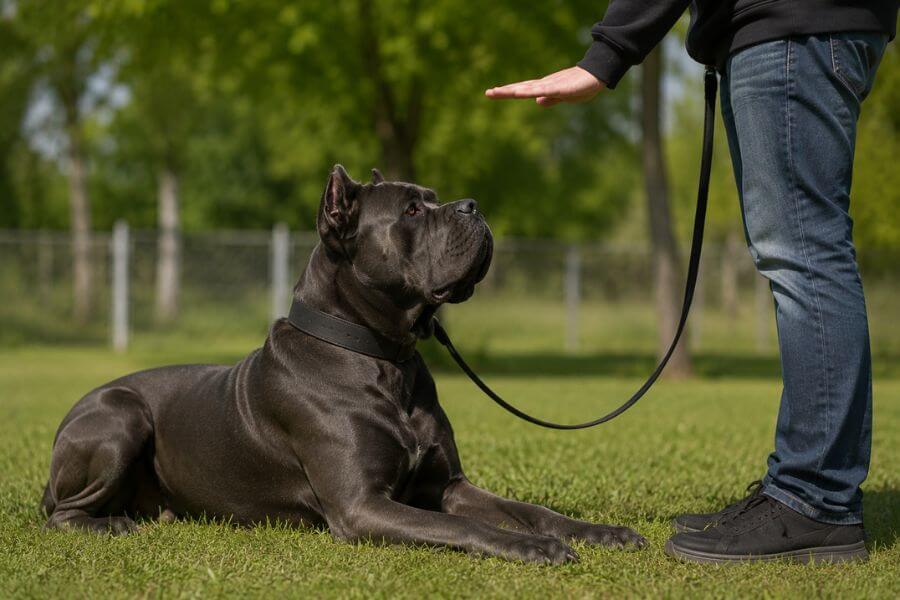
An emergency down-stay is a command that drops your dog to the ground instantly, even if they are fifty feet away from you. Imagine your dog slips out of the front door and heads toward a busy street. If you call them to come, they might cross the road to reach you. An emergency drop stops them exactly where they are.
This milestone is difficult because it requires extreme impulse control. You train it by first teaching a fast down command right in front of you. Once they master that, you practice while walking away from them. Finally, you add distance and motion. When you can yell the command while your dog is chasing a ball and they immediately drop their belly to the grass, you have mastered this life-saving milestone.
4. Food and Toy Drop on Command
Cane Corsos possess strong instincts to protect what they think belongs to them. Resource guarding can become a serious problem if you do not train them early. This milestone requires your dog to drop any object or food item immediately when you say the word. They must do this willingly without growling or showing stiff body language.
To reach this goal, you must never forcefully rip things out of your dog’s mouth. Instead, trade them for something better. If they have a plastic toy, offer them a piece of chicken. When they drop the toy to take the chicken, say your command word. This teaches your dog that giving things to you results in a reward, not a loss. At one year old, your dog should let you take a bone directly from their jaws without any tension.
5. Calm Greetings with Strangers
Your Cane Corso is naturally protective of their family group. However, they must learn to accept friendly strangers without jumping, barking, or lunging. This milestone means your dog sits quietly by your side when a new person approaches to shake your hand or pet their head. They should not view every single human as a potential threat.
This behavior takes months of steady socialization. You need to teach your dog that strangers are neutral objects. Do not let random people rush up to pet your puppy when they are young. Teach your dog to focus on your eyes while people walk past. A successful one-year-old Cane Corso remains calm, stable, and completely relaxed when guests enter your home or pass you on public trails.
6. Waiting at Doorways and Thresholds
A heavy dog that bolts through open doors can cause serious injuries to family members. This milestone demands that your Cane Corso stops and waits at every single doorway, car door, and gate until you give them permission to cross. They must not push past your legs or force their way outside the moment they see an opening.
You train this milestone by using the door itself as a boundary. Open the door a few inches. If your dog moves forward, close it immediately. Repeat this until they step back and look at you. Open it wider, and only give the release word when they are completely still. This creates a polite dog and prevents accidental escapes into dangerous areas.
7. Long-Duration Place Stay with Visual Distractions
The place command tells your dog to go to a specific bed or mat and stay there until you say otherwise. By one year of age, your Cane Corso should be able to stay on their place for at least thirty minutes while you eat dinner or cook food. They must remain on the mat even if you drop a piece of food on the kitchen floor or if someone rings the doorbell.
This milestone builds incredible mental strength in a working breed. It teaches them how to switch off their high energy and relax. Start with short two-minute stays and slowly build the time up over several weeks. If your dog gets up, quietly guide them back to the spot without getting angry. This milestone ensures your large dog is a pleasant companion inside the house rather than a constant shadow under your feet.
8. The Leave It Command for Unknown Objects
Dogs explore the world with their mouths, but a Cane Corso can pick up dangerous items quickly. The leave it command tells your dog to ignore an object completely and look at you instead. This milestone is achieved when your dog walks past a piece of dropped street food or a dead animal without touching it or sniffing it.
This skill protects your dog from swallowing poisons, sharp bones, or harmful chemicals. Train this by placing a low-value treat under your shoe. When your dog stops sniffing your shoe, give them a high-value treat from your hand. They quickly learn that ignoring the item on the ground brings a much better reward from you. At one year old, this response must be automatic.
9. Cooperative Muzzle and Vet Examination Handling
Your Cane Corso will weigh a lot when they visit the veterinarian. If they fight the vet or scream during a nail trim, they become impossible to handle safely. This milestone requires your dog to stand or lie still while an adult holds their paws, looks inside their ears, checks their teeth, and touches their tail. They must also accept wearing a basket muzzle without panic.
Even the friendliest dog might bite if they are in pain from an injury. Muzzle training is a responsible choice for large breeds. Put treats inside the muzzle so your dog willingly places their nose into it. Touch their paws daily and reward them with praise. When your vet can examine your dog without any growling or structural resistance, you have hit this milestone.
10. Indifference to Sudden Loud Sounds
Large guardian breeds can sometimes develop fear towards sudden noises like thunder, fireworks, or loud trucks. A panicked one-year-old Cane Corso can break through windows or destroy doors trying to escape a sound. This final milestone requires your dog to remain calm or look to you for guidance when a loud sound occurs.
You achieve this by playing soft noise recordings during meal times when they are young. Slowly increase the volume over time. If a trash can drops outside during a walk, do not coddle or comfort your dog. Act completely normal and give them a command to focus their mind. When your dog hears a loud pop and simply wags their tail or continues sleeping, their emotional training is complete.
Frequently Asked Questions
What should I do if my one-year-old Cane Corso suddenly forgets these milestones during adolescence?
Dogs go through a teenage phase around twelve months of age where their brains develop rapidly. They might test your boundaries or pretend they do not hear your commands. If this happens, you must not lose your temper or give up. Go back to basic training steps and use a long training leash for safety. Increase the value of your treats and keep training sessions short and fun until this hormonal phase passes.
Can I use a harness to help reach the loose-leash walking milestone faster?
A standard chest harness actually encourages a Cane Corso to pull because it distributes their weight evenly across their strong shoulders. It mimics the feeling of a sled-pulling dog. It is much better to use a standard flat collar or a head-halter tool along with consistent stop-and-go training methods. The goal is to teach your dog to manage their own weight rather than relying on a strong gear setup to hold them back.
How many minutes per day should I spend training these milestones?
At one year old, short sessions are much better than long hours of practice. Aim for three to four sessions per day, with each session lasting about five to ten minutes. A Cane Corso can get bored or mentally tired if you repeat the same command for thirty minutes straight. Mixing training into your daily routines like breakfast time or evening walks helps your dog learn much faster.
Is it safe to practice the emergency stop milestone off-leash in an open public park?
You should never practice off-the-leash training in an unsecured area until your dog has achieved a perfect score at home. Always use a thirty-foot or fifty-foot long-line training leash when you move your training to public spaces. This webbed line gives your dog the feeling of freedom while ensuring you can stop them physically if a dangerous distraction appears suddenly.
My dog passes all milestones at home but fails them in public, so how do I fix this?
Dogs do not generalize commands easily, which means a sit in the kitchen does not automatically mean a sit at the park. When you change locations, the environment introduces hundreds of new smells and sights. You must lower your expectations whenever you enter a new place. Act as if you are teaching the skill for the first time, use your best food rewards, and slowly build their focus back up to the milestone level.