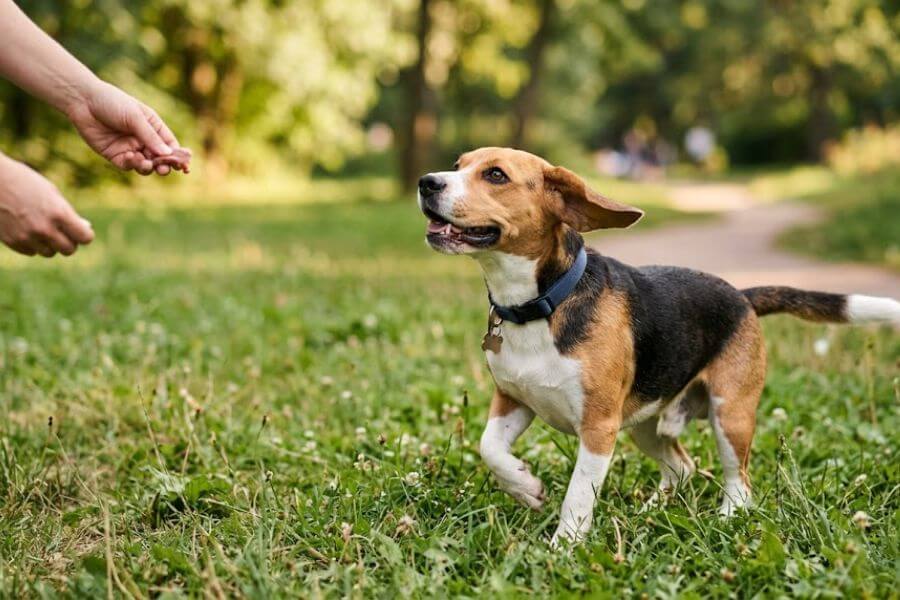
You stand in your backyard, holding a bag of the smelliest, most delicious treats you could find. Your lungs take in a deep breath. You open your mouth and call your dog. Your voice is bright and full of hope. But your little hound does not even turn around. Instead, their nose is glued to the grass. They are tracking a scent that you cannot smell. Their long ears trail along the ground like little brooms. They are completely locked in their own world. You call again, louder this time. Nothing happens.
If this sounds like your daily life, you are not alone. You own a scent hound. Specifically, you own a hound that belongs to one of the most stubborn and beautiful breeds on the planet.
Training this specific dog to turn around and run to you is a unique puzzle. It requires a lot of patience. It demands that you think like a dog. You must understand what makes their mind tick. This blog post is your ultimate guide to solving that puzzle. We will break down the steps together. We will explore how these small dogs think. You will learn how to build a bond that is stronger than any scent on the grass. By the end of this guide, you will have the tools to make your dog look at you like you are the greatest thing in the universe.
Understanding the Mind of Your Little Hound
Before you can teach your dog to do anything, you must understand who they are. These dogs were bred for hundreds of years to do one specific job. That job was to find a scent and follow it wherever it goes. They are independent problem solvers. When they are on a trail, their brain shuts down everything else. Their ears actually help them trap smells right under their nose. This means when you call them, they are not always ignoring you on purpose. Sometimes, they literally cannot hear you. The scent is just too loud.
You must stop viewing this behavior as disobedience. It is simply their natural design. Once you accept that your dog is wired to follow their nose, your training will change for the better. You will stop getting frustrated. You will start working with their nature instead of fighting against it.
To win their attention, you have to compete with the environment. The grass, the bugs, the wind, and the neighbor cats are all competing for your dog’s mind. If you want your dog to choose you, you must become more interesting than a hidden rabbit trail. That sounds hard, but it is entirely possible. You just need to know what they value most in life.
The Power of High-Value Rewards
If you try to train this breed with dry kibble, you will probably fail. They are smart calculators. They look at the dry food in your hand, and then they look at the exciting world around them. They will quickly decide that the world is worth more than the kibble. To fix this, you need to upgrade your rewards. We call these high-value rewards.
A high-value reward is something your dog almost never gets during normal life. It should be soft, smelly, and incredibly delicious. Think about small pieces of cooked chicken breast. Think about tiny cubes of cheddar cheese. Think about freeze-dried beef liver or pieces of hot dog. These treats should be cut into very small pieces, about the size of a pea. You do not want to feed your dog a whole meal during training. You just want to give them an explosion of flavor.
You must save these special treats only for recall training. Recall is the official word for teaching a dog to come when called. If your dog knows that they only get chicken when they run to you, they will start to look forward to that sound. They will connect your voice with the best flavors in the world.
Choosing the Perfect Recall Command
Words matter a lot in dog training. Many families make the mistake of using the dog’s name as the command to come. If you say your dog’s name all day long just to talk to them, the word loses its power. Your dog hears it while you are watching television, while you are talking to your family, and while you are doing dishes. It becomes background noise.
Instead, you need a specific action word. Most people choose the word come. You can also use words like here or close. The exact word does not matter as much as how you use it. It must be a sacred word. This means you should never say the word unless you are ready to reward your dog.
You should also avoid repeating the word over and over during a single moment. If you stand in the yard saying the word five times in a row, your dog learns that they do not have to listen the first time. They learn that the word actually means come back whenever you feel like it. You want them to learn that the word means come back right this second. Say it once, say it clearly, and then use your body language to get their attention.
Setting Up Your Training Zones
You cannot start training a scent hound in a busy public park. That is like trying to learn advanced math while sitting in the middle of a loud rock concert. There are too many distractions. You need to start in a place where you have total control over the environment.
Your first training zone should be inside your living room. It is a quiet space. The smells are familiar. There are no squirrels running up trees. Once your dog is perfect in the living room, you can move to the kitchen. Then you can move to a quiet hallway.
After your dog is a superstar inside the house, you can move to the backyard. The backyard introduces new challenges like wind and dirt smells. Only after they are perfect in the backyard should you move to the front yard. The final step is a public space, but that comes much later. Taking your time through these zones ensures your dog never experiences failure early on. Every success builds a stronger habit in their brain.
Phase One Training in the Living Room
Let us begin with your first official training session. Put your high-value treats into a pouch around your waist or in your pocket. Make sure your dog does not see them yet. Stand just two feet away from your puppy or adult dog. Wait until they look away from you for a brief second.
Now, say your chosen command word in a happy, high-pitched voice. The moment your dog turns their head toward you, take a step backward. Moving backward makes you look like a fun game. It triggers their natural urge to chase you. As they take those two small steps toward you, celebrate. Say yes or use a dog training clicker.
When they reach your feet, deliver the reward immediately. Praise them with your voice. Tell them they are the smartest dog to ever live. Do not touch their head or grab their collar just yet. Some dogs find head pats annoying when they are trying to eat. Just focus on the food and the happy voice. Repeat this short exercise five times, and then end the session. You want to stop while your dog is still having fun.
Phase Two Introducing the Touch Game
Sometimes a dog will run close to you but then dart away just out of arm’s reach. They turn it into a game of keep-away. This can be dangerous if you need to catch them near a busy road. To prevent this, you should teach your dog the touch game.
The touch game teaches your dog to target the palm of your hand with their wet nose. To teach this, hold your open hand out about two inches away from your dog’s nose. Do not say any words yet. Naturally, your dog will lean forward to sniff your hand to see if it holds food.
The exact millisecond their nose touches your skin, make your celebration sound. Open your other hand and give them a treat. Repeat this until your dog sees your open palm and instantly smashes their nose into it. Now you can add a word like touch.
How does this help with your recall? You can use your hand as the target. Instead of just calling them to your general area, you can hold out your hand and ask for a touch. This forces your dog to come close enough for you to calmly touch their collar if needed. It eliminates the game of keep-away entirely.
Phase Three Building Distance with a Helper
Now that your dog understands the basic game, it is time to add some distance. You will need a family member or a friend to help you with this exercise. This helper will act as a gentle anchor for your dog.
Have your helper sit on the floor with your dog in the living room. Your helper should gently hold the dog by their harness or around their chest. Walk to the other side of the room. Turn around so you are facing your pet. Show them that you have the amazing treats.
When you are ready, call your dog’s name followed by your command word. At that exact moment, your helper should release the dog. Your dog will sprint across the room because they can see the prize. As they race toward you, open your arms wide.
When they arrive, do not just give them one treat. Give them a jackpot reward. A jackpot means you feed them four or five tiny treats one after another while telling them how amazing they are. This creates a massive positive memory in their brain. They realize that running across a room to you results in a huge party.
Moving to the Backyard and Dealing with Grass
The backyard is where things get serious for a scent hound. The moment their paws touch the grass, their instincts wake up. They want to sniff the roots, the dirt, and the spots where birds landed.
Before you start calling your dog in the yard, let them explore for ten minutes. Let them get the initial sniffs out of their system. If you try to train them the second they walk outside, you are fighting a losing battle. Let them empty their nose tank first.
Once they seem a bit bored, stand a few feet away from them. Wait for a moment when they are not actively tracking a scent. Call your command word. If they look up and step toward you, run backward and reward them heavily.
If they do not look up, do not yell the word again. Instead, make a weird noise. Kiss your hand, whistle, or stomp your foot lightly. When they look up to see what made that silly noise, run away from them. Their instinct will make them chase you. When they catch you, give them the high-value treats. You are teaching them that looking away from the grass always leads to something better.
Utilizing the Long Training Leash
You should never let your hound off a leash in an open area during this phase of training. If they catch a scent and run away, they are experiencing freedom. That freedom is self-rewarding. Every time they run away and ignore you, your command word loses its meaning.
To practice distant recall safely outside, buy a long training leash. These are lightweight ropes that are fifteen, thirty, or even fifty feet long. Clip this long line to a comfortable body harness. Never clip a long line to a throat collar, as your dog could hurt their neck if they run fast and hit the end of the rope.
Let the rope trail behind your dog as they wander the yard. Now you have a safety net. Walk twenty feet away from your dog. Call your command word. If your dog turns and comes to you, celebrate.
If your dog ignores you, do not yank the leash. Instead, use the rope to gently guide them toward you. Gently step backward and pull the line like a fishing wire, keeping it soft. When they get to you, give them a treat. They learn that ignoring you is not an option. The rope gently ensures that they always end up at your feet when the word is spoken.
The Importance of the Release Word
A common mistake is calling a dog, giving them a treat, and then letting them run away instantly. If you do this, your dog will learn to sprint to you, grab the food like a thief, and dart away. They will not stay long enough for you to keep them safe.
To fix this, you must introduce a release word. A release word tells your dog that the exercise is completely finished and they can go back to being a dog. Common release words are okay, free, or go play.
When your dog comes to you, feed them a treat. Keep your hand near them. Feed them another treat. Count to three in your head. Then, say your release word in a cheerful voice and point toward the yard. This teaches your dog that coming to you means staying with you for a short moment of safety. It prevents them from rushing the process. They learn to wait for your permission before they go back to hunting bugs.
Making Recall an Unpredictable Game
Dogs are incredibly smart animals. If you only call them when it is time to leave the park or time to go inside the house, they will quickly learn to hate the command word. To them, the word means the fun is over. It means the end of their outdoor adventure.
You must make the word unpredictable. Call your dog while they are playing in the yard. When they come to you, give them an amazing piece of cheese, say your release word, and let them go right back to playing.
Do this multiple times during a single yard session. Your dog will realize that coming to you does not mean the end of their fun. In fact, it just means a quick snack break before the fun continues. This keeps their attitude positive. They will no longer run away when they see you holding their leash at the end of the day.
How to Handle Training Setbacks
Training a hound is not a straight line to success. You will have days where your dog acts like a perfect angel. You will feel like the greatest dog trainer on earth. Then, the very next day, your dog might completely ignore you to stare at a dead leaf.
When these setbacks happen, do not get angry. Anger ruins the bond of trust. If your dog thinks you are scary when they come to you, they will stop coming entirely. If you lose your temper, your dog will choose the safety of the grass over your angry face.
If your dog has a bad day, simply take a step backward in your training program. Move out of the yard and go back inside the living room. Shorten the distance between you and your pet. Make the treats even more delicious. Setbacks usually mean you tried to advance too fast for your dog’s current brain level. Slow down and rebuild their confidence.
Building Focus Through Daily Hand Feeding
An excellent secret trick for hound owners is to stop using a traditional food bowl for regular meals. If your dog gets all their food for free in a bowl twice a day, they do not have a strong financial reason to work for you. Food is just something that appears on the floor.
Instead, use their daily dry kibble for basic training throughout the day. Put their breakfast kibble into your pocket. Throughout the morning, call them to you randomly while you are walking around the house. When they come, give them a small handful of their breakfast.
This teaches your dog that you are the source of all good things in life. They will start to follow you from room to room, hoping you will turn around and start the game. This builds a natural habit of focus. Their eyes will naturally look up at your face more often, which makes outdoor training much easier.
The Hide and Seek Game for Natural Recall
Hounds love games that involve their natural tracking skills. You can use this to your advantage by playing hide-and-seek inside your home or in a safe yard. This game teaches your dog to look for you when you disappear.
When your dog is distracted in another room, quietly slip away behind a door, inside a closet, or behind a large couch. Once you are hidden, call your dog’s name and your command word just one time. Then stay completely silent.
Your dog will hear your voice and realize you are gone. Their ears will perk up. They will use their nose and ears to track your path through the house. When they finally find your hiding spot, explode with joy. Give them a jackpot of rewards. This game teaches them that keeping track of your location is a fun and rewarding puzzle. It transfers to the outdoors, making them less likely to wander too far away from you because they do not want to lose their human.
The Danger of Chasing Your Dog
Let us talk about a critical scenario. Your dog breaks out of the house or slips out of their harness. They are running down the sidewalk, following a scent. Your instinct will tell you to run after them to catch them. This is the worst thing you can do.
If you run toward a hound, they will see you out of the corner of their eye. They will think you are joining in on their magnificent hunt. They will run faster and harder, thinking it is a fun race between friends.
Instead of chasing them, you need to do the exact opposite. Call their name once, turn around, and run away from your dog as fast as you can. Scream in a wild, happy voice. Drop to the ground and roll around like you found something amazing. This sounds crazy, but it works. Your dog’s curiosity will take over. They will stop their hunt to see why their human is acting so bizarrely. When they run back to investigate you, calmly secure their harness.
Training for the Real World Distractions
Once your dog is a champion in your yard, you can start visiting new locations. A great place to practice is the outside of a local pet store or a quiet park path. Keep them on their long training line at all times.
Sit on a bench and let your dog take in the sights. There will be other people, different dogs, and strange car noises. Wait until your dog looks at a distraction and then looks back at you for guidance. The moment they look at you, reward them.
Practice short recalls across the pavement or grass. If a person walks past, wait until they pass before calling your dog. Do not set your dog up for failure by calling them when a distraction is right in their face. Build their tolerance slowly. Over time, their brain will generalize the command. They will realize that the word means the same thing in a park as it does in the quiet living room.
Frequently Asked Questions
Why does my dog listen to me inside the house but completely ignore me when we are outside?
Inside your house, the environment is predictable and boring. Your dog already knows what the couch, the carpet, and the kitchen smell like. There is nothing new to discover. Therefore, you are the most exciting thing in that space. The moment you step outside, the entire world changes. There are fresh scent trails from animals, moving cars, wind currents, and loud sounds. Your dog ignores you because you have not trained them to handle that level of sensory input. You need to use much higher-value treats outside and use a long training line to help them focus until their outdoor habit becomes as strong as their indoor habit.
Is it true that this specific breed can never be trusted completely off a leash in an open area?
As a general rule, safety experts agree that this breed should almost always be kept on a leash or within a securely fenced area when outdoors. Even the most highly-trained hound can catch a whiff of a deer or rabbit and lose their logical mind. Their hunting instinct is an ancient, powerful force that can override years of training in a single second. While you can achieve an incredible, reliable recall for everyday situations, you should never risk their life near open roads or unfenced woods. Utilizing long lines allows them to experience freedom while keeping them safe from their own adventurous noses.
What should I do if I call my dog and they take twenty minutes to actually walk over to me?
If your dog eventually comes to you after twenty minutes, you must still reward them. This is one of the hardest things for human owners to do. You will probably feel frustrated and annoyed after waiting for so long. But if you scold your dog when they finally reach your feet, they will connect your anger with the act of coming to you. They will think that coming to you results in a scary human. This will make them take even longer the next time. If they take a long time, accept the failure quietly, give a small reward for the eventual arrival, and then make your next training session much easier by shortening the distance.
My dog is obsessed with rabbits and squirrels. Can a recall command override their prey drive?
Prey drive is a deeply ingrained genetic behavior. It is not something you can easily erase with a simple treat. However, you can use their prey drive as a reward. If your dog loves to chase things, you can use a toy that mimics prey, like a furry toy on a long rope, as their ultimate recall reward. When they come to you, instead of giving them a piece of cheese, you can whip out the toy and play a wild game of tug-of-war. This teaches them that coming to you does not mean they have to stop being a hunter. It just means they get to hunt a fun toy with their favorite human.
At what age should I start training my puppy to come when called?
You should start training your puppy the very first day they arrive at your home, which is usually around eight weeks of age. Baby puppies have a natural instinct to stay close to their caregivers because the world is big and scary to them. If you walk away from an eight-week-old puppy in the hallway, they will naturally waddle after you. This is the perfect golden window to teach the command word. Call them in a happy voice as they are already walking toward you, and then feed them their puppy food. By starting early, you build a deep habit before their independent teenage brain wakes up at six months old.
Can I use a whistle instead of my voice for recall training with a hound?
Using a whistle is an amazing idea for this breed. Whistles produce a sharp, clear sound that travels much further than the human voice. More importantly, a whistle does not carry human emotion. If you are stressed, tired, or angry, your dog can hear that tension in your voice, and they might avoid you. A whistle always sounds exactly the same, no matter how you are feeling. It can also cut through the deep focus of a scent trail better than a spoken word. You train a whistle recall the exact same way as a voice recall. Just blow the whistle once instead of saying the command word, and follow it up with a massive jackpot treat.
What does it mean if my dog looks directly at me when I call them but then runs away in the opposite direction?
This behavior usually means your dog thinks your recall command is actually the start of a fun game of chase. In their mind, you called them, they looked at you, and now they want you to chase them around the yard. To fix this, you must break the habit of moving toward your dog when you call them. You should always move backward or run away from your dog when you speak the command word. This forces them to be the chaser. If they run away, do not follow them. Turn your back, ignore them, or walk inside the house. They will quickly learn that running away ends the fun and loses your attention.
How many times a day should I practice these exercises with my hound?
You should keep your training sessions very short but frequent. Aim for three to five sessions a day, but each session should only last about two to three minutes. This breed has a short attention span when they are young, and they get bored easily if you repeat the same thing for thirty minutes. A single session can be as simple as calling them three times across the kitchen during your lunch break. Frequent, short sessions build a lifestyle of listening. It teaches your dog that the game can start at any moment of the day, which keeps their mind sharp and ready to respond to your voice.