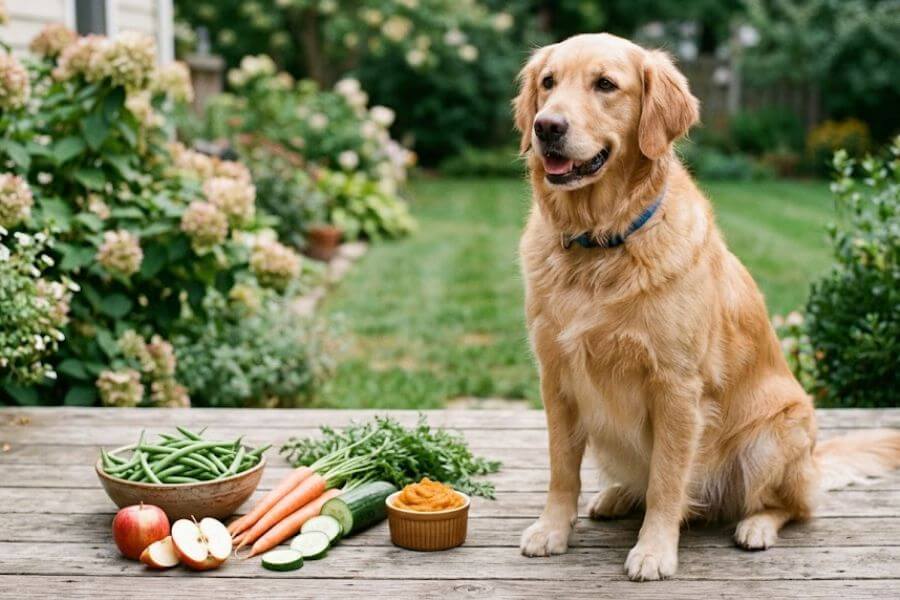
Seeing your furry best friend struggle with extra weight can be tough. You want to help them feel light, energetic, and healthy again, but cutting down their food portion often leaves them begging for more. Fortunately, you can use healthy, low-calorie fruits and vegetables to fill up their bowl without adding excess weight. Replacing a small portion of their regular kibble with these natural treats is an excellent way to help them slim down safely.
Quick Summary Table
| Fruit or Vegetable | Key Benefit for Weight Loss | Best Way to Serve |
| Green Beans | High fiber keeps dogs feeling full | Raw, steamed, or canned (no salt) |
| Pumpkin | Excellent for digestion and satiety | Plain pureed (not pie filling) |
| Cucumbers | Extremely low calories and high water | Sliced into bite-sized rounds |
| Carrots | Great crunch and high fiber | Raw chunks or lightly steamed |
| Celery | Very low calorie snack that cleans breath | Chopped into small, digestible pieces |
| Zucchini | Packed with vitamins and very light | Raw slices or steamed pieces |
| Apples | High pectin fiber and satisfying sweet crunch | Slices with all seeds and core removed |
How We Ranked These
To find the absolute best options for your pup, we looked closely at how certain foods affect a dog’s body. We chose these specific items based on a few crucial rules that ensure your dog drops pounds safely.
- Low calorie count to make sure your dog stays in a calorie deficit.
- High fiber content to help your dog feel completely full and satisfied.
- High water content to provide hydration and volume without adding fat.
- Easy to digest so your dog does not suffer from stomach upset.
- Strictly non-toxic and completely safe for canine consumption.
1. Green Beans
Green beans are the ultimate weight loss weapon for dogs because they are packed with fiber and have almost no calories. Many veterinarians recommend the green bean diet method, where you replace a tiny percentage of your dog’s regular food with these crunchy veggies to help them feel full. They are incredibly easy to prepare since you can serve them raw, frozen, steamed, or straight out of a can, as long as you buy the version with no added salt. Your dog will love the satisfying crunch, and you will love knowing you are helping their heart and joints by shedding those extra pounds.
2. Pumpkin
Plain canned pumpkin is a miracle worker when it comes to managing your dog’s appetite and digestive health. Because it is loaded with soluble fiber, it slows down digestion and keeps your dog feeling satisfied for hours after mealtime, preventing them from begging at the dinner table. It is also excellent for regulating their bowel movements, which can sometimes get thrown off when you change their diet. Just make sure you always buy one hundred percent pure pumpkin puree and never the pumpkin pie mix, which contains dangerous sugars and spices that can make your pup very sick.
3. Cucumbers
If your dog loves a crispy snack but needs to lose weight fast, cucumbers are the perfect solution. They are made of about ninety-five percent water, meaning they provide almost zero calories while still giving your dog the physical sensation of eating a substantial treat. They are also fantastic for hot summer days when your dog needs a bit of extra hydration after a walk. Just be sure to slice them up into small, manageable pieces so your enthusiastic eater does not accidentally choke on a large chunk.
4. Carrots
Carrots are a classic dog favorite that can easily replace high-calorie biscuits and processed chewy treats. They require quite a bit of chewing, which actually helps clean your dog’s teeth by scraping away plaque while they enjoy their snack. The high fiber and vitamin A content support your dog’s vision and immune system while keeping their waistline trim. You can feed them raw baby carrots for a quick snack, or steam them and mash them into their dinner bowl to add healthy bulk to their standard meal.
5. Celery
Celery is an often overlooked vegetable that works wonders for a dog on a strict diet. It contains a lot of water and fiber, which helps flush out toxins and keeps your dog’s urinary tract healthy while supporting weight loss. As an added bonus, the texture of celery helps freshen your dog’s breath by cleaning the tongue and teeth as they chew. Because celery can be quite stringy, make sure you chop it into tiny, bite-sized pieces to prevent any swallowing or digestive difficulties.
6. Zucchini
Zucchini is a gentle, nutrient-dense vegetable that is incredibly low in calories and very easy on a dog’s stomach. It is loaded with potassium, folate, and magnesium, which support your dog’s muscles and overall metabolic health during their weight loss journey. You can slice it thin and bake it into crispy, oil-free chips, or simply dice it up raw and mix it right into their food. It has a mild flavor that most dogs accept without any fuss, making it a seamless addition to their new lifestyle.
7. Apples
Apples offer a wonderfully sweet and crunchy reward that can make your dog feel like they are getting a special cheat meal. They contain a specific type of fiber called pectin, which helps regulate blood sugar levels and keeps your dog’s energy stable throughout the day. It is vital that you completely remove the core, stem, and every single seed before feeding an apple to your dog, as the seeds contain traces of cyanide. Stick to a few thin slices a day to keep the natural sugars low while still giving your dog a high-value treat.
Conclusion
Helping your dog lose weight does not mean you have to starve them or cut out treats entirely. By introducing these seven safe fruits and vegetables into their daily routine, you can keep your dog happy, full, and thriving. Always introduce new foods slowly to avoid upsetting their stomach, and check with your veterinarian before making major adjustments to their diet. With a little patience and consistency, you will see your dog regain their youthful energy and live a much longer, healthier life by your side.
Frequently Asked Questions
Can I give my dog these fruits and vegetables if they have diabetes?
Yes, many of these options are excellent for diabetic dogs because they are low in sugar and high in fiber, which helps prevent blood sugar spikes. Vegetables like green beans, cucumbers, and celery are especially safe because they have a minimal impact on insulin levels. However, you should limit sweeter fruits like apples, as even natural sugars need to be monitored closely in diabetic pets. Always consult your vet to create a specific snack schedule that aligns with your dog’s insulin injections.
Will feeding my dog raw vegetables cause gas or stomach bloating?
Introducing any new food too quickly can cause temporary gas, mild stomach gurgling, or loose stool. To prevent this, start by giving your dog just one or two small pieces of a single vegetable to see how their system reacts. If they tolerate it well over a few days, you can slowly increase the amount. Cooking or steaming vegetables like broccoli, carrots, or zucchini can also make them much easier to digest and less likely to cause gas compared to raw serving methods.
Is it safe to feed my dog the skins and peels of these vegetables?
For most of the vegetables listed, like cucumbers and zucchini, the skin is perfectly safe and actually contains a high concentration of beneficial nutrients and fiber. You just need to wash them thoroughly to remove any pesticides or dirt before slicing. For fruits like apples, the skin is also fine, but you must completely avoid the tough core and seeds. If your dog has a very sensitive stomach, removing the skins entirely can make the vegetable softer and easier for their belly to process.
Can these vegetables completely replace one of my dog’s daily meals?
No, you should never replace a full meal with fruits and vegetables because they do not contain the complete and balanced nutrition your dog needs to survive. Dogs require specific proteins, fats, vitamins, and minerals found in high-quality commercial dog food to maintain their muscles and organs. These plant-based foods should only be used as treats or as a small substitute, replacing no more than ten percent of their daily caloric intake. Replacing whole meals can lead to severe nutritional deficiencies over time.
How do I store these fresh treats so they last longer for my dog?
The easiest way to preserve these healthy snacks is to chop them into bite-sized portions and freeze them in airtight bags or containers. Frozen green beans, carrots, and cucumber slices make incredibly refreshing treats that dogs especially love during warm weather because the frozen texture provides extra chewing satisfaction. For pumpkin, you can scoop the leftovers from a can into ice cube trays and freeze them, allowing you to pop out a single, perfectly portioned serving whenever you need it.