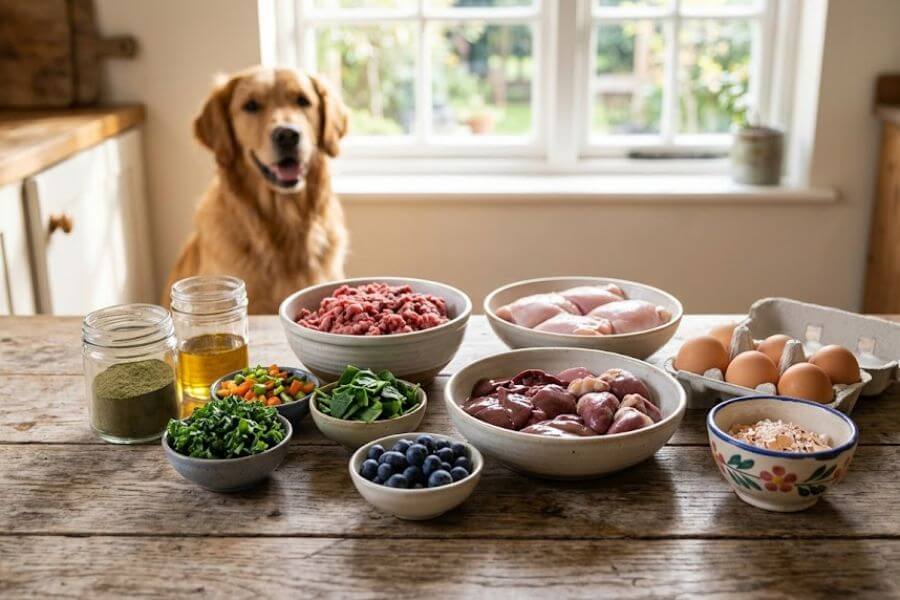
Feeding your furry friend a homemade diet is a wonderful way to show you care. Many pet parents are turning to raw food to provide fresh, whole-food nutrition that mimics what dogs might eat in the wild. However, nutrition is complex, and it is vital to get the balance of proteins, fats, vitamins, and minerals just right to keep your dog thriving. This guide provides you with a variety of balanced, vet-vetted approaches to raw feeding that prioritize your dog’s health and safety.
Quick Summary Table
| Recipe Type | Primary Protein | Best For | Key Additive |
| Beef & Kelp | Lean Beef | Adult Maintenance | Kelp Powder |
| Chicken & Egg | Chicken Thighs | Growing Dogs | Ground Eggshell |
| Turkey & Berry | Ground Turkey | Sensitive Stomachs | Blueberries |
| Fish & Flax | White Fish | Coat Health | Flaxseed Oil |
| Rabbit & Organ | Rabbit Meat | Allergy Prone | Liver/Kidney |
| Duck & Pumpkin | Duck Breast | Digestion | Pure Pumpkin |
| Lamb & Spinach | Ground Lamb | Active Dogs | Spinach |
| Venison & Kale | Lean Venison | Weight Control | Kale |
| Salmon & Hemp | Fresh Salmon | Joint Support | Hemp Seed Oil |
| Pork & Zucchini | Lean Pork | Picky Eaters | Zucchini |
How We Ranked These
We selected these recipes based on rigorous nutritional standards and safety practices common in modern veterinary circles. Here is how we evaluated them:
- Nutritional Completeness: Every recipe includes essential calcium, phosphorus, and trace minerals to prevent long-term deficiencies.
- Safety Standards: Recipes prioritize lean, high-quality proteins and emphasize proper handling to reduce risks like contamination.
- Vet-Aligned Ratios: Each entry follows a balanced percentage of muscle meat, organ meat, and healthy supplements recommended by veterinary nutritionists.
- Ingredient Diversity: We included a wide range of proteins and vegetables to ensure your dog receives a broad spectrum of amino acids and antioxidants.
- Ease of Preparation: While all raw diets require effort, these recipes provide clear instructions to help you maintain consistency.
1. Beef and Kelp Blend
This hearty recipe uses lean beef as the foundation for a nutrient-dense meal. By incorporating small amounts of beef heart and liver, you provide essential taurine and vitamin A. The addition of kelp powder is crucial here, as it supplies the iodine necessary for healthy thyroid function in your dog.
2. Chicken and Egg Power Mix
Using skinless chicken thighs alongside raw eggs creates a highly digestible protein base that is perfect for many dogs. To ensure skeletal health, you must include finely ground eggshells or a canine-specific calcium supplement in this mix. This recipe is a favorite because it is relatively easy to source and highly palatable.
3. Turkey and Berry Support
Ground turkey is a fantastic lean option for dogs that may be prone to weight gain. By blending in fresh blueberries, you add a boost of antioxidants that support the immune system. Just be sure to incorporate a balanced multivitamin supplement to ensure the recipe is complete for daily feeding.
4. Fish and Flax Coat Booster
Omega-3 fatty acids are the stars of this recipe, which utilizes white fish to promote a shiny coat and healthy skin. Adding cold-pressed flaxseed oil helps balance the omega fatty acids, providing the anti-inflammatory benefits your dog needs. This is an excellent choice for pets that need a little extra support for their skin health.
5. Rabbit and Organ Feast
For dogs with severe food allergies to common proteins like chicken or beef, rabbit is a perfect alternative. This recipe relies on a mix of rabbit muscle meat and vital organs like kidney and liver to ensure a natural source of vitamins. It is a clean, simple, and effective way to manage sensitivities.
6. Duck and Pumpkin Digestion
Duck is a rich, flavorful protein that most dogs find irresistible, while pumpkin adds high-quality fiber to support regular bowel movements. This recipe is particularly helpful for dogs that have sensitive stomachs and need a gentle, easy-to-digest meal. Always ensure the duck is boneless unless you have specific guidance on safe raw bone proportions.
7. Lamb and Spinach Energy
Lamb is a nutrient-rich red meat that provides plenty of iron and zinc for active dogs. Blending in fresh spinach gives your pet a dose of folate and vitamin K, which are important for overall vitality. This recipe is best suited for dogs that get plenty of daily exercise and need consistent energy levels.
8. Venison and Kale Weight Management
If your dog needs to shed a few pounds, lean venison is one of the best proteins you can choose. Kale is added for its high fiber content and density of essential vitamins, helping your dog feel full without excess calories. It is a sophisticated, healthy recipe that works well for long-term weight maintenance.
9. Salmon and Hemp Joint Support
Fresh salmon is packed with natural oils that support joint mobility and brain health. Adding hemp seed oil provides a unique balance of healthy fats that are rarely found in other ingredients. This is a top-tier choice for older dogs or breeds that may need extra support for their joints and bones.
10. Pork and Zucchini Simple Plate
Pork is an excellent protein source that is often overlooked in home cooking. When combined with mild, steamed, or finely grated zucchini, it creates a very palatable meal for even the pickiest eaters. This recipe is simple to prepare and provides all the basic macronutrients needed for a happy, healthy dog.
Conclusion
Feeding your dog a homemade raw diet is a significant commitment that requires precision and care. By choosing these vetted recipes, you are taking a great first step toward providing your dog with fresh, high-quality nutrition. Remember that the key to success is consistency and balance. Always monitor your dog for changes in coat condition, energy levels, and digestion when making a switch. Most importantly, keep an open dialogue with your veterinarian to ensure the recipes you choose meet your specific dog’s life stage and health needs.
Frequently Asked Questions
Is it safe to feed my dog raw bones in these recipes?
Feeding raw bones can provide dental benefits and calcium, but they must be introduced with extreme caution. Only feed raw, edible bones that are appropriate for your dog’s size, and never feed cooked bones, which can splinter and cause internal damage. Always consult your vet before adding bones to your dog’s diet.
How do I store homemade raw dog food safely?
Proper storage is vital to prevent bacterial growth. Keep raw food frozen in individual serving sizes and thaw only what you need for the next 24 hours in the refrigerator. Use stainless steel or glass containers, and thoroughly sanitize any surfaces or bowls that come into contact with the raw meat.
Can I change the protein source whenever I want?
It is generally better to stick to a consistent, balanced recipe to ensure your dog gets the same nutrient profile daily. If you want to rotate proteins, you must ensure each version of the recipe is nutritionally complete and balanced by a professional to avoid gaps in essential vitamins and minerals.
How can I tell if my dog is getting enough nutrients?
A well-balanced diet should result in a healthy, shiny coat, firm stools, and consistent energy levels. If you notice your dog becoming lethargic, losing weight unexpectedly, or having skin issues, these could be signs of a nutrient imbalance. Regular blood work and wellness exams with your vet are the best ways to monitor long-term health.
What should I do if my dog refuses the homemade food?
If your dog is picky, try warming the food slightly or mixing in a small amount of warm water or low-sodium bone broth. Some dogs may also prefer a different texture, so you might try varying how finely you grind or chop the ingredients. If the refusal persists, go back to your vet to rule out any underlying health issues.
Are there any specific fruits or vegetables I should avoid?
Yes, certain common produce items are toxic to dogs and must be strictly avoided. Never include grapes, raisins, onions, garlic, chives, or macadamia nuts in your recipes, as these can cause severe, life-threatening reactions in dogs. Always double-check any new ingredient before adding it to your meal prep.
Do I need to buy special supplements for these recipes?
In most cases, yes. While meat and vegetables provide great nutrition, they often lack specific ratios of calcium, iodine, and certain vitamins that are necessary for a complete diet. A veterinarian-approved, canine-specific mineral supplement is usually the safest way to ensure your dog is not missing key nutrients.
Can puppies eat these raw recipes?
Puppies have very specific and high requirements for calcium and phosphorus to support their rapid growth and bone development. A deficiency or excess of these minerals can cause permanent health damage in young dogs. Never feed a puppy a homemade recipe that has not been specifically formulated for their growth stage by a veterinary nutritionist.
How often should I take my dog to the vet on a homemade diet?
When you start a homemade diet, it is wise to schedule a check-up after a month to ensure your dog is transitioning well. After that, sticking to a routine of twice-yearly wellness exams is usually sufficient. Your vet may want to run occasional blood tests to confirm that your dog’s nutrient levels remain in a healthy range.
Will feeding raw food make my dog more aggressive?
There is no scientific evidence to suggest that feeding a raw diet causes aggression in dogs. While some owners notice their dogs seem more excited during mealtime, this is usually just a positive response to a high-quality, palatable meal. If you notice any behavioral changes, it is always worth discussing them with your veterinarian.