Quick Summary Table
| Red Flag | Major Risk | Why It Matters |
| No Official Health Testing | High medical bills | Hip dysplasia and heart defects are common in bad lines. |
| Missing Mother | Aggressive or sick parents | You cannot check the mother’s behavior or real health. |
| Selling Puppies Under Eight Weeks | Poor behavior control | Puppies miss vital social rules from their littermates. |
| Low Prices | Unsafe backyard breeders | Good care, food, and tests cost money. Cheap dogs are risky. |
| No Buyer Questions | Unsafe puppy homes | Bad breeders only care about cash, not the puppy’s safety. |
| Constant Puppy Availability | Overbred, tired mothers | Puppy mills produce non-stop litters for quick profit. |
| Missing Sales Contract | No legal protection | You have no help if your puppy gets sick later. |
| Strange Breed Colors | Genetic health issues | “Rare” colors like straw or blue-and-tan cause skin issues. |
| Dirty Facilities | Disease and virus risks | Bad smells and tight cages lead to weak, sick puppies. |
| No Post-Purchase Help | You are left alone | You need guidance to train a large, hundred-pound dog. |
How We Ranked These
We picked these warning signs based on how much they impact your dog’s future life. A Cane Corso is a large, powerful guardian dog. If you choose the wrong source, you risk bringing home a dog with severe body pain or dangerous behavior. We used the following key factors to build our list:
- Genetic Health Safety: We prioritize factors that save you from major vet bills and early heartbreak.
- Puppy Behavior Foundation: We look closely at how the early environment shapes a dog’s natural protective instincts.
- Breeder Truthfulness: We value clear paperwork, open tours, and honest talk over smooth sales speeches.
- Long-Term Care Focus: We reward breeders who stay in touch to help you guide your dog through adulthood.
1. The Breeder Does Not Show Proof of Official Genetic Health Testing
A real Cane Corso breeder checks the mother and father for severe body issues before they mate. This breed often suffers from hip dysplasia, which is a painful joint condition that makes walking difficult. They can also pass down bad elbows, heart problems, and a serious genetic eye condition called dental-skeletal-retinal-atrophy.
If a seller tells you that the parents “look healthy” or “the vet gave them a checkup,” that is not enough. You must ask for official papers from organizations like the Orthopedic Foundation for Animals or PennHIP. If they cannot show you these certificates, you must walk away. Without these tests, you might buy a puppy that faces serious pain and costly surgeries within its first two years of life.
2. You Are Not Allowed to Meet the Mother of the Litter
You must always ask to see the mother dog when you look at a puppy. The mother gives you a preview of your puppy’s future size, looks, and mind. More importantly, puppies inherit a lot of their behavior habits from their mother. If the mother is angry, hides in fear, or grows unstable when you walk near, her puppies will likely grow up to act the same way.
Some bad sellers will make excuses. They might say the mother is at a different house, or she is too protective to see guests. If a seller keeps the mother hidden, it usually means she is living in poor conditions, looks sick from overbreeding, or has an unsafe attitude. A good owner is proud to show you how calm and well-behaved their adult dogs are around company.
3. The Puppies Are Ready to Leave Before Eight Weeks of Age
It can be exciting to bring a small puppy home as soon as possible, but separation before eight weeks is a massive warning sign. The weeks between birth and two months old are a golden time for a puppy’s mind. During this period, the mother dog and the littermates teach each other crucial lessons about bite-inhibition, which means learning how to control the strength of their jaws.
When a puppy leaves its family too early, it misses these lessons. This can create a grown dog that bites too hard during play, gets scared easily, or acts aggressively toward other animals. Sellers who push puppies out the door at six or seven weeks are usually just trying to save money on dog food and puppy shots. They put their financial profit above the safety of your home.
4. The Price of the Puppy Is Unusually Cheap
A well-bred Cane Corso is an expensive investment. Good sellers spend thousands of dollars on high-quality food, vet visits, safe, clean housing, and official health screenings. If you find a listing where the price is much lower than the average market rate, you should worry immediately.
Cheap puppies usually come from backyard breeders who cut corners to save money. They skip the vital vet tests, feed cheap food, and ignore clean living setups. You might save a few hundred dollars on the purchase day, but you will likely spend thousands of dollars later on medicine, surgeries, and special trainers to fix the breeder’s mistakes.
5. The Seller Asks You Zero Questions About Your Lifestyle
A responsible breeder views their puppies like their own children. They want to make sure each dog goes to a loving, safe, and prepared home. Because the Cane Corso is a dominant guardian breed that grows to well over one-hundred pounds, these dogs require experienced owners who understand leadership.
If a seller is ready to hand over a powerful puppy without asking about your dog experience, your yard fence, or your family structure, they do not care about the dog’s future. They only care about getting your cash. A good breeder will ask you many detailed questions and might even turn you down if they feel your home is not a good fit for this specific type of working dog.
6. There Are Always Litters Available for Sale Year Round
Raising a healthy litter takes months of hard work, constant cleaning, and sleepless nights. High-quality breeders only plan one or two litters a year so they can give each puppy the best start in life. If a seller always has multiple litters ready to go every month, you are likely looking at a puppy mill.
Puppy mills treat female dogs like machines. They force them to have puppies back-to-back without letting their bodies rest and heal. This round-the-clock breeding leaves the mothers weak and produces thin, sickly puppies. If a website looks like an online supermarket with dozens of available puppies in every color, look somewhere else.
7. The Sale Lacks a Clear Written Contract and Health Guarantee
You should never buy a big guardian dog with a simple handshake or a basic cash receipt. A top-tier breeder will always provide a detailed written contract that protects you, the seller, and the puppy. This contract should clearly outline what happens if the dog develops a genetic illness later in life.
A bad seller will refuse to put their promises in writing. They might say a contract is unnecessary or make verbal promises they can easily break later. The contract should also state that if you can no longer care for the dog at any point in its life, the breeder will take the dog back. If there is no paperwork to sign, you have zero safety if things go wrong.
8. The Breeder Focuses heavily on Advertising “Rare” Colors
The official breed standard only allows specific colors like black, grey, fawn, and red. Some untrustworthy sellers try to breed unusual colors like straw, chocolate, or blue-and-tan so they can mark up the price for something “rare.”
Breeding for unusual colors is dangerous. It requires mixing in other dog breeds or inbreeding closely related dogs. This often leads to a weakened immune system and a painful condition called color-dilution alopecia, which causes a dog’s fur to fall out and creates skin sores. An ethical breeder focuses on strong hips and excellent temperaments rather than weird fur patterns.
9. The Puppies Live in Separate Dirty Outbuildings or Small Cages
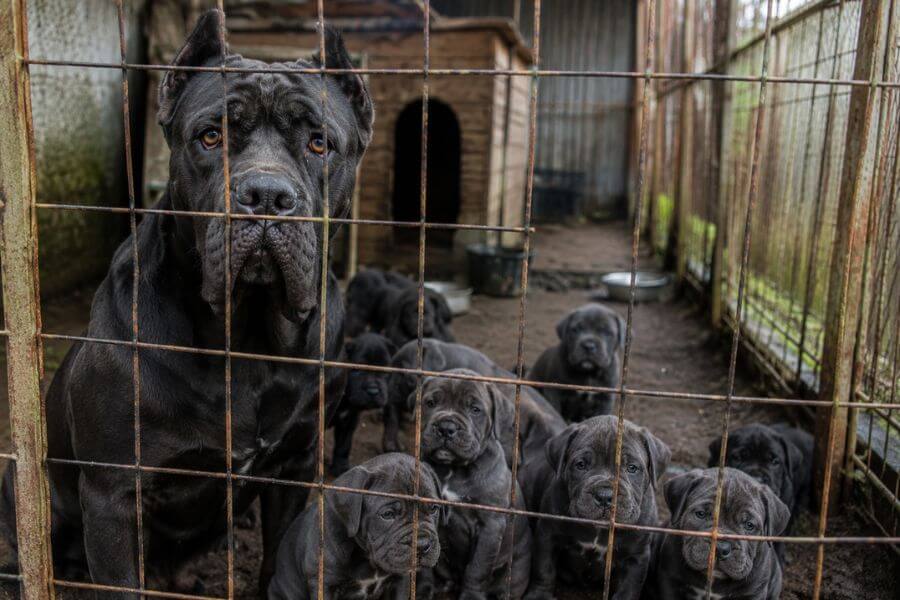
When you go to look at a puppy, look at the floors, the walls, and the air quality. Puppies need to live in a clean, warm home alongside humans. If the seller keeps the dogs in a dark backyard shed, a cold barn, or small wire cages outside, you should leave.
Dogs raised in dirty, isolated places do not get used to normal household sights and sounds. They will feel terrified of television noises, vacuum cleaners, and new footsteps when they move to your house. Furthermore, living in waste exposes young puppies to deadly viruses like parvo, which can kill a young dog in a matter of days.
10. The Seller Offers No Advice or Help After You Take the Puppy Home
Your relationship with a breeder should not end when you drive away with your puppy. As your young Cane Corso grows into a massive adult, you will face phases of stubborn behavior, diet changes, and training questions. A good breeder acts as a lifelong mentor for you and your dog.
If a seller blocks your phone number, answers your questions with short texts, or tells you to just look things up online, they are a red-flag source. You want a guide who stays excited to see progress pictures and stands ready to answer your call if your dog faces an emergency in the middle of the night.
Frequently Asked Questions
Can a Cane Corso puppy be registered with an official kennel club if the breeder is bad?
Yes, a dog can have registration papers even if it comes from a poor environment. Registration simply means that the puppy’s parents were registered dogs of the same breed. It does not track how clean the cages were, how well the puppies were fed, or whether the parents have genetic joint diseases. You must check health records and facility conditions yourself instead of just trusting a piece of paper.
What should I do if I find out my breeder is bad after I pay my money deposit?
If you discover serious warning signs after sending a deposit, it is usually safest to walk away and leave the money behind. Bringing a poorly bred, aggressive, or severely sick hundred-pound dog into your home can cause years of emotional pain and massive financial debt. Losing a small deposit is far better than dealing with an unmanageable dog crisis for the next decade.
Is it a bad sign if a breeder uses a father dog that lives in a different state?
No, this is actually a positive sign of a good breeding plan. Responsible owners look across the country to find the perfect match for their female dog to ensure healthy genes and strong bodies. If a breeder owns both the mother and the father and uses them for every single litter because it is fast and cheap, that is often a sign of laziness.
How can I verify that the genetic health certificates shown to me are real?
You can easily verify health papers by taking the official registration names or numbers listed on the certificates and typing them into the public online database of the Orthopedic Foundation for Animals. If the certificates are real, the dog’s test results for hips, elbows, and eyes will display openly on the screen for anyone to view. If the names do not show up in the database, the papers might be fake.
Why do some bad breeders require buyers to use a specific brand of dog food?
Some low-quality sellers include a rule in their contract that cancels your health guarantee if you do not buy a specific dog food or supplement using their special tracking code. They do this because they earn a monthly financial commission from that pet food company. It is a way for them to make extra money off you long after you take your puppy home.