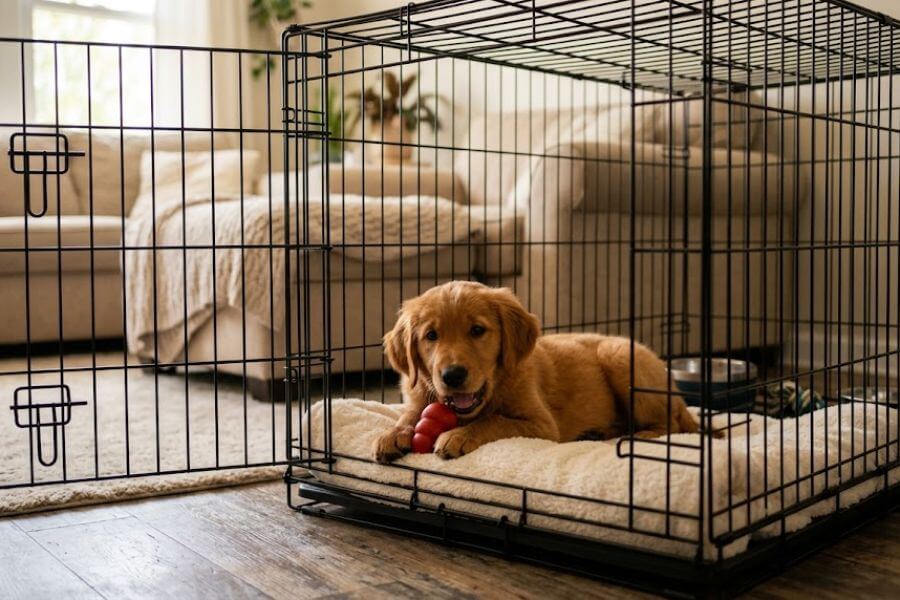
Bringing a new Golden Retriever puppy into your home is an exciting milestone, and crate training is one of the most effective tools for keeping your home clean and your puppy safe. Goldens are known for their sweet nature and intelligence, yet they are also sensitive and social creatures that thrive on companionship. When crate training is done incorrectly, it can turn a safe haven into a source of anxiety. By avoiding these common pitfalls, you will help your furry friend view their crate as a comfortable, happy space where they feel secure.
Quick Summary of Crate Training Mistakes
| Mistake Number | Mistake Name | Why It Matters |
| 1 | Using the Crate for Punishment | It creates a negative association with their safe space. |
| 2 | Rushing the Process | It leads to unnecessary stress and fear in your puppy. |
| 3 | Leaving Them Inside for Too Long | It causes physical discomfort and potential behavioral issues. |
| 4 | Ignoring the Need for Comfort | An uncomfortable crate makes them want to avoid it. |
| 5 | Giving In to Whining | It teaches the puppy that noise gets them out of the crate. |
| 6 | Failing to Create a Routine | Inconsistency makes it hard for the puppy to learn expectations. |
How We Ranked These
We determined the importance of these mistakes based on their long-term impact on your dog’s mental well-being and the success of the training process. Here are the key factors we considered:
- Impact on the emotional bond between the owner and the dog.
- The severity of anxiety triggered by negative crate associations.
- The frequency with which these mistakes disrupt the house-training process.
- The difficulty level of correcting the behavior once the mistake is ingrained.
1. Using the Crate for Punishment
One of the most damaging mistakes you can make is sending your Golden Retriever to their crate when they have misbehaved. The crate should always be a place of positive reinforcement, rest, and safety. If you use it as a timeout zone, your dog will begin to associate being locked away with your anger or their own mistakes. This can lead to crate aversion, where the dog becomes afraid or reluctant to enter the space voluntarily. Always keep the crate experience separate from discipline so your dog feels confident and calm whenever they go inside.
2. Rushing the Process
Golden Retrievers are eager to please, but they still need time to adjust to new environments. Many owners make the mistake of locking the door and leaving the room for hours on the very first day. If you move too fast, your puppy may become overwhelmed, which often results in frantic barking or scratching at the door. Start by letting them explore the crate with the door open and offer treats when they step inside voluntarily. Gradually increase the time they spend in the crate while you are nearby before eventually moving to short periods where you are out of sight.
3. Leaving Them Inside for Too Long
It is easy to forget that puppies have very limited bladder control and a high need for social interaction. If you leave your Golden in their crate for longer than they can physically manage, they will eventually have an accident inside. Once a dog soils their sleeping area, they lose the natural instinct to keep it clean, which makes future house-training much more difficult. Furthermore, Goldens are pack animals that crave human presence. Keeping them crated for excessive hours can lead to pent-up energy, vocalization, and emotional distress. Always match your expectations to your dog’s current age and physical capabilities.
4. Ignoring the Need for Comfort
If the crate feels like a cold, hard cage, your Golden Retriever will likely avoid it. You can make the space much more inviting by adding a soft bed or a cozy blanket that smells like home. Consider the temperature of the room, as Goldens can overheat easily due to their thick coats. Providing a safe chew toy or a puzzle toy stuffed with treats can also help your dog associate the crate with enjoyable activities. When the environment is comfortable and mentally stimulating, your puppy will be much more likely to seek out the crate for a nap on their own accord.
5. Giving In to Whining
When your puppy starts to whine or cry in the crate, your natural instinct will be to let them out to soothe them. However, if you open the door immediately when they make noise, you are accidentally teaching them that whining is the key to getting out. This can lead to a cycle where the puppy whines louder and longer each time. Instead, wait for a brief moment of silence before opening the door. By rewarding the calm behavior rather than the noise, you teach your dog that staying quiet is the most effective way to gain your attention.
6. Failing to Create a Routine
Consistency is the secret ingredient to successful training. Golden Retrievers thrive when they know exactly what to expect from their day. If you put your dog in the crate at random times without a clear schedule, they will become confused about their daily routine. Establish specific times for feeding, exercise, and crate time so your dog learns to anticipate when they will be inside. When your dog knows that they will get plenty of play and attention shortly after their scheduled rest, they will be much more willing to settle down without a fuss.
Conclusion
Crate training is a journey that requires patience, consistency, and a lot of positive reinforcement. By avoiding these six common mistakes, you provide your Golden Retriever with the best chance to grow into a calm, well-adjusted adult dog. Remember that the goal is to make the crate their favorite spot in the house, a place where they feel safe and secure. Stay calm, keep your sessions short and positive, and enjoy the process of building a stronger bond with your companion.
Frequently Asked Questions
What is the ideal size for a Golden Retriever crate?
You want a crate that is large enough for your dog to stand up, turn around, and lie down comfortably. If the crate is too big, your puppy might use one corner as a bathroom and sleep in the other. Many owners choose a crate with a divider panel so you can expand the available space as your puppy grows.
How can I help my Golden Retriever sleep through the night in their crate?
Ensure your puppy gets plenty of physical and mental exercise during the evening. A tired puppy is usually a quiet sleeper. Many owners also find that placing the crate in the bedroom during the first few weeks helps the puppy feel more secure since they can hear and smell you nearby.
Should I cover the crate with a blanket?
Covering the crate can help create a den-like atmosphere that many dogs find soothing, especially if the room is busy or bright. Just ensure that the cover allows for plenty of airflow and that your puppy does not pull the blanket inside the crate to chew on it.
What should I do if my Golden Retriever has an accident in the crate?
If an accident happens, clean the area thoroughly with an enzymatic cleaner to remove all traces of the scent. Do not scold your puppy, as they likely could not hold it any longer. Instead, evaluate your schedule and ensure you are taking the dog out more frequently, especially after eating or playing.
Is it ever too late to start crate training an older Golden Retriever?
It is rarely too late to introduce a crate, even for an adult dog. The process might take a bit longer since they have established habits, but using high-value treats and keeping the experience positive will eventually help most older dogs see the crate as a safe place to relax.