Just like our hands and feet get dry and chapped in harsh weather, your furry friend can also suffer from rough, cracked paws. Dog paw pads are tough, but winter cold, summer pavement, and rough terrain can take a toll, leaving them itchy, uncomfortable, or even painful. Since dogs use their paws for everything, keeping them healthy is essential for their happiness. Fortunately, you do not always need a trip to the vet to find relief. You can easily soothe and heal your pup’s paws right from the comfort of your home using simple, safe, and effective methods.
Quick Summary Table
| Remedy or Method | Best For | Difficulty Level |
| Dog-Safe Paw Balm | Everyday moisturizing and healing | Very Easy |
| Coconut Oil | Quick hydration and natural antibacterial care | Very Easy |
| Olive Oil | Deep conditioning for extra rough skin | Easy |
| Shea Butter | Soothing intense dryness and irritation | Easy |
| Epsom Salt Soaks | Cleaning wounds and reducing swelling | Medium |
| Vitamin E Oil | Targeted healing for deep cracks | Easy |
| Oatmeal Baths | Calming itchy and irritated paws | Medium |
| Protective Booties | Preventing future damage and trapping moisture | Easy |
How We Ranked These
To help you choose the absolute best remedy for your dog, we evaluated dozens of home care methods based on real world safety and effectiveness. We know that convenience and safety are your top priorities when it comes to your pet. Here are the key factors we used to rank these treatments:
- Pet Safety: Every item must be one hundred percent non-toxic since dogs love to lick their paws.
- Healing Power: We prioritized ingredients that actively repair skin rather than just sitting on top of it.
- Ease of Application: We picked methods that are simple to use, even if your dog is wiggly or impatient.
- Accessibility: You can find almost all of these items in your local grocery store or online.
1. Apply a Specialized Dog Paw Balm
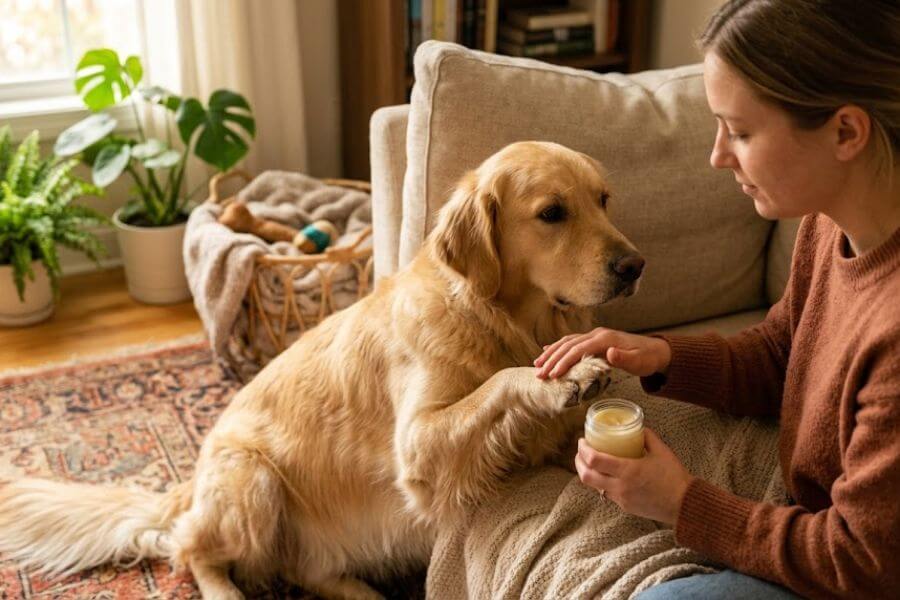
Using a commercial paw balm specially formulated for dogs is the absolute best way to heal dry pads because these products blend multiple healing ingredients into one easy application. These balms typically contain a safe mix of natural waxes and oils that absorb quickly while leaving a protective barrier against hot pavement or icy sidewalks. To apply it, simply distract your dog with a treat, gently rub a small amount onto each pad, and massaged it in until it absorbs. Since these are manufactured specifically for canines, you do not have to worry if your dog sneaks a quick lick after you put it on.
2. Rub on Natural Coconut Oil
Coconut oil is a household favorite for dry skin, and it works wonders on your dog’s paws thanks to its deep moisturizing properties and natural ability to fight off bacteria and fungi. It is incredibly affordable, highly effective, and completely safe for your dog to eat in small amounts. All you need to do is scoop a small spoonful of organic coconut oil, let it melt slightly between your warm hands, and gently massage it onto the cracked areas. Because most dogs love the taste of coconut oil, you will want to keep them distracted with a favorite toy or a durable chew for a few minutes so the oil has time to soak into the skin.
3. Massage with Pure Olive Oil
If you do not have coconut oil in your pantry, pure olive oil is an excellent alternative that delivers fantastic hydrating results for stubborn skin dryness. Olive oil penetratres the skin deeply to provide long lasting moisture, and it also contains beneficial antioxidants that help repair damaged tissue. You can apply a few drops directly to your dog’s paws once a day, making sure to rub it in thoroughly so your dog does not track oily footprints across your clean carpets or hardwood floors. It is a highly accessible option that works perfectly as a daily conditioner until the roughness disappears entirely.
4. Use Unrefined Shea Butter
Unrefined shea butter is an exceptional natural moisturizer that is entirely safe for pets and highly effective at softening thick, calloused paw pads. It is packed with rich vitamins that soothe skin irritation, reduce redness, and promote fast cellular healing without causing any harm if swallowed. Grab a dime-sized amount of pure shea butter, rub it between your fingers to soften the texture, and smooth it over the cracked surfaces of the paws. This remedy is particularly great for dogs that suffer from seasonal allergies, as it calms the intense itchiness that often leads to excessive paw chewing.
5. Prepare an Epsom Salt Soak
When your dog’s paws are so dry that they begin to swell or develop tiny sores, an Epsom salt soak can provide instant relief by reducing inflammation and drawing out impurities. Dissolve a half cup of Epsom salt in a basin of warm water and let your dog stand in the mixture for about ten minutes to allow the healing properties to work. This method is perfect for soothing aching joints and cleaning out microscopic dirt from deep paw cracks, but you must monitor your pup closely to ensure they do not drink the saltwater. Once the soak is finished, pat the paws completely dry with a soft towel and apply a moisturizer to lock in the hydration.
6. Squeeze Out Vitamin E Oil
Vitamin E is a power-packed nutrient that acts as a natural skin healer, making it the perfect targeted treatment for deep, painful cracks that need extra attention. You can buy standard vitamin E capsules from any pharmacy, pierce a capsule with a clean pin, and squeeze the concentrated liquid directly onto the worst parts of your dog’s paw pads. Massage the thick oil gently into the cracks to stimulate blood flow and speed up the natural regeneration of healthy skin cells. Because the oil is quite sticky, it stays in place well, providing a concentrated burst of healing power exactly where your canine companion needs it most.
7. Try a Soothing Oatmeal Bath
Oatmeal has been used for centuries to relieve irritated skin, and an oatmeal paw bath is a fantastic, comforting option if your dog’s dry paws are accompanied by constant itching and scratching. Grind plain, unflavored oatmeal into a fine powder, mix it into a shallow tub of warm water until the water looks milky, and let your dog’s paws soak for five to ten minutes. The natural compounds in oatmeal form a protective coating on the skin that locks in moisture and stops the urge to scratch or bite. This treatment is incredibly gentle, making it ideal for dogs with highly sensitive skin or environmental allergies.
8. Outfit Your Dog in Protective Booties
While moisturizing treatments work to heal existing damage from the inside out, using protective dog booties is the best way to prevent future cracking caused by the elements. Booties act as a physical shield against extreme weather conditions, such as freezing ice, winter salt, and scorching hot summer asphalt, which are the primary causes of dry paws. Slipping a pair of lightweight, breathable boots onto your dog before you go for walks will keep their paws clean, dry, and safe from harm. Additionally, putting boots on your dog right after applying a cream or oil will prevent them from licking the remedy off, allowing it to work much faster.
Conclusion
Caring for your dog’s dry, cracked paw pads at home is a simple yet impactful way to ensure your pet stays comfortable, active, and happy. By using safe, everyday household items like coconut oil, oatmeal, or specialized canine balms, you can easily restore moisture and heal painful cracks before they turn into major problems. Remember that consistency is key when treating skin conditions, so try to make paw moisturizing a regular part of your pet care routine. With just a little bit of time and love, your furry best friend will be back to running, playing, and walking by your side without any discomfort.
Frequently Asked Questions
Can I use human lotion or Vaseline on my dog’s dry paws?
You should avoid using human lotions, moisturizers, or standard Vaseline on your dog’s paw pads because these products often contain chemicals, artificial fragrances, and artificial preservatives that can be toxic if your dog licks them off. Additionally, human moisturizers are designed to soften skin significantly, which can actually make a dog’s paw pads too soft and fragile, leaving them more vulnerable to cuts and tears on rough terrain. Always stick to products that are explicitly labeled as safe for dogs or use pure, single-ingredient natural oils.
How often should I apply a paw treatment to see results?
For dogs with mildly dry or rough paws, applying a moisturizer two to three times a week is usually enough to maintain good skin health and prevent cracking. If your dog already has severe, deep cracks, you should apply a safe remedy like coconut oil or a specialized paw balm two times a day until the skin heals completely. It is always best to apply these treatments right before bed or right before a walk so your dog is either sleeping or too distracted to lick the product off immediately.
Why do my dog’s paws get so dry in the winter time?
Winter weather is incredibly tough on a dog’s paws due to the combination of freezing outdoor temperatures, dry indoor heating, and exposure to harsh de-icing chemicals or rock salt on sidewalks. The cold air draws natural moisture out of the skin, while walking on salted roads can cause chemical burns and severe dehydration in the paw pads. Taking extra care during the winter by applying a protective balm before walks and washing your dog’s paws afterward will help prevent seasonal cracking.
How can I tell if my dog’s dry paws are infected?
While mild dryness and slight cracking can be managed easily at home, you should watch out for signs of a bacterial or yeast infection, which requires professional medical treatment. If you notice swelling, oozing discharge, bleeding, an unusually foul odor, or if your dog is constantly limping and crying when pressure is applied to the foot, the paws may be infected. If you observe any of these severe symptoms, stop home treatments immediately and schedule a visit with your veterinarian.
Does a dog’s diet affect the moisture level of their paw pads?
Yes, your dog’s nutrition plays a massive role in the overall health and elasticity of their skin and paw pads. A diet that is lacking in essential fatty acids, particularly omega-3 and omega-6 oils, can lead to chronic dry skin, dull fur, and brittle, easily cracked paws. If you notice that your dog struggles with dry paws year-round despite using topical treatments, you may want to talk to your vet about adding a high-quality fish oil supplement to their daily meals to hydrate their skin from the inside out.