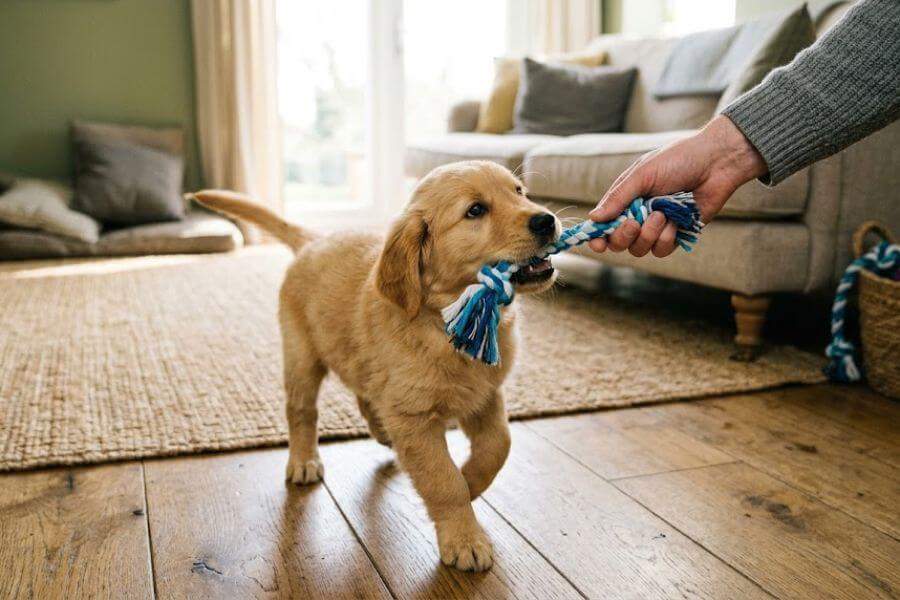
Bringing a new puppy home is an exciting adventure, but the constant nipping and biting can quickly turn that joy into frustration. It is completely normal behavior for puppies to explore the world with their mouths, but that doesn’t mean you have to endure the pain. If you are tired of your pup treating your fingers and toes like chew toys, you are in the right place. In this guide, we will walk you through the most effective and gentle techniques to help your puppy learn that skin is not for chewing, helping you build a calm and happy relationship with your new best friend.
Quick Summary of Methods
| Method | Best For | Focus |
| Redirection | Immediate distraction | Offering a toy |
| The “Ouch” Method | Teaching bite inhibition | Vocal feedback |
| Ignoring | Stopping attention-seeking | Removing attention |
| Time-Outs | Calming overstimulated pups | Short separation |
| Exercise | Reducing excess energy | Physical health |
| Mental Stimulation | Preventing boredom | Training/puzzles |
| Positive Reinforcement | Encouraging good behavior | Treats and praise |
| Consistency | Long-term success | Habit building |
How We Ranked These
We ranked these methods based on their effectiveness, ease of implementation, and the importance of humane, positive reinforcement. Our key factors included:
- Speed of Results: How quickly the puppy learns to stop the behavior.
- Safety: Ensuring no harm comes to the puppy or the owner.
- Ease of Use: Techniques that a beginner owner can perform without professional equipment.
- Behavioral Science: Methods backed by modern, positive-based training principles.
1. Redirection With a Toy
Whenever you see your puppy moving toward your hands or feet with their mouth open, immediately offer them a toy instead. The goal is to make the toy the most exciting thing in the room, creating a habit where they reach for a chew toy rather than your skin. By consistently swapping your hand for a rope or rubber chew, you teach them what is appropriate to bite and what is off-limits.
2. The “Ouch” Method
Puppies learn bite inhibition from their littermates; when a puppy bites too hard, the other puppy yelps to signal that the play was too rough. You can mimic this by making a sharp, high-pitched “Ouch!” the moment your puppy’s teeth touch your skin, then going limp or withdrawing your hand. This surprising sound often stops them in their tracks, teaching them that biting causes the fun to stop.
3. The Power of Ignoring
Sometimes puppies bite because they want your attention, even if that attention is you yelling “no.” If your puppy starts nipping, stand up, cross your arms, and turn your back to them, removing all interaction. When they see that biting makes you uninteresting and causes you to leave, they will quickly realize that their teeth are not a useful tool for getting you to play with them.
4. Calm Time-Outs
If your puppy becomes a “land shark” and won’t stop, they are likely overstimulated and need a reset. Gently place them in a safe, boring space—like a playpen or crate—for 30 to 60 seconds. This isn’t a punishment, but a chance for them to calm down so they can return to playing more gently once they are back to a rational state of mind.
5. Increase Daily Exercise
A tired puppy is a good puppy, and often, biting is a direct result of pent-up physical energy. Ensure your puppy is getting age-appropriate exercise through short walks, structured playtime, or controlled fetch in a safe area. When their physical needs are met, they are much less likely to feel the need to release energy through frantic, nipping behavior.
6. Add Mental Stimulation
If your puppy is bored, they will find their own fun, which often involves chewing on your ankles. Keep their brain busy with puzzle toys, food-dispensing balls, or basic training sessions like “sit” and “stay.” A puppy that is thinking is a puppy that isn’t focused on your toes, as mental exhaustion is just as effective as physical exhaustion.
7. Use Positive Reinforcement
Catch your puppy being good and reward them heavily for it. When they are playing calmly or interacting with you without using their teeth, give them a small treat or calm, happy praise. By highlighting the moments they choose not to bite, you encourage them to keep making those great choices, solidifying the idea that calm behavior leads to rewards.
8. Maintain Absolute Consistency
Consistency is the most important factor in any training journey. Everyone in your household must follow the same rules; if one person allows biting while another forbids it, your puppy will become confused and continue the behavior. Ensure everyone is on the same page regarding when to redirect, when to say “ouch,” and when to use time-outs so the puppy receives the same message every time.
Conclusion
Stopping your puppy from biting is a process that requires patience, consistency, and a lot of understanding. Remember that this phase is temporary, and your puppy is simply learning how to navigate the world. By using these gentle, redirection-based methods, you are laying a strong foundation for a well-behaved dog. Stay calm, keep practicing, and enjoy the process of growing alongside your puppy.
Frequently Asked Questions
Why does my puppy bite harder when I tell them “no”?
Many puppies interpret a loud “no” or shouting as excited play or a challenge. When you raise your voice, it can unintentionally ramp up their energy levels, making them feel like the game has just become more intense. It is usually more effective to use a neutral tone or a soft, sharp sound to startle them rather than getting loud.
Is it normal for my puppy to growl while biting?
Yes, in most cases, growling is just another form of play vocalization. Puppies often make growling sounds while playing tug-of-war or wrestling with toys. However, you should monitor their body language; if their body is rigid, their tail is tucked, or they seem truly aggressive rather than playful, it is best to consult a professional trainer.
Should I tap my puppy on the nose when they bite?
You should avoid tapping, hitting, or pinching your puppy’s nose. Physical punishment can cause your puppy to become fearful of your hands or lead to defensive aggression later on. It is much more effective to focus on positive redirection and removing attention, which teaches them what to do rather than just what not to do.
When will my puppy finally grow out of the biting stage?
Most puppies begin to significantly decrease their biting behavior once their permanent teeth have finished coming in, usually around 6 to 7 months of age. While they may still have the urge to chew, the frantic puppy nipping usually subsides as they mature and gain more self-control.
Can teething toys really help stop the biting?
Absolutely, especially if your puppy is currently teething. During this time, their gums are likely sore, and they have an intense biological need to chew to relieve the pressure. Providing a variety of textures—like frozen washcloths or rubber toys—gives them an appropriate outlet for that discomfort so they don’t feel the need to use your hands as a substitute.