Welcoming a French Bulldog puppy into your home is one of the most exciting experiences you can have. These little dogs are full of personality, love, and charm. However, you might already know that they come with their own unique set of challenges. One of the biggest hurdles for any new dog owner is potty training. Because French Bulldogs have small bladders and can be a little bit stubborn, it is important to have a solid plan right from the start. By following this guide in 2026, you can help your puppy become a house-trained companion.
Getting a new pet means taking on a lot of responsibility. It is not just about playing and cuddling. It is also about teaching your puppy how to live nicely in your house. Potty training is the very first big lesson you will teach them. If you do it correctly, it will make your bond much stronger. You will learn to understand each other better, and your home will stay clean and fresh. Let us look at what makes your puppy tick before we jump into the actual steps.
Understanding Your French Bulldog
Before you start training, it helps to understand why your puppy acts the way they do. French Bulldogs are intelligent, but they are also independent thinkers. This means they might not always want to do exactly what you want them to do the first time you ask. They like to have fun, and sometimes they think your rules are just a game.
Their physical build also plays a massive part in this process. They are small dogs with short bodies, which means their bladders are tiny compared to larger breeds. You should expect to take your puppy out much more often than you would a Golden Retriever or a German Shepherd. A tiny bladder fills up very quickly, especially after they drink water or play hard. Knowing this ahead of time will help you stay patient when things do not go perfectly on the first day. Your puppy is not trying to be bad when they have an accident. They simply cannot hold it in for very long.
Gathering Your Supplies
To be successful, you need to have the right tools ready before your puppy even comes home. Having everything in place prevents stress and helps you react quickly when your puppy needs to go. Here is a short list of items you will want to buy.
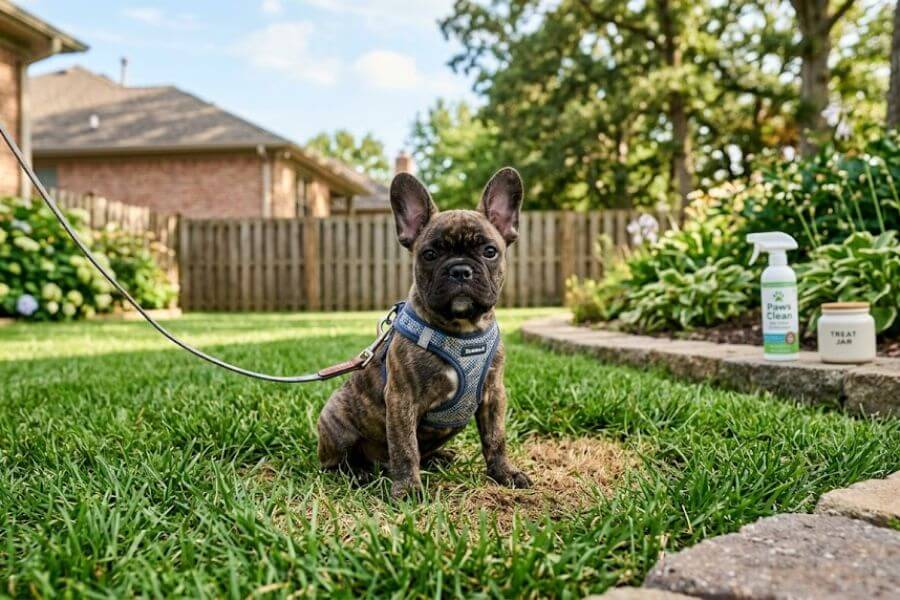
First, you need a high-quality crate. We will talk more about how to use it later, but make sure it is adjustable so it can grow with your puppy. Second, you need a lot of small, soft training treats. These should be different from their normal food so that they feel extra special. Third, you must get an enzymatic cleaner. This is a special type of spray that breaks down the scent of pet waste completely. Regular soap will not work because dogs have an amazing sense of smell. If they smell a past mistake, they will think it is a permanent bathroom spot. Finally, buy a sturdy collar and a lightweight leash. You should always use a leash when training so you can keep your puppy focused on the task.
Step One: Setting Up Your Daily Routine
Routine is the most important part of successful house-training. Frenchies are creatures of habit. If you do the same thing at the exact same time every day, your puppy will start to feel comfortable and know what to expect. You should create a strict schedule that revolves around your puppy’s natural daily needs.
First thing in the morning, take your puppy outside immediately. Do not wait to make breakfast or check your phone. Go straight to the door. After they eat a meal, wait about fifteen to twenty minutes and then head back outside. Puppies also need to go after they wake up from a heavy nap, right after a vigorous playtime session, and right before they go to sleep at night. If you follow this exact pattern, you will catch most of their bathroom breaks before an accident can even happen inside. Write your schedule down on a piece of paper and stick it to the refrigerator so everyone in the house can see it.
Step Two: Choosing a Designated Spot
It sounds very simple, but you should pick one specific spot in your yard for your puppy to use the bathroom. If you live in a high-rise apartment and do not have a yard, you can pick a specific spot on a balcony or a corner of your home where you place a puppy pad. The reason this matters is that the leftover scent of their own waste helps them remember what they are supposed to do.
Every single time you go outside, walk your puppy on their leash directly to that exact same spot. Do not let them run around and play until they have done their business. Stand still in that spot and give them a few minutes to sniff around. Eventually, their nose will tell them that this is the designated place to go. This builds a powerful connection in their growing mind between the physical location and the action of going potty.
Step Three: Using a Training Cue
While you are standing in your designated spot, you should use a specific training word or phrase. This is called a cue. Many people like to say things like “go potty” or “do your business” or “hurry up” in a calm voice. Choose whatever phrase feels natural to you, but make sure it is short and easy to remember.
Say the phrase quietly while your puppy is sniffing around. You want them to connect the sound of your voice with the feeling of relieving themselves. Do not repeat the word fifty times in a row like a machine, or your puppy will just tune you out. Just say it once or twice when you first walk out. When they actually start going, stop talking so you do not distract them from finishing. Over time, simply hearing this word will signal to your puppy that it is time to go to the bathroom.
Step Four: The Power of Positive Reinforcement
You should never yell at, scold, or punish your Frenchie for having an accident inside the house. It will only make them scared of you and confused about what you actually want. They will not understand why you are angry, and they might just start hiding behind the couch to go to the bathroom where you cannot see them. Instead, you should use positive reinforcement. This is the biggest secret to training any puppy successfully.
When your puppy goes to the bathroom outside in their spot, give them a reward right away. The reward must happen within three seconds of them finishing. Use an enthusiastic voice, hand them a tasty treat, or give them a big belly rub. Make it a massive celebration every single time they get it right. They will quickly learn that going potty outside makes you incredibly happy and earns them a delicious snack.
Step Five: Using a Crate for Success
Crate training is a wonderful tool for potty training when used correctly. Dogs have a natural instinct to keep their sleeping area clean. If you use a crate that is the perfect size, your puppy will try very hard to hold their bladder until you let them out. The crate should only be big enough for them to stand up, turn around, and lie down comfortably. If it is too big, they might use one far corner as a bathroom and sleep peacefully in the other corner.
When you cannot look directly at your puppy because you are cooking dinner or doing schoolwork, putting them in their crate for a short time helps prevent unexpected accidents. Always remember that a crate is not a place for punishment. It should be a cozy bedroom filled with safe toys. Most importantly, always take them directly to their potty spot the very second you let them out of the crate.
Step Six: Watching for the Warning Signs
If you keep a close eye on your puppy when they are loose in the house, they will often tell you when they need to go. You just have to learn how to read their body language. Puppies do not usually go potty without giving some clues first.
Some common warning signs include sniffing the floor intensely, walking in tight circles, whining at nothing, or suddenly running away into a different room. You might also notice them stopping whatever they were doing to focus completely on the floor. If you see your Frenchie doing any of these things, do not hesitate for even a second. Gently scoop them up and carry them outside right away. If you catch them in the middle of having an accident, you can make a sudden noise like clapping your hands to surprise them, but never be mean. Just pick them up calmly and move them to their outdoor spot so they can finish there.
Step Seven: Managing Food and Water
What goes into your puppy must come out, and it usually happens on a predictable timeline. Managing when your puppy eats and drinks is a clever way to control when they need to go to the bathroom. You should feed your Frenchie at the exact same times every day. If their meals are consistent, their bowel movements will become consistent too.
Avoid leaving a bowl of food out all day long for them to snack on. This is called free feeding, and it makes potty training much harder because you cannot predict when they will need to go. When it comes to water, make sure they have plenty of fresh water during the daytime. However, you should lift the water bowl up about two hours before bedtime. This gives their body enough time to empty out before everyone goes to sleep, which means fewer wake-up calls in the middle of the night.
Step Eight: Handling Accidents Properly
Accidents are going to happen. It is a completely normal part of raising a young puppy, so you must not get discouraged or sad. When an accident happens on your carpet or hardwood floor, clean it up as soon as humanly possible.
Grab your enzymatic cleaner and soak the area thoroughly. Follow the directions on the bottle to make sure it destroys the odor completely. Do not use ammonia-based cleaners because ammonia smells similar to urine to a dog. If you do not clean it well, your puppy will return to that exact same spot the next time their bladder is full. While you are cleaning up the mess, keep your puppy in another room so they do not try to play with the paper towels or the cleaning spray. Just wipe it up, let it dry, and promise yourself to watch them a little bit closer next time.
Step Nine: Staying Consistent Every Day
Consistency is the glue that holds all of these training steps together. You must make sure that everyone who lives in your house follows the exact same rules. If you tell your puppy to “go potty” but your brother says “hurry up” and your mom says “do your business,” it will confuse your puppy’s brain.
Keep the training phrases, the treats, and the schedule completely identical. You also need to stay consistent with your own emotions. If you feel yourself getting frustrated or tired, take a deep breath. Your puppy is very sensitive and can feel your mood easily. If you are stressed out, they will get stressed out too, and a stressed puppy cannot learn new things. Stay calm, keep moving forward, and trust that your hard work is paying off even if you cannot see it immediately.
Step Ten: Handling the Nighttime Routine
Young puppies have tiny bodies, so it is normal to have to get up in the middle of the night for the first few weeks. You should set an alarm to check on them, or listen for them whining gently in their crate. When you have to take your puppy out in the dark, keep the entire trip quiet, dark, and incredibly boring.
Do not turn on bright lights, do not play with them, and do not talk in a high-pitched, excited voice. Keep them on their leash, walk them to their spot, use your cue word, and give them a treat quietly when they finish. Then, carry them right back inside and put them straight back into their crate. You want your puppy to learn that nighttime is strictly for sleeping and going bathroom, not for playing with toys or getting extra attention from you. As your puppy grows older, their muscles will get stronger, and they will naturally start sleeping through the entire night without needing a break.
Overcoming Common Weather Roadblocks
Sometimes, French Bulldogs develop a strong fear of going outside if the weather is bad. Because they have very short fur and flat faces, they can get cold or wet very quickly. If it is raining, snowing, or very windy, your puppy might sit by the door and refuse to move.
To overcome this roadblock, you need to make the outdoor area feel safer. You can buy a small pop-up tent to put over their potty spot to keep the rain off them, or you can clear away a patch of snow so they can feel the grass underneath their paws. You can also practice putting a small puppy jacket on them so they stay warm. If it is raining hard, carry an umbrella over both of you. Show them that you are there to protect them. The more comfortable they feel in the elements, the less likely they are to hold it in or have an accident on your living-room rug.
Understanding the Training Timeline
You should not expect absolute perfection in the first few weeks of training. House-training a puppy is a long-term project that takes months of effort. For the first two months, your primary goal is simply preventing accidents from happening by taking them out constantly.
Around the third month of training, you will notice that your puppy starts to understand the system much better. They might start walking toward the door on their own when they need to go. Most French Bulldogs reach a point where they are completely reliable by the time they are six to nine months old. Even after they are trained, you might see a small setback if you move to a new house, change your work schedule, or introduce a new pet. If a setback happens, do not worry. Just go right back to the basics for a week, and your puppy will remember what to do.
Making Training a Fun Experience
Training does not have to feel like a boring chore or a test. You can turn it into a fun game that both you and your puppy look forward to every day. Use an energetic, happy voice when you tell them it is time to go outside. Bring out their absolute favorite toy to play with for two minutes after they successfully use the bathroom.
When they do a wonderful job, let them see how proud you are of them. French Bulldogs love attention and want to make their owners happy. If they see that going potty outside results in praise, love, and yummy food, they will work extra hard to repeat that behavior. Keep your training sessions light, keep things positive, and you will see amazing results before you know it.
Tracking Your Daily Progress
A great way to stay motivated is to keep a training journal or a chart on your wall. Every day, write down the times your puppy ate, the times they went potty outside, and the times they had an accident inside.
After a week or two, look at the notes you made. You will probably start to see a very clear pattern. You might notice that your puppy always needs to poop exactly thirty minutes after lunch, or that they always have a urine accident at four o’clock in the afternoon. Once you see these patterns, you can adjust your schedule to take them out right before those times. It takes away the guessing game and gives you a data-backed plan for success. It is also highly rewarding to see the number of accidents drop down toward zero as the weeks pass by.
Final Thoughts on Your Success
By reading this comprehensive guide, you are already well on your way to having a beautifully trained French Bulldog. You now possess all the tools, the step-by-step knowledge, and the strategies needed to help your puppy succeed in 2026.
Remember that every single accident is just a tiny learning opportunity for both of you, not a permanent failure. Be kind to yourself and be kind to your little furry friend. You are setting a strong foundation for a clean, safe, and happy home that you will share for many years to come. Potty training is just one short chapter in the long, beautiful story of your life with your Frenchie. Keep your treats ready, keep your schedule steady, and enjoy every single moment of watching your new best friend grow up.