Bringing home a new toy breed puppy is one of the most exciting things you can do. Those tiny paws, big eyes, and soft fur can melt anyone’s heart. But then, it happens. You reach down to pet your furry little friend, and snap! Those razor-sharp puppy teeth sink right into your fingers. It hurts a lot more than people expect, especially coming from a dog that weighs less than a bag of sugar.
Toy breed puppies like Chihuahuas, Pomeranians, Yorkies, and Maltese are famous for their spicy personalities. Because they are so small, they often use their mouths to explore the world and protect their personal space. The good news is that you can teach your tiny pup to stop biting, and you can do it quickly. This guide will show you exactly how to handle those sharp baby teeth so you can enjoy your puppy completely.
Why Toy Breed Puppies Bite So Much
Before you can stop the biting, you need to understand why your little puppy is doing it. Puppies do not bite because they are mean or bad. Mouthy behavior is actually a totally normal part of growing up for a canine.
First, your puppy is exploring. Human babies use their hands to grab and feel things, but puppies do not have hands. They use their mouths to figure out what objects are, how they taste, and whether they are alive. When they bite your ankles or your fingers, they are often just trying to say hello or see what you are made of.
Second, your puppy is likely teething. Just like human babies, puppies grow a set of baby teeth that eventually fall out to make room for adult teeth. This process makes their gums feel very sore and itchy. Chewing on things, including your hands and your favorite shoes, helps soothe that uncomfortable feeling.
Third, toy breeds have very small bodies but very big emotions. They get excited quickly during playtime. When a tiny dog gets overwhelmed with joy or energy, they lose control of their impulses and start nipping at whatever is closest to them.
The Power of the High-Pitched Yelp
In the puppy world, littermates teach each other how hard is too hard to bite. When a group of puppies plays together, they wrestle and nip. If one puppy bites a brother or sister too hard, the hurt puppy will make a sharp, high-pitched yelp and stop playing. This tells the biting puppy that the fun ends when they get too rough. You can use this exact same language with your dog.
The next time your toy puppy nips your hand, make a sudden, high-pitched “Ow!” sound. Try to copy the sound of a lonely or hurt puppy. As soon as you make the sound, let your hand go completely limp. Do not pull your hand away fast, because quick movements look like a fun game of chase to a dog.
Once you yelp and freeze, look away from your puppy for about twenty seconds. Ignore them completely. This teaches your tiny pup a major lesson: biting makes the fun human go away. Toy breeds love attention more than almost anything else, so losing your attention is a big deal to them.
The Redirection Trick
You cannot tell a puppy to just stop chewing completely because their gums need relief. Instead, you need to show them what they are allowed to chew on. This method is called redirection, and it works wonderfully for small dogs.
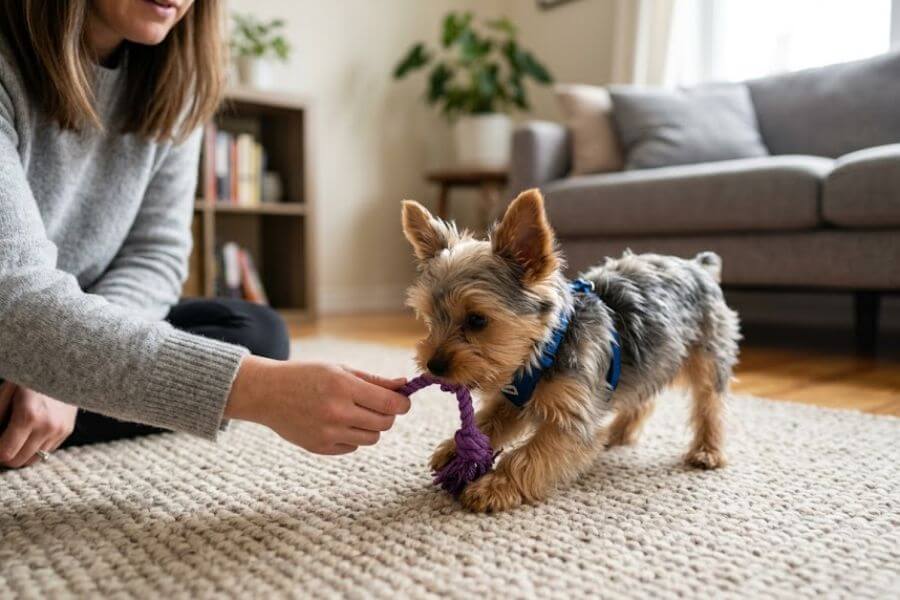
Always keep a small, safe puppy toy in your pocket or nearby on the couch. When your puppy approaches you and tries to nip your fingers, immediately place the toy in their mouth instead. You are choosing the toy over your skin.
When your puppy takes the toy and starts chewing it, praise them with a happy voice. Tell them they are a good dog. This helps them understand that biting human skin results in zero fun, but biting a toy results in happy praise and exciting playtime. Make sure the toys are small enough for a toy breed to grip comfortably. Soft rubber toys or small fabric ropes are perfect for tiny mouths.
Reverse Time Outs for Tiny Terrors
Sometimes a toy puppy gets so wound up that a simple yelp or a toy redirection will not work. They might get a wild look in their eyes and keep charging at your feet. When this happens, it usually means your puppy is overtired or overstimulated. They need a quick break to calm down.
Since toy puppies are so small, you can easily pick them up, but doing that might make them think you are playing. Instead, try a reverse time out. This means you leave the room instead of moving the puppy.
When the biting will not stop, calmly stand up, cross your arms, and step over a puppy gate or close a door between you and your pup. Stay gone for just one minute. This short break gives your puppy time to cool down and realize that their sharp teeth caused them to be left all alone. When you walk back into the area, act calm and offer them a proper chew toy right away.
Avoid Rough Play with Hands
It is very easy to look at a two-pound puppy and want to wrestle with them using your hands. You might tickle their tummy or wiggle your fingers in front of their face to make them pounce. While this looks cute, it is actually teaching your dog a bad habit.
When you use your hands as toys, you are telling your puppy that your body is a plaything. They cannot tell the difference between you wanting to wrestle at noon and you wanting to relax at night. They will think your hands are always open for business.
Instead, always use a toy as a barrier between your hand and the puppy. A great option for toy breeds is a flirt pole, which is a small stick with a rope and a toy attached to the end. This keeps the puppy biting a toy that is far away from your skin. It also lets them burn off energy without anyone getting hurt.
Frequently Asked Questions
Why does my puppy bite my ankles when I walk?
Your puppy is reacting to motion. Toy breeds often have a natural instinct to chase moving objects. When you walk past them, your moving feet and ankles look like a fun, fast-moving toy. To stop this, keep a toy in your hand while you walk around the house. If your puppy rushes toward your feet, stop moving completely and drop the toy for them to chase instead.
Can I pinch my puppy’s nose or hold their mouth shut to teach them a lesson?
No, you should never use physical punishment or hold your puppy’s mouth closed. Toy breeds are incredibly fragile, and you could easily hurt their small jaws or noses. Doing this will also make your puppy afraid of you. If they fear your hands, they might start biting even harder to defend themselves. Stick to positive training and redirection.
How long does it take for a toy breed puppy to stop biting?
Every puppy learns at a different pace, but most owners see a big improvement within two weeks of consistent training. The keyword is consistency. Everyone in your house must follow the exact same rules. If you ignore biting but someone else lets the puppy nip their fingers, the puppy will get confused and the biting habit will last much longer.