Walking a large dog should feel like a fun adventure, not a brutal workout where your arms get pulled right out of their sockets. When you have a big, strong pup who gets incredibly excited by a passing squirrel or another dog, a regular collar just will not cut it. You need the right tool to help you communicate clearly with your furry friend and keep your walks peaceful.
This guide explores the top training options for big dogs who love to pull. You will learn how they work, why they help, and how to pick the perfect one for your oversized companion.
The Challenge of a Big Puller
Large dogs come with a lot of muscle. When a heavy dog leans all their weight forward, they can easily pull a human off balance. This makes walks stressful and even unsafe for both of you. Regular flat collars often put direct pressure on your dog’s throat when they pull, which can cause choking or coughing.
To fix this, training tools are designed to change the mechanics of the walk. Instead of a game of tug-of-war that the dog will always win, these tools use gentle redirection or slight pressure to signal that it is time to slow down. The goal is always to teach your dog to pay attention to your movement, turning your walks back into a fun team effort.
Martingale Collars for Gentle Control
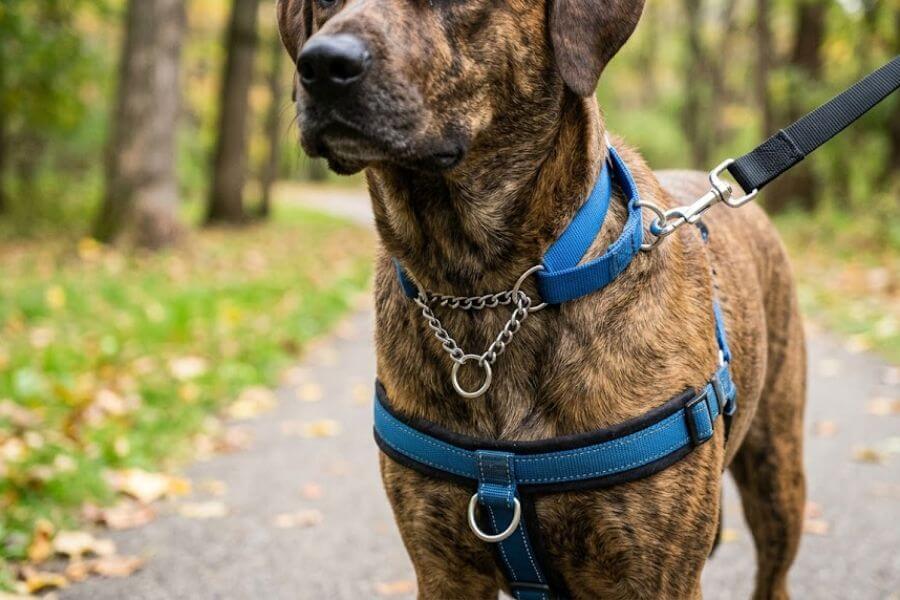
A martingale collar is a fantastic option for dogs who tend to back out of regular collars or just need a slight reminder not to pull. It looks like a standard collar, but it has a special extra loop of fabric or chain where the leash connects.
When your dog decides to surge forward, the extra loop pulls tight, which reduces the size of the main collar. This prevents your big dog from slipping their head out and running away. Because it stops tightening at a certain point, it never chokes your pet. It simply applies even pressure around the neck, which gives you a quick way to get their attention without causing discomfort. It is an excellent choice for thick-necked breeds like greyhounds or labs.
No-Pull Front-Clip Harnesses
While not a traditional neck collar, a front-clip harness is one of the most effective training tools for large pullers. The secret lies entirely in where you attach the leash. Regular harnesses clip on the back, which actually encourages dogs to pull harder because it triggers their natural pulling reflex.
A front-clip harness attaches right on the dog’s chest. When your powerful pup tries to bolt forward, the leash tension automatically steers them around to face you. They cannot put their full body weight into a forward sprint because the harness redirects their momentum sideways. It is a highly effective, force-free way to manage a heavy dog while you work on teaching them the heel command.
Head Halters for Steering Power
If you have a truly massive dog and you lack upper-body strength, a head halter might be your best friend. This tool looks a bit like a horse halter. It features a strap that goes over your dog’s nose and another behind their ears, with the leash connecting under the chin.
Head halters work on a simple law of physics: where the head goes, the body must follow. When your dog tries to lunge forward, the halter gently guides their nose down and back toward you. It requires very little physical effort from your end to control a giant breed this way. Most dogs need a bit of time to get used to the feeling of a strap on their nose, but with plenty of treats, they usually adapt quickly.
Tips for Training Success
No collar can magically train your dog by itself. The tool is simply there to keep you safe and in control while you teach your pup how to behave on a leash. Pair your chosen collar with plenty of positive reinforcement.
Bring a pocket full of tasty treats on your walks. Whenever your dog walks nicely next to you without pulling the leash taut, give them a treat and praise them with an excited voice. If they start to pull, stop walking completely and become an unmovable statue. Only start moving again when your dog steps back and slackens the leash. This teaches them that pulling actually makes the fun walk stop, while walking nicely keeps the adventure going.
Frequently Asked Questions
What is the safest collar option for a dog that chokes themselves while pulling?
A front-clip harness or a head halter is usually the safest choice for a dog that chokes easily. Regular flat collars put all the pressure directly on the windpipe, which leads to coughing and hacking. A front-clip harness moves that pressure to the sturdy chest area, while a head halter controls the dog from the muzzle, keeping the neck completely free from strain.
Can a martingale collar hurt my large dog?
No, a martingale collar will not hurt your dog if it is fitted properly. The unique design features a built-in limit on how tightly it can squeeze. You adjust the collar so that when the loop is pulled fully tight, it is just snug enough to stay secure behind the ears without choking the dog. It offers a much gentler experience than traditional choke chains.
How long does it take for a big dog to stop pulling with a training collar?
Every dog is different, so the timeline depends on your consistency and your dog’s personality. Some dogs modify their behavior almost instantly when they wear a head halter or a front-clip harness because the tool physically disrupts their ability to pull. Lasting change where they walk nicely on a regular collar takes several weeks of daily training with treats.
Should I leave a training collar on my dog all day long?
It is best to remove training collars, especially head halters and martingale collars, when your dog is hanging out at home or playing in the yard. These tools are specialized equipment meant for active walking and training sessions. Leaving them unsupervised can create a safety hazard if the extra loops catch on furniture or fences.