Welcome to the wonderful, fluffy, and sometimes incredibly noisy world of living with a Pomeranian! If you are reading this, you probably have a tiny, energetic ball of fur that loves to speak its mind. Pomeranians are famous for their beautiful coats, their bright little faces, and their massive personalities. They might be small enough to fit inside a tote bag, but their voices can easily fill a whole neighborhood.
Living with a talkative toy dog can be a bit of a rollercoaster. One minute you are laughing at their funny antics, and the next minute you are apologizing to your neighbors because your dog is shouting at a leaf that blew across the driveway. It is completely normal to feel a little frustrated when the barking just will not stop. You love your furry friend more than anything, but you also really miss the sound of silence.
The good news is that you do not have to live in a constant state of noise. Your tiny pup is not barking just to make you crazy. They are actually trying to tell you something. Once you learn how to understand their secret language and use the right training methods, you can help your small companion become much calmer and quieter. This guide will walk you through everything you need to know to bring some peace back into your home.
Understanding Why Your Pomeranian Barks
Before you can fix the noise problem, you have to look at the world from your dog’s point of view. Pomeranians were originally bred from much larger Arctic sled dogs, which means they still have a big, brave dog brain trapped inside a tiny five-pound body. They do not realize how small they are! To them, they are the fierce protectors of their kingdom, and they take their job very seriously.
Barking is your dog’s primary way of communicating with the world. Since they cannot use human words to tell you that they are scared, bored, or excited, they use their sharp, high-pitched voice instead. Every single bark has a specific meaning behind it. If you treat every bark the same way, your training will not work very well. You need to become a bit of a dog detective to figure out what triggers the noise in the first place.
When you take the time to figure out the root cause of the noise, you can fix the actual issue instead of just covering it up. This builds a much deeper bond of trust between you and your pet. Let us look at the most common reasons why these little fluffballs decide to turn up the volume.
Alarm Barking and the Watchdog Instinct
Have you ever noticed that your Pomeranian seems to have super-hearing? They can detect a person walking down the sidewalk three blocks away, or a delivery truck turning a corner far down the street. The moment they hear these faint sounds, they immediately run to the window or the front door and start barking like crazy. This is classic alarm barking.
Because of their ancestry, Pomeranians are natural-born watchdogs. They believe that their main duty in life is to keep you safe from any potential danger. When the mail carrier walks up the porch steps, your dog thinks, “Oh no, an intruder is coming to attack my family! I must scare them away right now!”
The funniest part about alarm barking is that it usually works from the dog’s perspective. Think about what happens when the mail carrier arrives. Your dog barks furiously, and a few seconds later, the mail carrier walks away down the steps. In your dog’s mind, their bark was a powerful spell that successfully drove the scary intruder away. Because this happens every single day, the behavior gets stronger and stronger. They truly believe they are saving your life every morning.
Boredom and Loneliness in Small Spaces
Pomeranians are incredibly smart little creatures. They have active minds that need a lot of mental stimulation to stay healthy. If you leave your toy dog alone in an empty room for hours with nothing to do, they are going to get bored very quickly. And when a smart dog gets bored, they usually find a hobby that you are not going to like. Most of the time, that hobby is barking.
Boredom barking is usually very repetitive, rhythmic, and monotonic. It sounds like a continuous “boof, boof, boof” that goes on and on for hours. It is their way of saying, “Hey! Someone please come pay attention to me! I have absolutely nothing to do here!”
This type of barking often happens when you are busy working on your computer, doing schoolwork, or trying to watch a movie. Your dog might sit right at your feet, look up at you with those big glassy eyes, and let out a sharp yip every few seconds. They are trying to create their own entertainment by getting a reaction out of you, even if that reaction is just you telling them to be quiet.
Separation Anxiety and Fear of Being Alone
Toy dogs are famous for being “velcro dogs,” which means they love to stick to your side wherever you go. If you walk into the kitchen, they follow you. If you go to the bathroom, they sit outside the door. While this attachment is very sweet, it can sometimes turn into a serious psychological issue called separation anxiety.
When a Pomeranian with separation anxiety realizes that you are getting ready to leave the house, they start to panic. They might see you grab your car keys, put on your shoes, or pick up your backpack, and their heart starts racing. The moment you step out the door and close it behind you, their world falls apart. They feel terrified and totally abandoned.
The barking that comes from separation anxiety is very different from alarm barking. It is usually high-pitched, frantic, and mixed with sad whines or long howls. Your dog might also scratch at the door, chew on the baseboards, or pace around the room in circles. They are trapped in a state of pure panic, and their crying is a desperate plea for you to come back to save them from the scary loneliness.
Excitement and Playtime Noise
Not all barking comes from fear or boredom. Sometimes, your Pomeranian is just bursting with pure, unadulterated joy! This is especially true when you first come home from school or work, when you pick up their favorite squeaky toy, or when you ask them that magic question: “Do you want to go for a walk?”
Excitement barking is usually very fast, sharp, and accompanied by a wildly wagging tail and a bouncy body. Your dog might spin around in circles like a little furry top while letting out a string of happy yaps. They are simply too filled with energy to contain themselves, and the noise slips out naturally.
While it is wonderful to see your pet so happy, excitement barking can quickly get out of hand if you encourage it. If you laugh, cheer, and give your dog lots of belly rubs while they are yapping with excitement, you are teaching them that making noise is the absolute best way to celebrate. Over time, they will start barking louder and longer whenever anything mildly interesting happens in the house.
Demand Barking for Treats and Attention
Demand barking is a very specific type of noise that happens when your little pup decides that they are the boss of the house. This usually starts out very small. You might be sitting at the dinner table eating a sandwich, and your dog looks up and gives a tiny bark. You think it is adorable, so you toss them a little piece of cheese.
Congratulations, you have just been trained by your dog! Your Pomeranian is a master scientist, and they just discovered a brilliant cause-and-effect rule: “When I make a loud noise, a delicious treat magically falls from the sky.”
Once they learn this trick, they will start using it for everything. They will bark at their food bowl to tell you they want dinner right now. They will bark at the closet door where the treats are hidden. They will bark at your arm while you are trying to read a book to demand immediate petting. If you give in to these demands even once in a while, your dog will keep doing it because they know that eventually, you will crack and give them what they want.
The Golden Rule of Training: Never Shout Back
Now that you know why your Pomeranian is making so much noise, it is time to start learning how to fix it. Before we talk about specific exercises, we must establish the absolute most important rule of dog training: you must never, ever yell at your barking dog.
It is very natural to want to shout “Stop it!” or “Be quiet!” when your dog is hurting your ears with a loud yap. However, from a dog’s perspective, human shouting does not sound like a correction at all. Remember, your dog doesn’t speak English. When you start yelling loudly, your dog thinks, “Oh wow, my human is barking too! This is great! We are both barking together at the mail carrier! We are a team!”
Yelling also adds a lot of negative energy and stress to the situation. If your dog is barking because they are scared or nervous, you shouting at them will only make them feel more unsafe. To calm down a loud dog, you must become the ultimate example of peace and quiet. You need to keep your voice low, cool, and totally relaxed. Your calm energy will act like a cooling blanket over their fiery excitement.
Creating a Super Quiet Environment
One of the easiest ways to reduce the amount of noise in your home is to change the environment around your dog. If your Pomeranian cannot see or hear the things that trigger their barking, they will naturally stay a lot quieter throughout the day. This gives you a blank slate to work on your training without constant interruptions.
Start by looking at the windows in your living room or front hallway. If your dog loves to sit on the back of the couch and look out the glass at passing cats, dogs, and neighbors, you need to block that view. You can use beautiful, frosted window film that sticks right onto the glass. It lets the bright sunlight through, but it turns the outside world into a blurry shapes-only view. If your dog cannot clearly see the neighbor walking by, they will not feel the need to shout at them.
Next, you can use the power of sound to mask the noises from the street. Pomeranians have incredibly sensitive ears, so a quiet house can actually make them more anxious because every little sound stands out. Try running a white-noise machine, a spinning fan, or playing soft classical music near the front door. There are even special music playlists made just for dogs that are proven to lower their heart rates and keep them calm.
The Power of Mental and Physical Exercise
A tired Pomeranian is a quiet Pomeranian. This is a classic saying among dog trainers, and it is absolutely true. A huge percentage of barking problems can be solved simply by burning off all that excess fuel that your dog is carrying around inside their tiny body.
Even though they are small, Pomeranians still need regular daily walks to explore the neighborhood, smell new things, and stretch their legs. A twenty-minute walk in the morning and another twenty-minute walk in the evening can work wonders for their mood. Let them sniff as much as they want during these walks. Sniffing is like reading the morning newspaper for a dog, and it actually uses up a lot of brainpower, which tires them out beautifully.
Inside the house, you should replace standard food bowls with interactive puzzle toys. Instead of just handing your dog their breakfast for free, put their kibble inside a rolling treat dispenser or a soft sniffing mat. This forces them to work for their food, using their nose and brain to solve the puzzle. You can also fill a tough rubber toy with peanut butter and freeze it. Licking releases calming hormones in a dog’s brain, and a frozen treat can keep your pup quietly occupied for a long time.
Teaching the Focus and Attention Cue
One of the fundamental building blocks of a quiet dog is teaching them how to look at you when things get exciting. If your Pomeranian is staring intensely at a trigger, they are locked into a barking mindset. You need a way to break that trance and bring their attention back to you.
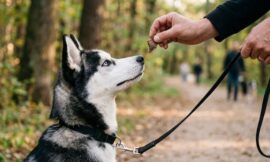
To teach this, grab a handful of tiny, delicious treats. Sit on the floor with your dog in a quiet room with no distractions. Hold a treat near your chest, right below your eyes, and say your dog’s name or a word like “Look” or “Focus.” The very millisecond your dog looks up into your eyes, say a happy word like “Yes!” and immediately give them the treat.
Practice this simple game every day for just a few minutes. Eventually, your dog will learn that looking into your eyes is the absolute most rewarding thing they can possibly do. Once they know this skill perfectly in a quiet room, you can start using it in more difficult situations. When you see a distraction in the distance during a walk, say your focus cue before your dog starts to bark, and reward them generously for choosing to look at you instead of the distraction.
The Quiet Command Step-by-Step
Teaching your dog a specific command to stop making noise is incredibly helpful. However, many people make the mistake of trying to teach this command while their dog is already in the middle of a massive barking fit. That is like trying to teach someone how to swim while they are falling over a waterfall. You need to start small and practice in a controlled way.
First, you need to find a situation where your dog barks once or twice, like when someone knocks on a wall. When your dog barks, let them do it two times to acknowledge the sound. Then, say the word “Quiet” in a very calm, clear, and gentle voice. Do not yell it.
Immediately after saying the word, place a super smelly, high-value treat right in front of your dog’s nose. Your dog cannot bark and sniff a treat at the exact same time. Their nose will take over, and they will go completely silent to investigate the food. Wait for three seconds of total silence while they smell the treat. Once those three seconds are up, say “Yes!” and give them the food. Over many weeks, you can slowly increase the time they have to be silent before they get the reward, moving from three seconds to five seconds, then ten seconds, and beyond.
Using the Place Command for Doorbell Noise
The sound of the doorbell or a knock at the front door is the ultimate test for any Pomeranian owner. The moment that sound echoes through the house, most small dogs turn into tiny rockets that launch themselves straight at the entryway, screaming at the top of their lungs. To fix this, you need to give your dog an alternative job to do when the bell rings.
The “Place” command involves teaching your dog to go to a specific, comfortable spot, like a small dog bed or a cozy mat in the living room, and stay there until you say it is safe to leave. Start by leading your dog to the mat with a treat, saying “Place,” and rewarding them when all four of their tiny paws are standing on it. Practice this until they run to the mat happily whenever they hear the word.
Once they love their mat, have a family member or friend help you practice by standing outside and pretending to ring the bell. When the bell rings, your dog will want to run to the door. Instead, immediately direct them to their mat using your place cue. When they go to the mat and sit down quietly, give them a massive jackpot of treats. You are rewriting the rules of the house: the doorbell no longer means “run to the front door and scream,” it now means “run to my cozy bed and get delicious snacks.”
Overcoming Separation Anxiety Slowly
Fixing separation anxiety takes time, patience, and a lot of love. Because your dog is acting out of real fear and panic, you can never punish them for making noise when you are gone. Instead, you need to slowly teach them that being alone is not a scary monster, and that you will always come back to them.
Start by practicing tiny absences while you are still inside the house. Put your Pomeranian in their safe zone or crate with a fantastic toy that is stuffed with treats. Walk out of the room and close the door behind you. Wait for just five seconds, then walk back in before your dog has a chance to start crying. Do not make a big deal out of your return; stay totally calm and boring.
Slowly increase the time you spend outside the room. Move from five seconds to thirty seconds, then to two minutes, and then to ten minutes. If your dog starts to whine or bark, it means you moved too fast, and you should go back to a shorter time for the next turn. Eventually, you will be able to walk out the front door to check the mailbox, walk around the block, or run a quick errand while your dog rests peacefully on the couch, knowing that you are always going to return.
Handling the Crate at Night
Many Pomeranian puppies and adult dogs love to bark when they are put into their crates for bedtime. It can be heartbreaking to hear them cry when the lights go out, and it makes it very difficult for you to get a good night of sleep. However, giving in and letting them out of the crate while they are actively screaming will only teach them that crying is the key that opens the cage door.
To make the crate a happy place, ensure it is packed with soft, warm blankets that smell like you. You can even take an old cotton t-shirt that you have worn all day and place it inside the crate so your pup can feel your comforting scent all night long. Covering the top and sides of the crate with a dark, breathable sheet can also help create a cozy, cave-like environment that tells their brain it is time to sleep.
If your dog starts barking in the middle of the night after being quiet for hours, they might genuinely need to go outside for a quick bathroom break. Take them out on a leash in a very boring, mechanical way. Keep the lights dim, do not talk to them, do not play with them, and do not give them any treats. Take them to their potty spot, wait for them to do their business, and put them right back in the crate. This teaches them that nighttime wake-up calls are strictly for business, not for playtime or attention.
Socialization and Desensitization Secrets
Many times, a Pomeranian will bark at things simply because they are unfamiliar and scary. A strange dog walking down the street, a person wearing a big floppy hat, a stroller rolling past, or a loud trash truck can look like a terrifying alien monster to a tiny dog. This is why proper socialization is so important.
Desensitization is a fancy training term that simply means slowly getting your dog used to something scary by introducing it at a very safe distance. For example, if your dog is terrified of other dogs and barks at them instantly, you should not take them to a crowded dog park. Instead, stand all the way across the street from a spot where you know dogs walk by.
Find the exact distance where your Pomeranian can see the other dog but is still feeling relaxed enough to stay quiet. The moment they look at the other dog, give them a stream of amazing treats. You are teaching their brain a new association: “When I see another dog far away, delicious things happen to me, so I don’t need to be afraid.” Over several weeks, you can slowly move a little bit closer to the walking path, always keeping your dog under their barking threshold.
The Danger of Accidental Rewards
As humans, we often reward our dogs for bad behavior without even realizing it. Dogs do not understand human logic; they only understand the immediate consequences of their actions. If your Pomeranian is barking at you to demand attention, and you look down, sigh deeply, and say “Please stop barking, sweetie,” you have just rewarded them.
To a lonely or bored dog, even negative attention is better than no attention at all. Your eye contact, your touch, and your voice are all massive prizes to your pet. If they make a noise and you look at them or talk to them, they win. They will remember that trick and use it again the next time they want you to look away from your phone or your television.
To stop demand barking completely, you must practice total, absolute ignoring. The moment your dog stands in front of you and lets out a demanding yap, you must turn your body completely away from them, cross your arms, and stare at the ceiling. Pretend your dog has suddenly become invisible. Do not look at them, do not touch them, and do not speak a single word. The very second they give up and go quiet for a few moments, turn back around and shower them with love, praise, and treats. They will quickly learn that silence opens the door to your love, while noise makes you disappear.
Grooming and Physical Comfort
Sometimes, a Pomeranian might be making a lot of noise because they are physically uncomfortable. These dogs have an incredibly thick double coat of fur that requires a lot of maintenance to stay healthy. If their fur gets tangled, matted, or dirty, it can pull tightly against their delicate skin, causing irritation and constant discomfort.
A dog that is in pain or feeling itchy is much more likely to be grumpy, stressed, and reactive to noises. Make sure you are brushing your Pomeranian thoroughly several times a week all the way down to the skin to prevent mats from forming behind their ears, under their front legs, and around their hindquarters. Keeping them clean, dry, and neatly groomed can significantly lower their overall stress levels.
It is also highly important to check their tiny toenails regularly. Because Pomeranians are lightweight toy dogs, their nails do not always wear down naturally when they walk on pavement. If their nails grow too long, they can push up against their toe joints when they walk, which can be very painful. If your dog is suddenly barking more than usual during walks, check their paws to see if a painful nail or a stuck burr is causing the issue.
Consistency Across the Family
One of the biggest reasons why dog training fails in busy households is a lack of consistency among family members. If you are working incredibly hard to ignore your dog’s demand barking, but your brother, sister, or parents give the dog a treat every time they yap at the kitchen counter, your dog will never learn to be quiet.
Dogs are opportunistic creatures. If they know that one specific person in the house will crack and give them what they want when they make a noise, they will focus all their barking energy on that single person. This keeps the bad habit alive and well, making your own training efforts much harder.
Sit down with everyone who lives in your home and create a clear, unified game plan. Make sure every person knows exactly what words to use, what treats to give, and how to react when the dog starts barking. Write the basic rules down on a piece of paper and stick it to the refrigerator so everyone is reminded daily. When your entire family acts like a single team with identical rules, your tiny dog will learn the new quiet habits much faster.
Tracking Progress and Celebrating Small Wins
Changing a dog’s behavior does not happen overnight. It is a long journey filled with good days and bad days. It is completely normal to feel like you are making great progress one week, only to have your dog have a massive barking meltdown the very next week when a strange cat walks across the porch.
To keep yourself from getting discouraged, it can be very helpful to keep a simple training journal. Every day, jot down a quick note about how much your dog barked and what triggered the noise. You might find that on Monday they barked five times at the window, but by Friday they only barked two times. These small shifts can be hard to notice in the moment, but when you look back at your notes after a month, you will see just how much progress you have actually made.
Celebrate the small wins along the way! If your Pomeranian hears a car door slam outside, lets out a tiny “boof,” but then stops and looks at you for a treat instead of throwing a massive screaming fit, that is a huge victory. Reward them with an extra special jackpot snack and give yourself a big pat on the back for being such an awesome, dedicated pet parent.
Frequently Asked Questions
Are Pomeranians naturally louder than other dog breeds?
Yes, Pomeranians do have a natural tendency to bark more than many other dog breeds. Because they belong to the spitz family of dogs, which includes historic watchdogs and arctic breeds, they possess an incredibly strong genetic drive to alert their family to anything new or unusual in their environment. Their small size also makes them highly sensitive to the big world around them, meaning they often use their sharp voices to protect themselves and express their big emotions. However, while they are naturally talkative, any Pomeranian can be taught to be calm and quiet with the right positive training and daily mental exercise.
How long does it take to train a Pomeranian to stop barking?
There is no single magic number of days for training, as every individual dog is completely unique. Some Pomeranians might start showing significant improvement within just one or two weeks of consistent training, while others with deeply ingrained habits or severe separation anxiety might take several months to fully calm down. The speed of your success depends almost entirely on how consistent you and your family members are with the training rules every single day. If you practice your quiet commands regularly and never accidentally reward the noise, you will see steady progress over time.
Should I use a bark collar to quiet my toy dog?
No, you should never use electronic shock collars, painful prong collars, or harsh spray collars on a Pomeranian. Because toy dogs have incredibly small, fragile necks and delicate windpipes, these devices can cause severe physical injury to their bodies. Furthermore, harsh punishment collars do not teach your dog what they should be doing instead; they only scare them. If a dog barks because they are terrified or anxious, hurting them will only increase their panic, which can lead to severe aggression issues down the road. Positive training that builds trust is always the safest and most effective path.
Why does my Pomeranian bark at me when I am on the phone?
Your Pomeranian barks while you are on the phone because they see you talking out loud, but they do not see another person or animal in the room. In their mind, you are talking directly to them! When you ignore them to keep speaking into the device, they get confused and use a loud yap to get your attention back. Additionally, many dogs quickly learn that when their human is on a phone call, they are distracted and more likely to toss a treat or open the door just to keep the peace. To fix this, always give your dog a long lasting puzzle toy or a frozen treat right before you dial a number so they stay quietly occupied.
Can a senior Pomeranian still learn to be quiet?
Absolutely! There is an old saying that you cannot teach an old dog new tricks, but that is completely false. Older Pomeranians are highly intelligent and can learn new habits at any stage of their lives. In fact, senior dogs often have longer attention spans and less chaotic puppy energy, which can make them wonderful training partners. If an older dog suddenly starts barking a lot more than usual, it is always a smart idea to visit your local veterinarian first to ensure that hidden joint pain, shifting eyesight, or hearing loss is not causing them to feel anxious in their home.