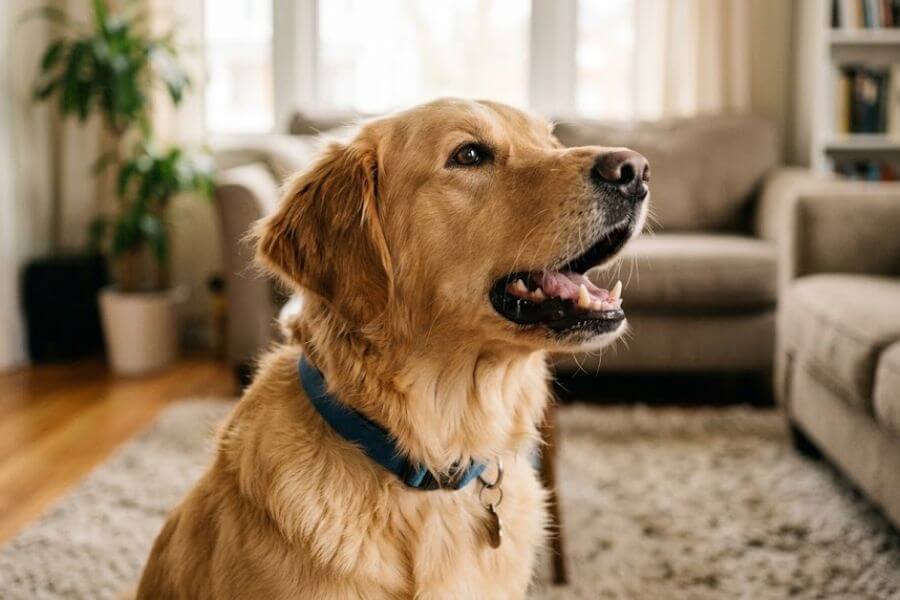
Have you ever looked into your dog’s bright, soulful eyes and wished they could just tell you what they are thinking? While they might not be able to recite poetry or tell you how their day went in human words, you can absolutely teach them to bark whenever you ask them to. This trick is widely known as teaching your dog to “speak.”
Teaching your dog to speak on command is one of the most rewarding, exciting, and downright hilarious activities you can share with your pet. It is a fantastic way to bond, stretch your dog’s brain muscles, and show off a cool party trick to your family and friends.
Many people think that training a dog to bark on cue is incredibly difficult or that it will turn their quiet house into a non-stop noise festival. The truth is quite the opposite! When you teach a dog how to bark when you ask, you are actually gaining control over their noise. You are teaching them a clear rule: barking is a special activity that happens when a human asks for it, not a random habit to practice all day long.
This deep dive guide will walk you through every single detail, phase, and secret trick to get your furry pal vocalizing like a pro. Whether you have a tiny puppy with a high-pitched squeak or a massive hound with a booming rumble, this guide is built just for you. Grab some tasty treats, get your dog’s attention, and let us dive into the wonderful world of canine communication!
Why Teaching Your Dog to Speak is a Great Idea
Before we jump into the actual steps, let us look at why this specific trick is so wonderful for both you and your canine companion. Training is not just about showing off; it serves a massive purpose in your dog’s daily life.
Boosting Your Dog’s Brain Power
Dogs are incredibly smart creatures. They need physical exercise like walks and games of fetch, but they also need mental workouts. When you challenge your dog to learn a brand-new behavior, you are forcing them to think, problem-solve, and figure out what you want from them. This type of mental stimulation tires out a high-energy dog just as much as a long run through the park. A thinking dog is a happy, well-behaved dog.
Strengthening Your Special Bond
Every single second you spend working together on training builds a bridge of trust between you and your pup. Your dog learns to pay close attention to your body language, your vocal tones, and your expressions. You, in turn, learn to read your dog’s subtle signals, like the tilt of their head or the twitch of their tail. This shared language creates a deep friendship that lasts a lifetime.
Managing Nuisance Barking
This is the big secret that surprises most pet owners. If your dog currently barks at every single leaf that blows past the window, teaching them to speak on command can help solve that issue. By putting the action of barking on a specific cue word, you can then teach a matching command like “quiet.” It gives you a way to tell your dog, “Okay, you did your job, now it is time to stop.” You cannot easily teach a dog to be quiet until they truly understand what making noise means in a training setting.
Getting Ready for Your First Training Session
You cannot just walk up to your sleeping dog, yell “speak,” and expect them to understand. You need to set the stage for success. Think of this like prepping your kitchen before you bake a magnificent cake. You need all your ingredients ready to go before you begin.
Picking the Ultimate Training Treats
Dogs are highly motivated by food, but ordinary dry kibble might not cut it for a trick that requires this much excitement. You need what professional trainers call high-value treats. These are small, soft, and extremely smelly snacks that your dog almost never gets to eat during regular meals.
Good options include tiny pieces of cooked chicken breast, small slivers of cheese, or specialized soft training treats from the pet store. The pieces should be no larger than the size of a pea. This ensures your dog can swallow the reward instantly and stay focused on you, rather than spending five minutes chewing a massive biscuit.
Finding the Perfect Environment
When you are starting out, choose a room in your house that is totally calm and quiet. Turn off the television, put your phone away, and make sure other family members or pets are not running around. You want your dog’s eyes and mind locked onto you. Once your dog becomes a master at speaking in the quiet living room, you can slowly practice in more distracting places like the backyard or the local park.
Keeping Your Attitude Bright and Happy
Dogs are emotional mirrors. If you are stressed, tired, or annoyed, your dog will pick up on that negative energy and become nervous or confused. Always approach a training session with an enthusiastic, upbeat tone of voice. Treat this like a fun game you are playing together. If you find yourself getting frustrated because your dog is not understanding, simply stop the session, give your dog a belly rub, and try again later.
Understanding the Secret Mechanism of Triggers
The easiest way to teach a dog to bark on purpose is to use something that already makes them bark naturally. This starting point is called a trigger. Different dogs react to different things, so you need to figure out what sparks a joyful or alert bark from your specific pet.
The Magic Doorbell or Knock
For a huge number of dogs, the sound of someone at the front door is an instant bark trigger. You can use this to your advantage during your training journey. You can have a family member stand outside and knock on the door, or you can use a recorded doorbell sound on your computer or phone to get that initial vocal reaction.
The Exciting Toy Game
Does your dog go absolutely wild for a tennis ball, a squeaky plush toy, or a game of tug-of-war? You can use their favorite toy to create a state of high excitement. By holding the toy just out of their reach and moving it around playfully, you can tease out an impatient, excited bark.
The Dinner Bowl Anticipation
If your dog is obsessed with food, the process of preparing their breakfast or dinner is a golden opportunity. Holding their food bowl high in the air while they wait eagerly often causes them to let out a small bark or whine of anticipation.
Mirroring Your Own Voice
Sometimes, dogs just need an example to follow. If you look at your dog and make a funny, high-pitched barking sound yourself, they might just bark back at you in playful confusion. Do not be afraid to look a little silly!
Step-by-Step Training Guide Using the Excitement Method
Now that you have your treats ready, your environment quiet, and you understand what triggers your dog, it is time to start the real training. This method relies on building up your dog’s natural excitement until a bark pops out.
Step One: Capture the Attention
Stand directly in front of your dog. Hold a high-value treat or their absolute favorite squeaky toy right near your chest so their eyes are glued to you. Make sure your dog is in a comfortable position, like a sit or a stand. Do not say any commands yet. Just let them focus entirely on the prize in your hand.
Step Two: Create the Trigger
Now, introduce the trigger that you selected earlier. If you are using a toy, wave it around playfully just above their nose. Squeak it a couple of times. Move it in circles. If you are using the food method, hold the treat close to their nose so they can smell it, then pull it back out of reach. The goal here is to build up a wave of eager anticipation inside your dog’s mind.
Step Three: Wait For the Vocalization
Your dog will likely try a few different things to get the reward. They might try to sit, they might offer you a paw, or they might try to jump up. Ignore all of these physical actions. Remain still, keep holding the reward, and continue to tease them playfully with it. Eventually, out of pure excitement or slight impatience, your dog will open their mouth and let out a sound. It does not matter if it is a giant bark, a tiny yip, or a loud whine. Any vocal noise counts as a victory in the beginning!
Step Four: Mark and Reward Instantly
The exact millisecond your dog makes a vocal noise, you must mark that behavior. You can do this by saying a sharp, happy word like “Yes!” or by using a training clicker if you use one. Immediately give them the treat or toss them the toy, and shower them with enthusiastic praise. Say things like “Good boy!” or “Good girl!” in a very high-pitched, happy voice.
Timing is everything here. If you wait even three seconds to give the treat, your dog might think they are being rewarded for sitting down or wagging their tail instead of making the sound.
Step Five: Repeat and Establish Consistency
Do this exact sequence three to five times in a row. Trigger the excitement, wait for the noise, mark the noise instantly with your voice, and deliver the reward. Keep the training session short, lasting no more than five minutes total. You want to stop the game while your dog is still having an absolute blast, which leaves them eager for the next session.
Introducing the Verbal Cue Word
Once your dog is consistently making a noise every single time you hold up the toy or treat, they are ready to link that action to a specific human word. This is where we turn a natural reaction into a polished trick.
Choosing Your Command Word
Most people choose the word “speak” because it sounds natural and direct. However, you can use any word you like, such as “bark,” “talk,” or even something funny like “tell me!” The key is that every single person in your household must use the exact same word. If you say “speak” but your sibling says “bark,” your poor dog will get incredibly confused.
Adding the Word to the Action
In this phase, you are going to say your chosen word right before the dog barks. Stand in front of your dog, look them in the eyes, and say “Speak!” in a clear, confident, and joyful voice. Immediately after saying the word, use your excitement trigger, like waving the toy or pulsing the food bowl. When your dog lets out their bark, mark it with “Yes!” and hand over the reward.
Fading Out the Trigger
Over multiple training sessions spread across a few days, you want to slowly reduce how much you rely on the trigger. If you were waving the toy wildly, start waving it just a tiny bit. If you were knocking loudly on a wall, try just making a tiny tapping motion.
Eventually, you will be able to stand completely still, look at your dog, say the word “speak,” and they will bark based on the word alone, without needing the extra physical excitement. When this happens for the first time, celebrate big! Give them a jackpot reward, which means feeding them three or four treats in a row to show them they did something truly extraordinary.
Adding a Hand Signal for Visual Communication
Dogs are incredibly visual animals. In fact, they often understand body language and hand gestures much faster than they understand spoken human words. Adding a distinct hand signal alongside your verbal cue makes the trick much cleaner and helps your dog succeed even in noisy environments where they might not hear your voice clearly.
Choosing a Visible Hand Gesture
You want a gesture that looks distinct from other common signals like “sit” or “stay.” A popular and effective hand signal for “speak” is making a talking mouth shape with your hand. Hold your hand up at chest level, close your fingers together against your thumb, and open and close them repeatedly, mimicking a puppet talking. Another great gesture is pointing a single finger gently toward your dog’s muzzle.
How to Mix the Hand Signal In
To teach the hand signal, simply perform it at the exact same moment you say your verbal cue word. Stand tall, hold up your hand, do the puppet motion while saying “Speak!”, and then wait for the bark. Just like before, mark the bark with a happy “Yes!” and deliver the treat. With enough repetition, your dog will start to connect the visual movement of your hand with the act of barking, allowing you to eventually command them to speak using silently delivered hand gestures alone.
Teaching the Essential Counter Command: Quiet
Teaching your dog to speak is only half the battle. To ensure your home stays peaceful, you must teach the yin to this yang, which is the “quiet” command. This ensures you have full control over the volume in your house and prevents your dog from becoming an annoying, non-stop barker.
The Power of the “Quiet” Command
The absolute best time to teach a dog to be quiet is right after you have asked them to speak. Because you are the one who started the barking, you know exactly when it is happening, which means you can control the exact moment it stops.
How to Practice the Quiet Transition
Start by asking your dog to speak. Once they bark once or twice, do not give them a treat right away. Instead, hold a brand-new, highly aromatic treat right in front of their nose. To sniff the treat, your dog must close their mouth and stop barking.
The very second your dog stops making noise to sniff the treat, say your new command word, “Quiet,” in a calm, soothing, and gentle voice. Wait two seconds while they remain totally silent, then mark it with “Yes!” and give them the treat.
Extending the Silence Duration
As your dog begins to understand that the word “quiet” means stopping all noise, slowly increase the amount of time they have to remain silent before they get the reward. Start with two seconds, then move to four seconds, then eight seconds. This teaches your dog valuable self-control and shows them that long-term silence is highly profitable.
Troubleshooting Common Training Roadblocks
Not every dog learns at the identical pace, and it is completely normal to run into a few speed bumps along your training journey. If your dog is struggling, do not worry! Here are solutions to the most common problems dog owners face.
My Dog Just Sits and Stares at Me
If your dog is sitting perfectly still, looking at the treat, but completely refusing to make a single sound, they are likely a very polite dog who has been trained well in the past. They think that sitting quietly is the only way to get treats.
To break this pattern, you need to break their stillness. Move around the room. Get on your knees and play with them. Run from one side of the kitchen to the other to get their adrenaline pumping. The higher their physical energy and excitement, the more likely a bark will naturally slip out of their mouth.
My Dog Will Not Stop Barking Once They Start
If you say “speak” and your dog unleashes a non-stop, endless machine-gun wall of barking, they are experiencing over-excitement. They have lost their focus and are just throwing noise at you hoping something works.
When this happens, immediately turn your back to your dog, cross your arms, and look up at the ceiling. Become completely boring, like a stone statue. This body language tells your dog that excessive, uncontrolled noise makes the fun human disappear. Once they calm down and go silent for a few moments, turn back around and try again, but keep your energy levels lower this time.
My Dog Offers an Anxious Whine Instead of a Proud Bark
Some timid, sensitive, or very gentle dogs are hesitant to bark loudly because they naturally want to keep the peace. If your dog gives you a soft whine, a tiny huff of air, or a quiet growl, reward that sound!
Do not hold out for a massive, booming bark on day one. Reward the small noises to build up their confidence. As they realize that making throat noises makes you super happy, those whines will naturally grow into confident, clear barks over time.
Advanced Challenges for the Master Pup
Once your dog can easily speak and go quiet on command inside your home using only verbal words or hand signals, they have graduated from the beginner level. It is time to challenge their brain with some advanced variations of this fun trick.
Whispering on Command
Yes, you can actually teach your dog to do a quiet, polite bark, often called a “whisper” or an “inside voice!” To do this, ask your dog to speak. If they bark softly by chance, reward them enormously.
You can also use a very soft, hushed, whispered tone when you say the command “whisper.” Dogs naturally mimic the volume and energy of their humans. If you whisper the word, they will often respond with a muffled, adorable little huff instead of a full blast bark.
Counting with Barks
This is an unbelievable trick that will make your friends think your dog is an absolute math genius. You can teach your dog to bark a specific number of times. To do this, say “speak” and let them bark once, then immediately feed them a treat to stop the sequence. Next time, wait for two distinct barks before marking and rewarding. By carefully timing your rewards, you can teach your dog that the command “speak two times” means exactly two noises.
Distance and Environmental Generalization
A truly well-trained dog can perform their tricks anywhere, not just in the comfort of their home. Start practicing your speak command while standing five feet away from your dog, then ten feet, then from across the entire yard. Introduce small distractions, like practicing while a washing machine is running or while sitting on a bench at a quiet park. This process ensures the trick is locked deeply into their long-term memory.
Golden Rules for Safety and Success
To ensure this training experience remains purely positive and safe for everyone involved, keep these foundational rules in the back of your mind at all times.
Never Reward Demanding Barks
This is the most critical rule of all. Your dog must only bark when you explicitly ask them to. If you are sitting on the couch watching a movie or eating dinner, and your dog walks up to you and barks in your face to demand attention or food, you must completely ignore them. If you give them a treat or pet them when they bark unprompted, you are teaching them that barking is a magical tool to boss you around. Only reward barks that happen after your official command word or hand signal.
Keep Training Sessions Short and Sweet
Dogs, especially young puppies, have very short attention spans. If you try to train them for thirty minutes straight, their brain will get tired, they will lose focus, and they will become frustrated. Two or three short sessions per day, lasting just three to five minutes each, are infinitely more effective than one massive, exhausting session. Always end your training on a massive high note with lots of love and play.
Never Scold or Yell at Your Dog
If your dog is not understanding the trick, it is never their fault. It simply means they have not figured out the puzzle yet. Never yell at your dog, push them down, or look angry. Training should always feel like an incredibly fun game. If it feels like a chore or a punishment, your dog will shut down and stop wanting to learn from you. Keep it positive, keep it encouraging, and remember to laugh at the silly moments!
Frequently Asked Questions
Can you teach an older dog to speak on command?
You absolutely can! The old saying that you cannot teach an old dog new tricks is a complete myth. Older dogs love learning just as much as young puppies do, and mental exercises are fantastic for keeping senior minds sharp, alert, and youthful. The only difference is that an older dog might have a more established habit of being quiet, so you might need to spend a little extra time finding a trigger that excites them enough to let out that first bark. Be patient, use extra smelly high-value treats, and celebrate their older wisdom as they figure out the game.
At what age can I start teaching this trick to a puppy?
You can start teaching basic training tricks to puppies as early as eight weeks old, which is usually the age they leave their mother and join their new human families. However, for a vocal trick like speaking, it is often best to wait until they are around twelve to sixteen weeks old. Very young puppies are still discovering their own voices, and their attention spans are incredibly tiny. Ensure your puppy already understands basic foundation commands like “sit,” “look at me,” and “stay” before you introduce a highly exciting trick like speaking on command.
Will teaching my dog to speak cause them to bark at neighbors or delivery drivers more often?
No, it will not, as long as you strictly follow the training rules. When done correctly, teaching your dog to speak actually reduces random, unwanted barking. By teaching your dog that barking is a special trick that only earns rewards when you ask for it, they learn that barking randomly at the window is a waste of energy that does not result in treats. It also gives you the perfect opportunity to use the matching “quiet” command when a delivery driver does arrive at your porch, giving you ultimate control over their vocalizations.
What should I do if my dog gets too excited and accidentally nips at my hand for the treat?
If your dog gets overly enthusiastic and their teeth accidentally brush against your hand while they are trying to grab the reward, you must pause the game immediately. Say a calm but firm “Ouch,” turn around, and ignore your dog for thirty seconds. This teaches them that rough behavior makes the food and the fun disappear instantly. When you resume, you can deliver the treat by placing it flat on the palm of your open hand, much like feeding a horse, which prevents them from accidentally nipping your fingers.
Can all dog breeds learn to speak on command?
While virtually every dog breed is capable of learning this trick, some breeds will naturally find it much easier than others. Breeds that are naturally vocal, alert, or working-oriented, such as German Shepherds, Terriers, Beagles, and Shetland Sheepdogs, will often pick up the trick within just a few repetitions because they love to use their voices. Breeds that are notoriously quiet, laid-back, or independent, like Basenjis, Greyhounds, or Great Danes, might take a bit more time, patience, and high-energy motivation to offer that very first bark.
My dog only lets out a tiny, funny growl instead of a bark. Is that okay?
That is completely fine and actually incredibly adorable! Every dog has a unique voice box and a distinct personality. If your dog prefers to make a soft rumbling sound, a tiny puffing noise, or an amusing little grumble instead of a full, booming bark, you can absolutely accept that noise as their version of speaking. The core goal of this training exercise is communication and understanding. As long as your dog is making a specific, intentional vocal sound in direct response to your command, the trick is a total success.
How long does it take for a dog to master this trick fully?
The timeline varies quite a bit depending on your dog’s individual personality, breed, age, and how consistent you are with your daily practices. Many dogs can understand the basic concept of linking the word “speak” to a bark within three to five days of short daily practices. However, to truly master the trick, meaning they can perform it instantly in different locations, around distractions, and alongside the “quiet” command without hesitation, typically requires about two to three weeks of consistent, playful practice.
What if my dog is completely deaf? Can they still learn to speak?
Yes, they absolutely can! Deaf dogs are incredibly smart and adaptable, and they learn tricks beautifully using visual communication. Since a deaf dog cannot hear a spoken cue word like “speak,” you will rely entirely on the hand signal method from the very start. Use the talking puppet hand gesture or a clear pointing motion right before you introduce their favorite trigger, like a flashing light toy or a smelly treat. Instead of marking the behavior with a spoken word like “yes,” you can use a visual marker, such as a quick thumbs up signal or a brief flash of a small penlight, before handing over their reward.