Quick Summary Table
| Sign | What to Look For | How Common Is It? |
| The Bunny Hop Run | Using both back legs together like a rabbit | Very common in young dogs |
| Trouble Getting Up | Moving slowly or whining when rising from the floor | High in older dogs |
| Limping and Stiffness | Favoring one leg, especially after a long sleep | Very common after exercise |
| Loss of Thigh Muscle | Back legs look thin while shoulders look very big | Common in advanced cases |
How We Ranked These
We chose and ranked these signs based on specific key factors to help you spot trouble early. Here is what we looked at:
- Visibility: How easily a regular dog owner can see the change during daily activities.
- Early Warning Potential: How early the sign appears in the life of a Cane Corso.
- Pain Indication: How clearly the sign shows that your dog is hurting.
- Breed Specificity: How often this exact sign shows up in heavy-boned, large-breed dogs like the Cane Corso.
1. The Bunny Hop Run
When you watch a healthy Cane Corso run across the yard, their movement should look smooth and powerful. They should move each back leg separately, driving off the ground with incredible strength. However, if your dog has hip dysplasia, you will often notice a very specific change in how they move at a fast pace. They will start running with a “bunny hop” style.
This means your dog brings both of their back legs forward and pushes them off the ground at the exact same time. It looks just like a rabbit hopping through the grass. Your dog does this because moving their hips normally requires a wide range of motion. When the hip joint is loose or poorly shaped, moving each leg alone causes friction and sharp pain. By locking their back legs together and hopping, they can reduce the deep discomfort in their hip joints.
You will notice this sign most when your dog is trying to fetch a ball, run up a grassy hill, or catch up to you during a jog. In young puppies between six and twelve months old, this is often the very first big warning sign that something is wrong with their joint development. It is easy to miss if you think it is just a cute puppy habit, but it actually shows that the hip ball is slipping out of its socket.
2. Trouble Getting Up and Sitting Down
A healthy Cane Corso is an athletic animal that can spring into action from a resting position without any delay. If you notice that your large dog is suddenly moving like an old dog when it is time to wake up, you need to pay close attention. Dogs with hip dysplasia struggle greatly with the physical act of changing positions.
When your dog wants to stand up from their bed, they must put a massive amount of weight on their hindquarters to push themselves up. If their hips are damaged, this push causes a deep, aching pain. You will see your dog hesitate before standing. They might plant their front paws firmly on the ground first and slowly drag their back end up. Sometimes, you might even hear a soft whine or a deep sigh as they force themselves to stand.
The same problem happens when they try to sit down or lie down. Instead of a smooth, controlled lower, they might drop to the floor suddenly because holding the position hurts too much. This stiffness is always worst first thing in the morning or right after a long nap. Once they walk around for ten or fifteen minutes, the joint fluid warms up, and they might seem to move a bit better.
3. Persistent Limping and Hind Leg Stiffness
Limping is the most obvious way a dog tells you that a specific part of their body hurts. With hip dysplasia, the limping might start as a small change that comes and goes, which makes it easy for owners to ignore. Your Cane Corso might limp for a few minutes after they chase a squirrel, and then they might look completely fine for the rest of the day.
Over time, this limping becomes a permanent part of how they walk. You will see that your dog does not want to put full weight on one or both of their back legs. Their walk might look uneven, or they might sway their hips side to side in an unusual way to avoid bending the painful joint. This stiffness becomes very clear after long walks or heavy play sessions.
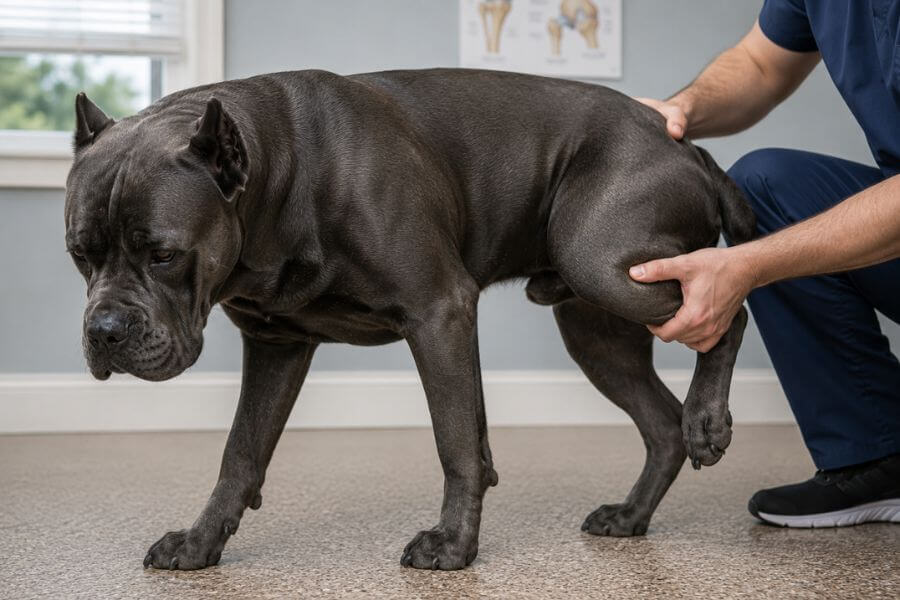
Instead of resting happily after exercise, a dog with hip dysplasia will look tight and sore. They will refuse to walk up the stairs, or they will stop at the bottom of the staircase and look up at you with sad eyes. They know that climbing steps requires deep hip bending, which will hurt them. If you try to touch their hips or stretch their back legs during these moments of stiffness, they might pull away, growl softly, or turn around to lick your hand to ask you to stop.
4. Visible Loss of Muscle Mass in the Thighs
When a Cane Corso has hip dysplasia, they naturally try to avoid using their painful back legs. Because they shift most of their heavy body weight forward to their front legs to escape the pain, a major physical change happens over several months. The muscles in their back legs begin to shrink from lack of use, a process called muscle atrophy.
If you stand directly behind your dog and look down at their body, you will see a strange shape. A healthy Cane Corso should have thick, muscular, and powerful thighs. A dog suffering from hip dysplasia will have very thin, narrow back legs. You might even be able to feel the hard bones of their hips and spine very easily through their skin.
At the same time, because the front legs are doing double the work to pull the dog along, the shoulders, chest, and neck muscles will look unusually huge and overdeveloped. This body imbalance is a classic sign of advanced hip issues. Your dog is essentially using their front body as a motor to drag their painful back body forward. This uneven weight distribution causes extra wear on their front elbows and wrists, which can lead to even more joint problems in the future.
Frequently Asked Questions
Can a puppy grow out of hip dysplasia if they are just going through a clumsy growth spurt?
No, a dog cannot grow out of hip dysplasia. This condition is caused by a genetic deformity where the hip ball and socket do not fit together correctly. While puppies can certainly be clumsy during rapid growth phases, true hip dysplasia will only stay the same or get worse over time without proper medical care, weight management, or surgery.
Are there specific crate training adjustments I should make for a dog with hip issues?
Yes, you should make changes to their crate setup. Ensure the crate is large enough so your dog does not have to bend their hips tightly to turn around. Place a thick, orthopedic foam bed inside the crate to support their joints and keep them off the hard floor. Keep the crate in a warm area of the house, because cold air makes joint stiffness much worse.
Does cold or rainy weather really change how much pain my dog feels?
Yes, weather changes directly affect dogs with joint issues. When the temperature drops or the atmospheric pressure changes before a rainstorm, it can cause the tissues around the deformed hip joint to expand and swell. This increases pressure inside the joint, leading to more noticeable limping, stiffness, and discomfort on cold days.
Can changing my dog to a specific diet help fix their malformed hip joints?
A change in food cannot physically reshape a deformed bone or joint socket. However, a proper diet is critical because it keeps your Cane Corso lean. Extra body weight puts massive stress on failing hips. Feeding your dog high-quality food with correct calcium ratios helps prevent them from growing too fast, which reduces the severity of the condition.
How does fetching a ball on a slick hardwood floor affect a dog with bad hips?
Playing fetch on slippery surfaces like hardwood, tile, or laminate floors is very dangerous for a dog with hip dysplasia. When your dog tries to stop or turn quickly, their paws lose grip, causing their back legs to slide out sideways. This sudden twisting puts extreme, painful stress on the loose hip joint and can cause immediate injury to the ligaments.