Best Exercises for Cane Corso Dogs
| Exercise Number | Exercise Name | Primary Muscle Group | Setup Time |
| 1 | Flat Surface Leash Walking | Full Body Endurance | None |
| 2 | Controlled Hill Climbs | Hindquarters and Glutes | 5 minutes |
| 3 | Low Height Flirt Pole | Core and Shoulders | 2 minutes |
| 4 | Shallow Water Wading | Joints and Core | 10 minutes |
| 5 | Soft Surface Fetch | Thighs and Chest | None |
| 6 | Gentle Tug Game | Neck and Jaws | 1 minutes |
| 7 | Side Step Training | Hip Abductors | 2 minutes |
| 8 | Structured Companion Jogging | Cardiovascular System | None |
| 9 | Platform Balance Holds | Stabilizer Muscles | 5 minutes |
How We Ranked These
Selecting the right movements for a heavy-boned guardian breed requires care. We analyzed how these large animals move, grow, and carry their weight to build this list.
- Joint safety factor: We chose activities that protect the growing plates and heavy skeletons of big dogs.
- Balanced muscle growth: The selections target both the large pulling muscles and the small stabilizing tissues.
- Mental control connection: Every movement requires cooperation, which prevents your dog from rushing or getting hurt.
- Accessibility for owners: You do not need expensive gym tools or special training fields for these activities.
1. Flat Surface Leash Walking
Walking on a flat path is the base of all fitness for a heavy guardian dog. It looks simple, but a steady pace forces your dog to use all four legs equally. When a dog roams free in a yard, they often use a choppy gait that lets them avoid using weak muscles. A structured walk on a short leash fixes this problem. It keeps their weight centered and builds steady endurance over long distances.
To start, choose a firm path like a paved sidewalk or a hard dirt trail. Keep the leash short but loose enough that you do not pull their head upward. Walk at a brisk speed that forces your dog into a trot. A trot is a two-beat gait where diagonal legs move together. This specific movement requires your dog to balance their weight perfectly across their spine and hips. It strengthens the long muscles running down the back and tightens the shoulder ligaments.
Do this exercise daily for twenty to thirty minutes. For young dogs, you can split this into two shorter sessions. The goal is consistency, not exhaustion. If your dog starts to drag their back feet or lag behind, their muscles are tired. Stop and walk slowly back home. This exercise builds a strong base for more advanced muscle work later.
2. Controlled Hill Climbs
Walking up a gentle hill shifts your dog’s weight backward. This movement puts extra load on the rear legs, which is excellent for building power in the hips and thighs. Many large dogs carry too much weight on their front shoulders, which can lead to injury. Hill climbs teach them to push from behind, creating a balanced and powerful body shape.
Find a grassy slope that is not too steep. A field with a mild incline is perfect. Keep your dog on a short leash to control their speed. You must prevent them from running up the hill. Running allows momentum to do the work instead of the muscles. Walk upward at a slow, deliberate pace. Force your dog to step firmly with each hind foot. You will see the large thigh muscles flex and work with every step.
When you reach the top, turn around and walk down very slowly. Walking downhill requires a different type of muscle control. The chest and shoulders must act as brakes to slow the body down. This builds the front-armor muscles safely. Start with two or three climbs per session, twice a week. As your dog gets stronger, you can find slightly longer hills, but always keep the pace slow and steady.
3. Low Height Flirt Pole
A flirt pole is a long stick with a rope attached and a toy tied to the end. It allows you to move a target along the ground while you stand still. This game mimics the chase instinct and forces your dog to change directions, which works the side muscles of the core and neck. However, you must use this tool with great caution to protect big joints.
Keep the toy on the grass at all times. Do not lift the toy into the air. If you lift it, your dog will jump, and landing with heavy weight can damage their knees. Drag the toy in wide, slow circles on the ground. Let your dog track it and jog after it. The constant turning builds the stabilizing muscles around the wrists, elbows, and hips. It also strengthens the oblique muscles, which are the side walls of the abdomen.
Limit these sessions to five minutes at a time. The high excitement can make a dog forget their fatigue, which leads to pulled muscles. Always play on grass or soft dirt to give their paws a good grip. Never use a flirt pole on concrete or wet wood. Let your dog catch the toy every minute or two to keep their mind calm and satisfied, then trade it for a treat to restart the game.
4. Shallow Water Wading
Water offers natural resistance without any hard impact. When your dog walks through water, the fluid pushes against their legs from all sides. This builds sleek, strong muscles while completely protecting the joints from shock. Wading is especially good for building the chest and the deep hip rotators.
Find a calm lake, a quiet beach, or a specialized dog pool. The water should come up to your dog’s chest, but it must not be deep enough to force them to swim. Walk along the shoreline with your dog on a leash. Your dog will have to lift their legs higher than usual to move through the water. This high-step movement stretches and strengthens the hip flexors and the lower back muscles.
Start with just five minutes of wading. Moving through water takes double the effort of walking on dry land. Watch your dog’s breathing closely. If they pant heavily or lift their feet lazily, it is time to exit the water. Dry them thoroughly after the session, especially around the ears and belly. This exercise is perfect for hot summer days when outdoor running is too dangerous due to heat.
5. Soft Surface Fetch
Playing fetch can be a great workout if you control the environment. Instead of hard dirt, choose a field with thick grass, sand, or deep soil. These soft surfaces act like a cushion for your dog’s paws. They also require more muscular effort to walk or run across, which gives a deeper workout to the calves and thighs.
Roll or throw a heavy ball a short distance. Do not throw it high into the air, because you do not want your dog twisting their body mid-air to catch it. Wait for the ball to stop rolling before you let your dog go get it. This prevents sudden, sharp stops that can strain the shoulders. The act of running across sand or deep grass forces the feet to flex fully, which strengthens the lower leg ligaments and the toes.
Keep the game short, around ten throws total. The soft ground will tire your dog much faster than a standard park lawn. If you notice your dog swaying or sitting down immediately after returning the ball, they have done enough. This exercise is great for building explosive power in the rear thighs while keeping the impact on the bone pads low.
6. Gentle Tug Game
Tug is often viewed as just a fun game, but it is actually a powerful resistance workout. When your dog holds a tug toy and pulls back, they engage their entire neck, upper back, and jaw structure. This builds the thick, protective muscle collar around the throat that defines the classic guardian look.
Use a long, soft rope toy with handles for your hands. Let your dog grip the middle of the rope. Instead of jerking the toy up and down, hold your arms steady and pull straight back with a smooth, continuous force. Your dog will plant their feet wide and lean away from you. This static hold works the core, the upper shoulders, and the deep neck muscles. Keep the toy low, near the level of your dog’s chest, so their spine stays straight.
Never pull so hard that you lift your dog’s front feet off the ground. Teach your dog a command to drop the toy on demand. This keeps the game safe and prevents them from getting too excited. Play for two or three minutes, then take a break. This exercise is an excellent way to build upper-body mass without putting any stress on the leg joints.
7. Side Step Training
Side step training forces your dog to move laterally, which means moving to the left or right instead of forward. Dogs rarely move sideways in daily life, so the muscles that control this movement are often weak. Strengthening these lateral muscles helps stabilize the hip joints and prevents common knee injuries like ligament tears.
To teach this, stand facing your dog. Hold a treat near their nose and take a step toward their shoulder, forcing them to step sideways to keep their balance. You can also use a long wooden board or a low curb as a guide. Encourage your dog to move along the barrier sideways. Each step requires the outer hip muscles to pull the leg away from the body, and the inner thigh muscles to slide the other leg across.
Start with just five steps in each direction. It requires a lot of brainpower and a different kind of balance for a large animal. Reward each successful step with praise and a small treat. Over a few weeks, you can increase this to twenty steps per side. This simple movement creates a wide, stable stance and strengthens the pelvic area.
8. Structured Companion Jogging
Jogging with your dog builds long-term muscle endurance and keeps the heart strong. However, you must wait until your dog is fully grown, usually around two years old, before you start jogging. Their bones must be solid enough to handle the repeated steps on hard paths.
Start with a very slow jog, just slightly faster than your fast walk. Keep your dog right at your side on a short leash. They should stay in a calm, rhythmic trot. Do not let them dart side-to-side or pull you forward. The steady, matching pace helps build lean muscle tissue across the ribs and thighs. It also helps burn fat, which is vital because extra weight puts dangerous pressure on a large dog’s skeletal frame.
Begin with a half-mile jog twice a week. Every week, if your dog shows good energy, you can add a quarter-mile to the distance. Always jog during the coolest parts of the day, like early morning or late evening. Large dogs overheat quickly due to their thick body mass. Carry water with you and offer small sips during breaks to keep them hydrated.
9. Platform Balance Holds
Balance holds look static, but they are an intense workout for the hidden stabilizer muscles. These small tissues sit deep inside the body around the spine and joints. They keep the body steady during sudden movements. Working these muscles improves overall balance and agility.
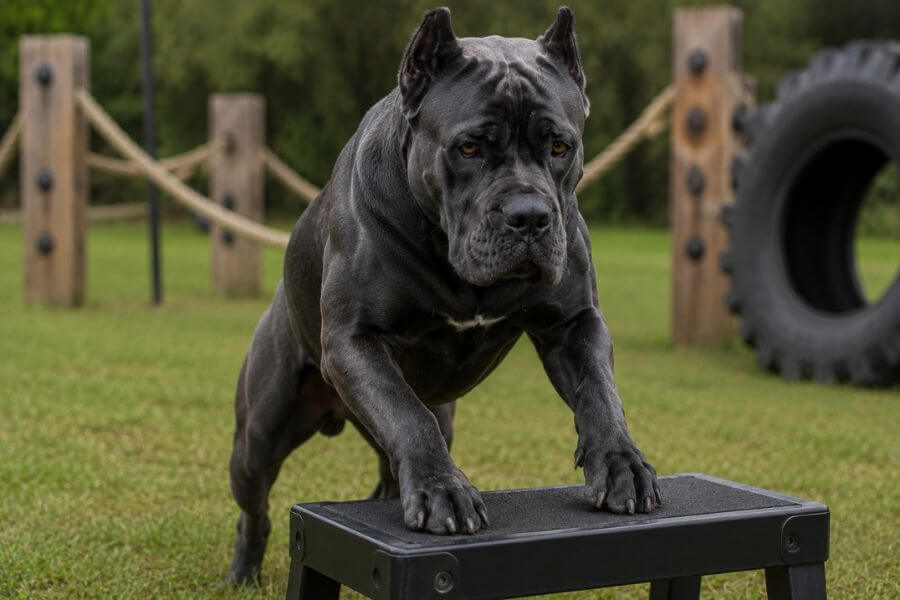
You will need a low, sturdy platform that can hold your dog’s entire weight without tilting. An exercise bench or a large, low wooden box works well. Guide your dog onto the platform so all four feet are planted firmly. Once they are standing still, gently push their hip or shoulder with one finger. Your dog will have to tense their core and leg muscles to stay still. This small tension is the exercise.
Hold the position for thirty seconds, then let them sit and rest. Repeat this five times. You can make it harder by asking them to lift one front paw while keeping the other three feet on the platform. This shifts the weight and forces the remaining legs to work harder to stay balanced. It is a quiet, low-stress workout that builds deep structural strength.
Frequently Asked Questions
How can I tell if my dog’s muscles are getting too sore after these activities?
You can spot muscle soreness by watching how your dog rises from their bed. If they stand up much slower than usual or stiffen their legs during their first few steps, their muscles are tired. You might also notice them sitting with their legs slid out to one side rather than tucked neatly under their hips. Give them two days of complete rest with only short, slow potty walks if you see these signs.
Is it safe to use weighted vests on this specific breed to build muscle faster?
No, you should avoid weighted vests for this breed unless a veterinary doctor tells you otherwise. These dogs are already very heavy, and their joints carry a lot of natural mass. Adding extra weight to their back can compress their spine and put dangerous pressure on their front wrists and elbows. It is much safer to build muscle using natural resistance, like hills or shallow water, rather than adding artificial weights to their body.
What should I do if my dog refuses to walk sideways during the side step exercise?
If your dog refuses to move sideways, they are likely confused by your body language, or they lack the balance to do it easily. Start smaller by standing next to a house wall so they cannot back up. Hold a treat at their nose and turn your body slightly into theirs. This gentle pressure usually forces them to take just one single step to the side to reset their balance. Reward that single step immediately and build up the movement very slowly over several days.
Can these structural exercises help a dog that already has minor hip issues?
Yes, controlled exercises can help support weak joints by building a strong wall of muscle around them. Activities like flat surface walking, shallow water wading, and platform balance holds are excellent because they do not include sharp twists or hard impacts. The stronger the surrounding muscles become, the less stress falls directly on the bone joints. Always talk to your vet before starting a fitness plan for a dog with known joint problems.
How does the winter weather affect how I should plan these muscle workouts?
Cold weather makes muscles stiff, which increases the risk of pulls and strains. In the winter, you must spend five minutes walking very slowly to warm up your dog’s body before moving into hill climbs or fetch games. Avoid any outdoor workouts if the ground is covered in hidden ice, because a heavy dog slipping can tear a knee ligament instantly. You can move the balance holds and gentle tug games indoors during freezing days.