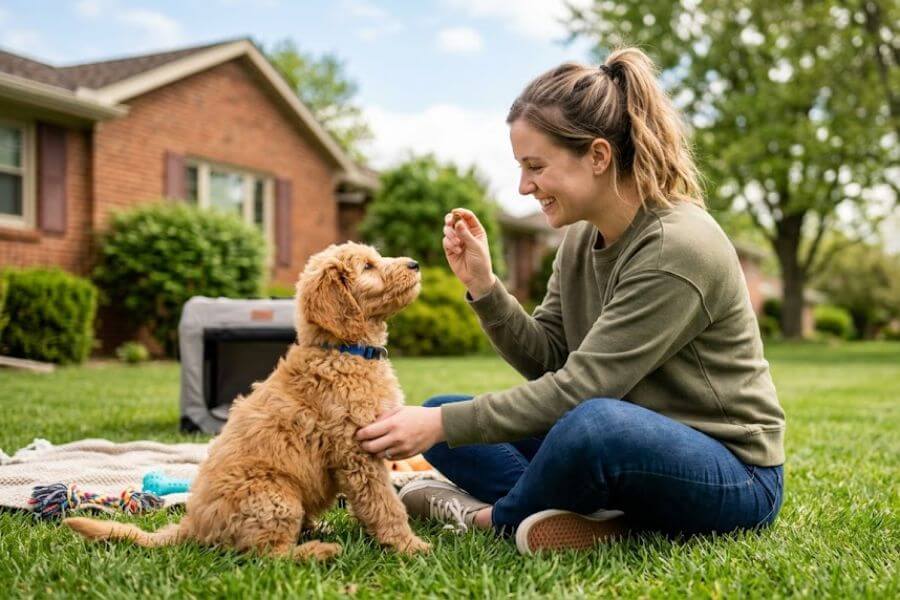
Bringing home a Goldendoodle puppy is like welcoming a living, breathing teddy bear into your life. With those floppy ears, soulful eyes, and a coat that begs for cuddles, it is easy to see why they are so popular. However, that cute little bundle of fur can also turn your world upside-down.
As a first-time owner, you might feel a little overwhelmed by the biting, the accidents on the rug, and the midnight crying. Do not worry. These smart, goofy, and eager-to-please dogs are highly trainable. With the right approach, you will guide your pup into becoming the best dog on the block. Here is everything you need to know to get started on your training journey.
Set Up a Safe Space First
Before your puppy even sets foot in your house, you need to prepare their environment. Puppies are natural explorers, and they use their mouths to learn about the world. If you leave your favorite shoes out, they will quickly become chew toys.
Start by choosing a specific area of your house for your puppy. A laundry room, a section of the kitchen, or a sturdy playpen works best. Fill this area with a comfortable bed, a water bowl, and a few safe toys. This zone keeps your puppy safe when you cannot watch them every single second. It also protects your belongings from sharp puppy teeth. Think of it as a cozy bedroom where your pup can relax without getting into trouble.
Master Housebreaking with a Schedule
Potty training is usually the biggest worry for new pet parents. The secret to success here is a rock-solid schedule. Puppies have tiny bladders, and they cannot hold it for very long. A good rule of thumb is that a puppy can hold their bladder for one hour for every month of their age.
Take your puppy outside to the exact same spot every single time they wake up, right after they eat or drink, and after a heavy play session. When they go potty outside, throw a mini party. Praise them with a high-pitched voice and give them a tasty treat immediately. If they have an accident inside, do not yell or punish them. Just clean it up with a special pet cleaner and try to take them out sooner next time.
Use the Power of Positive Reinforcement
Goldendoodles are sensitive dogs. They respond beautifully to praise and rewards, but they shut down if you use harsh punishments. Positive reinforcement means you reward the behaviors you want to see more of and ignore or redirect the bad behaviors.
Keep a pouch of small training treats attached to your hip. Whenever you see your puppy doing something good, like sitting quietly instead of jumping, say “Yes!” and hand over a treat. Keep your training sessions very short. Five minutes of focused practice a few times a day is much better than one long, boring hour. Your puppy has a short attention span, so you want to keep the games fun and exciting.
Teach the Core Commands
You do not need to teach your puppy complex tricks right away. Focus on the core building blocks that will keep them safe and well-behaved. The three most critical commands are sit, stay, and come.
To teach a sit, hold a treat right in front of your puppy’s nose and move it slowly back over their head. Their nose will go up, and their bottom will naturally go down. The moment their bottom hits the floor, give them the treat. Once they get the hang of it, add the word “sit.” Practice this daily until they do it smoothly. These basic skills form the foundation for all future learning and help you manage your dog in everyday situations.
Handle Biting and Nipping Calmly
Puppy teeth are like little needles, and Goldendoodles love to use them. Mouthing is how they play with their littermates, but they need to learn that human skin is far too delicate for those sharp teeth.
When your puppy bites your hand or ankles during play, make a high-pitched “ouch” sound and freeze. Stop all interaction for about ten seconds. This teaches the puppy that biting makes the fun stop. Next, hand them a proper chew toy instead. When they chew on the toy, praise them happily. Everyone in the house must follow this rule so the puppy does not get confused about what is allowed.
Crate Training is Your Best Friend
A crate is not a punishment tool. When used correctly, it becomes your puppy’s personal den where they feel safe and secure. It is also an invaluable tool for housebreaking and preventing destructive chewing when you sleep or step out.
Make the crate a wonderful place by tossing yummy treats and fun toys inside. Let your puppy explore it with the door wide open at first. Slowly work up to closing the door for just a few seconds while you stand right there, then reward them. Never use the crate as a place for time-outs, or your puppy will learn to fear it. Instead, let it be their peaceful sanctuary.
Introduce Your Pup to the Big World
Socialization does not mean letting every person and dog rush up to your puppy. It means exposing your pup to new sights, sounds, smells, and textures in a calm, controlled way. This prevents them from becoming fearful or aggressive adults.
Let your puppy walk on different surfaces like grass, concrete, tile, and carpet. Introduce them to people wearing hats, people holding umbrellas, and people of all different ages. Play weird noises on your phone at a low volume, like thunder or fireworks, while feeding them treats. Always ensure these experiences are pleasant so your pup builds strong confidence.
Frequently Asked Questions
How long does it take to potty train a Goldendoodle puppy?
Most puppies can grasp the basic concept of housebreaking within a few weeks of consistent training. However, complete reliability usually takes a few months. You can expect occasional accidents until your puppy is around six months old, as their body is still growing and developing muscle control.
Why does my puppy cry when I leave them alone?
Puppies are pack animals, and being alone is a brand-new, scary experience for them. They cry to call you back to the pack. You can help them feel better by leaving a safe chew toy with them and practicing short separations where you step away for just a minute and return before they start to panic.
When should I start training my Goldendoodle puppy?
You can start teaching your puppy the moment they arrive at your house, which is usually around eight weeks old. Young puppies are like little sponges, and they are constantly learning from you anyway. Starting early with gentle, reward-based methods helps prevent bad habits from forming in the first place.
How much exercise does a Goldendoodle puppy need?
While Goldendoodles are high-energy dogs, puppies have soft bones that are still growing. Too much heavy exercise can hurt their joints. A good guideline is five minutes of structured walking per day for each month of their age, up to twice a day. Mental games and training sessions are also great for wearing them out safely.