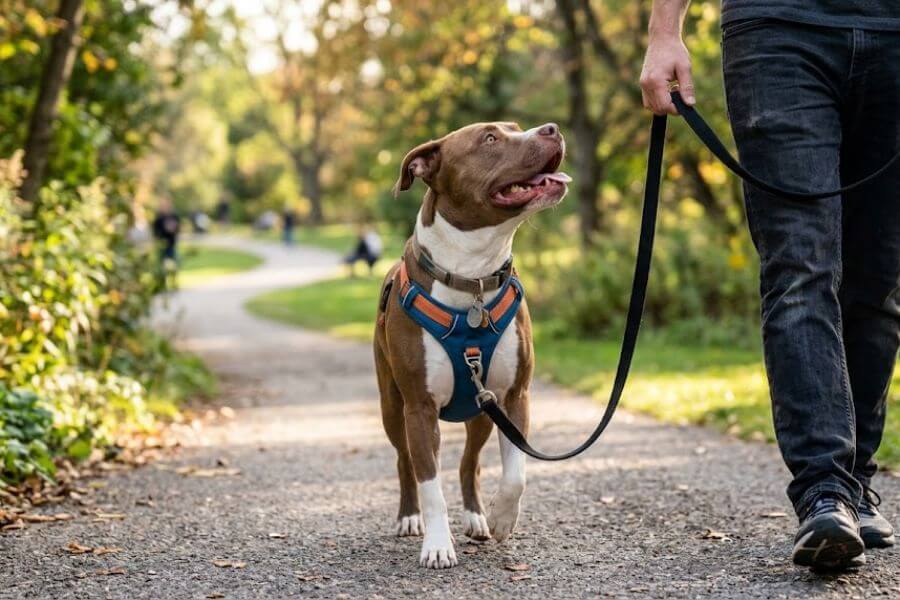
Walking your pit bull should be the best part of your day. You picture a relaxing stroll through the neighborhood with your furry best friend walking calmly right by your side. Instead, it feels like a giant tug-of-war game where your arm gets stretched out, and you are being dragged down the sidewalk.
Pit bulls are naturally strong, muscular, and full of energy. When they see a squirrel or want to greet another dog, their first instinct is to lean forward and pull. But you can absolutely change this habit. With patience, consistency, and the right approach, you can teach your strong pup to walk politely on a loose leash.
Understand Why Your Pit Bull Pulls
Before you can fix the problem, it helps to understand why your dog does it. Dogs do not pull because they want to rule the house or be the boss. They pull simply because they walk much faster than humans do, and they are excited to explore the world.
Every time your pit bull pulls and you keep walking, your dog learns a lesson. They think that pulling is the magic trick that gets them closer to that interesting bush or that friendly neighbor. Since pit bulls have a high drive to explore, the reward of moving forward is worth the pressure on their neck. To stop the pulling, you have to change the rules of the game so that pulling never gets them what they want.
Get the Right Walking Equipment
Using the right tools makes a massive difference when you are training a strong dog. Standard collars can put a lot of pressure on your dog’s throat if they pull hard. This can actually cause injuries over time.
A front-attachment harness is a game-changer for pit bull owners. On this type of harness, the leash clips to a ring on your dog’s chest instead of their back. When your dog tries to lung forward or pull hard, the harness gently steers them back toward you. It takes away their pulling power without causing them any pain. Avoid retractable leashes because they actually teach dogs that tension on the leash is normal. Stick to a standard four-foot or six-foot flat leash for the best control.
Practice the Red Light Green Light Game
The easiest way to teach loose-leash walking is to act like a statue whenever the leash gets tight. Think of it like the classic children’s game called Red Light, Green Light.
When you start your walk and the leash is loose, that means green light, so you keep walking. The second your pit bull pulls and the leash goes straight, that means red light. Stop walking immediately and freeze in place. Do not yell, do not jerk the leash, and do not move forward. Wait until your dog wonders why you stopped. They will eventually turn around, look at you, or take a step back to slacken the leash. As soon as the leash goes loose again, say a cheerful word like “yes” and start moving forward. This teaches your dog that a tight leash means everything stops, while a loose leash keeps the fun moving.
Use High-Value Rewards to Keep Attention
Pit bulls love to please their humans, and they are highly motivated by tasty food. To compete with all the distractions outside, you need to bring snacks that are extra special. Think of tiny pieces of cooked chicken, cheese, or soft training treats that your dog rarely gets at home.
Hold a few treats in your hand and walk a few steps. If your pit bull stays near your side and looks up at you, give them a treat immediately. You want to reward the exact position where you want them to be. In the beginning, give treats every few seconds to keep your dog focused on you. As your dog gets better at staying by your side, you can space out the rewards and give them every few minutes instead.
Change Directions Unexpectedly
If your dog keeps pulling ahead because they think they know exactly where you are going, you need to surprise them. This technique is called the about-turn, and it forces your dog to pay close attention to your body movements.
While you are walking, if you feel the leash start to tighten, do not just stop. Instead, turn around smoothly and walk in the exact opposite direction. You do not need to pull your dog hard, just walk away. Your pit bull will suddenly find themselves behind you and will have to hurry to catch up. When they catch up and walk nicely next to you, give them praise and a treat. By changing directions frequently, your dog learns that they must watch you at all times because they never know which way you will turn next.
Burn Off Energy Before the Walk
A pit bull that has been sitting inside the house all day is like a tightly coiled spring. They have so much built-up energy that asking them to walk slowly and calmly right away is almost impossible.
Try playing a fast game of fetch in the backyard or a game of tug-of-war inside for ten minutes before you put the leash on. You can also use puzzle toys to give them some mental exercise. Letting them burn off that initial burst of hyperactive energy makes them much more relaxed and ready to learn when you finally step outside for your training session.
Frequently Asked Questions
How long does it take to train a pit bull to stop pulling?
Every dog learns at a different pace, but most pit bulls start to understand the rules within a few weeks of daily practice. Consistency is the most important factor. If you let your dog pull on Monday but try to stop them on Tuesday, they will get confused. If you follow the same rules on every single walk, you will see great progress very quickly.
Can I use a choke chain or prong collar to stop the pulling?
It is best to avoid collars that pinch or choke your dog. Pit bulls have a very high tolerance for discomfort, so they often just pull right through the pain anyway. These tools can also make your dog feel stressed or anxious during walks. Positive rewards and a front-clip harness are much safer and more effective for long-term success.
Why does my dog walk fine inside the house but pull outside?
Your house is quiet and familiar, so it is easy for your dog to focus on you there. The outside world is full of amazing smells, moving cars, noisy birds, and other animals. These distractions are very exciting for a young pup. Start your training in your living room, then move to your backyard, and finally hit the sidewalk once your dog can focus in easier places.