Keeping your dog physically active is important, but mental exercise matters just as much. When your dog gets bored, you may notice chewing, barking, digging, or other unwanted behavior around your home. Interactive toys can help solve that problem by challenging your dog’s brain and giving them something fun to focus on.
The best interactive dog toys do more than just entertain. They encourage problem-solving, reduce stress, slow down eating habits, and help your dog stay happy throughout the day. Whether you have a playful puppy, an energetic adult dog, or a senior dog who still loves a challenge, the right toy can make a huge difference.
In this guide, you’ll discover the 10 best interactive toys to keep your dog mentally stimulated and engaged for hours.
Quick Summary Table 🎾
| Toy Type | Best For | Main Benefit | Difficulty Level |
|---|---|---|---|
| Treat Dispensing Ball | Active dogs | Rewards problem-solving | Easy |
| Puzzle Board Toy | Smart breeds | Improves focus | Medium |
| Snuffle Mat | Food-motivated dogs | Encourages natural sniffing | Easy |
| Tug Puzzle Toy | Energetic dogs | Combines exercise and thinking | Medium |
| Automatic Moving Toy | Curious dogs | Keeps dogs entertained alone | Medium |
| Frozen Treat Toy | Heavy chewers | Long-lasting stimulation | Easy |
| Hide-and-Seek Plush Toy | Playful dogs | Encourages hunting instincts | Medium |
| Slow Feeder Puzzle Bowl | Fast eaters | Slows eating and challenges the brain | Easy |
| Interactive Rope Toy | Social dogs | Encourages bonding play | Easy |
| Advanced Dog Puzzle Box | Highly intelligent dogs | Builds advanced problem-solving skills | Hard |
How We Ranked These Interactive Toys 🦴
We looked at several important factors to decide which toys deserve a spot on this list:
- Mental stimulation value
- Safety and durability
- Ease of cleaning
- Entertainment time
- Suitability for different dog sizes
- Ability to reduce boredom
- Value for money
- Difficulty variety for beginners and advanced dogs
- Positive reinforcement potential
- Real-life usefulness for everyday dog owners
1. Treat Dispensing Ball 🍖
A treat-dispensing ball is one of the easiest ways to introduce your dog to interactive play. These toys release treats or kibble as your dog rolls and nudges the ball around the floor.
Dogs quickly learn that movement creates rewards, which keeps them engaged and mentally focused. This type of toy is especially great for energetic dogs who need a productive outlet during the day.
You can also use these toys during mealtime instead of a regular food bowl. Doing this slows your dog down while making eating more exciting and rewarding.
Many dogs stay entertained for long periods because every roll creates anticipation. The unpredictable movement also keeps the challenge fresh and fun.
Best for:
- Puppies
- High-energy dogs
- Dogs left home alone for short periods
2. Puzzle Board Toy 🧩
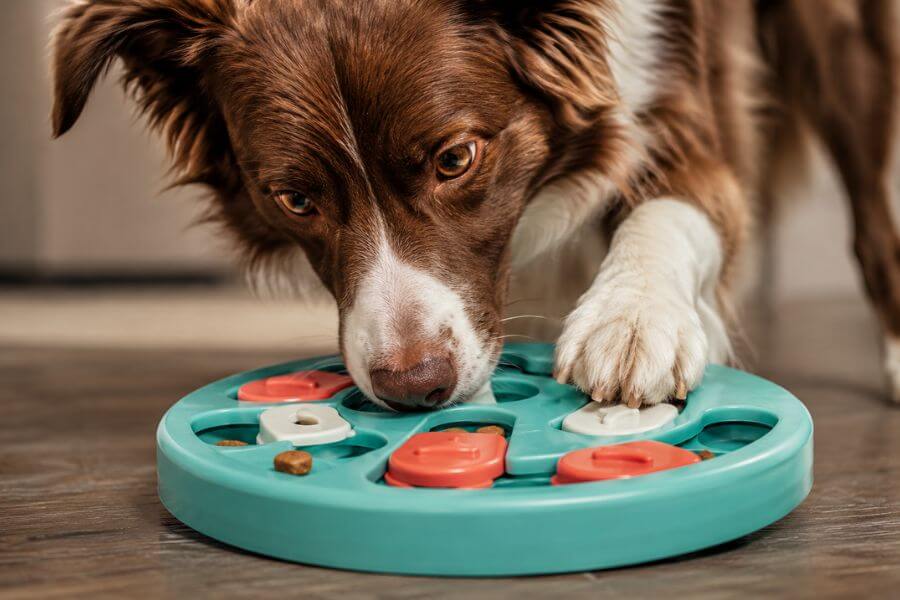
Puzzle board toys are excellent for teaching your dog patience and problem-solving skills. These toys usually include sliding pieces, hidden compartments, or rotating sections that hide treats inside.
Your dog must figure out how to move the pieces correctly to reach the reward. Some puzzle boards start simple, while others become surprisingly difficult.
This kind of mental exercise can tire your dog out faster than physical activity alone. A short puzzle session may leave your dog calmer and more relaxed afterward.
Puzzle boards are especially popular with intelligent breeds that naturally enjoy learning tasks and solving problems.
Best for:
- Border Collies
- Poodles
- German Shepherds
- Curious and highly trainable dogs
3. Snuffle Mat 🌿
A snuffle mat taps into your dog’s natural instinct to sniff and search for food. These mats contain layers of soft fabric where treats or kibble can be hidden.
Instead of eating quickly from a bowl, your dog must use their nose to locate every piece of food. This creates a calming and rewarding activity that feels natural to them.
Sniffing activities are mentally exhausting for dogs in a healthy way. Many anxious dogs become more relaxed after spending time with a snuffle mat.
They are also gentle enough for senior dogs and puppies.
Benefits include:
- Reduced boredom
- Slower eating habits
- Less stress and anxiety
- Indoor enrichment during bad weather
4. Tug Puzzle Toy 🪢
A tug puzzle toy combines physical play with mental stimulation. Some versions include hidden treats, while others require your dog to pull ropes or fabric pieces to unlock rewards.
This type of toy is perfect for dogs that enjoy tug-of-war but also need a mental challenge. The combination of movement and thinking keeps dogs fully engaged.
Interactive tug toys are also great for bonding because you can join the play session and encourage your dog throughout the activity.
Dogs that become bored with standard chew toys often stay interested longer when the toy includes multiple ways to interact.
Ideal for:
- Medium to large dogs
- Strong chewers
- Social dogs who enjoy owner interaction
5. Automatic Moving Toy 🚗
Automatic moving toys create excitement by moving unpredictably across the floor. Some bounce, spin, or roll on their own, encouraging your dog to chase and investigate.
These toys work especially well for dogs that stay home alone during the day because they create movement without requiring human involvement.
The unpredictability keeps dogs mentally alert. Since the toy changes direction randomly, your dog must stay focused to continue the game.
Many moving toys also include lights or sounds for added stimulation, although simpler versions are often better for sensitive dogs.
Things to consider:
- Choose durable models
- Make sure the toy matches your dog’s size
- Supervise the first few play sessions
6. Frozen Treat Toy ❄️
Frozen treat toys are simple but incredibly effective. You fill the toy with soft food, peanut butter, yogurt, or wet dog food, then freeze it before giving it to your dog.
The frozen filling creates a long-lasting challenge because your dog must lick, chew, and work patiently to remove every bit.
These toys are especially useful for:
- Dogs with separation anxiety
- Heavy chewers
- Teething puppies
- Hot summer days
Licking activities can also help calm nervous dogs. Many owners use frozen toys before leaving home because they keep dogs busy during stressful moments.
The longer-lasting entertainment makes these toys one of the best values for dog owners.
7. Hide-and-Seek Plush Toy 🐿️
Hide-and-seek plush toys usually come with a larger container and several smaller squeaky toys hidden inside. Your dog must figure out how to remove the smaller toys one by one.
This game activates your dog’s hunting instincts and keeps them mentally engaged through searching and discovery.
Many dogs become obsessed with pulling out the hidden toys repeatedly. The challenge feels rewarding because each successful removal creates excitement and stimulation.
These toys are often softer and gentler, making them ideal for smaller dogs or dogs that prefer plush toys over rubber ones.
Best for:
- Small to medium dogs
- Gentle players
- Dogs who love squeaky toys
8. Slow Feeder Puzzle Bowl 🍽️
Some dogs eat so quickly that they barely chew their food. Slow-feeder puzzle bowls solve this problem by forcing your dog to work around ridges, patterns, and obstacles while eating.
This turns mealtime into a mentally stimulating activity instead of a rushed routine.
Dogs must carefully navigate the bowl to reach each piece of food, which naturally slows them down and improves digestion.
These bowls are especially helpful for:
- Dogs prone to bloating
- Fast eaters
- Food-obsessed dogs
Since your dog uses both focus and patience, even regular meals become a form of enrichment.
9. Interactive Rope Toy 🎯
Interactive rope toys encourage both physical and mental activity. Some include knots, hidden compartments, or attached toys that make play more challenging and exciting.
These toys work best when you join the activity. Tugging, tossing, and training games help your dog stay mentally alert while strengthening your bond.
You can also use rope toys during obedience practice by rewarding your dog with play after successful commands.
Benefits include:
- Improved engagement
- Healthy exercise
- Better focus during training
- Stronger owner-dog connection
Always inspect rope toys regularly because damaged strands can become a choking risk if swallowed.
10. Advanced Dog Puzzle Box 🧠
Advanced puzzle boxes are designed for highly intelligent dogs that need serious mental challenges. These toys often require multiple steps to unlock treats.
Your dog may need to slide panels, lift levers, spin compartments, or complete tasks in the correct order.
These puzzles provide some of the deepest mental stimulation available in dog toys. They are excellent for preventing boredom in smart breeds that quickly lose interest in simple games.
However, beginners may become frustrated if the toy is too difficult too soon. Start with easier puzzles and slowly increase the challenge level over time.
Perfect for:
- Experienced puzzle-solving dogs
- Working breeds
- Dogs that master simple toys quickly
Conclusion 🐕
Interactive toys can completely change your dog’s daily routine. Instead of spending hours bored or restless, your dog gets the chance to think, explore, and solve problems in healthy ways.
The best toy for your dog depends on their personality, energy level, and play style. Some dogs love sniffing games, while others prefer puzzles, chasing toys, or frozen treats.
Rotating different interactive toys throughout the week can keep your dog excited and prevent boredom from returning. Even a few minutes of mental stimulation every day can improve your dog’s behavior, confidence, and overall happiness.
A mentally stimulated dog is often calmer, healthier, and much more satisfied at home.
Frequently Asked Questions 🐾
How often should you give your dog interactive toys?
You can use interactive toys daily. Many dogs benefit from at least 15 to 30 minutes of mental stimulation each day. Active and intelligent breeds may need even more.
Are interactive toys good for puppies?
Yes, interactive toys are excellent for puppies. They help reduce boredom, encourage healthy brain development, and prevent destructive chewing habits. Just choose toys designed for your puppy’s size and age.
Can interactive toys help with separation anxiety?
Interactive toys can help reduce stress and keep your dog occupied while you are away. Frozen treat toys and puzzle feeders are especially helpful for anxious dogs.
What if your dog loses interest in interactive toys quickly?
Try rotating toys instead of leaving all of them out every day. Dogs often regain interest when a toy feels new again after being stored away for a few days.
Are puzzle toys better than regular chew toys?
Puzzle toys and chew toys serve different purposes. Puzzle toys focus on mental stimulation, while chew toys mainly satisfy chewing instincts. Many dogs benefit from having both types available.