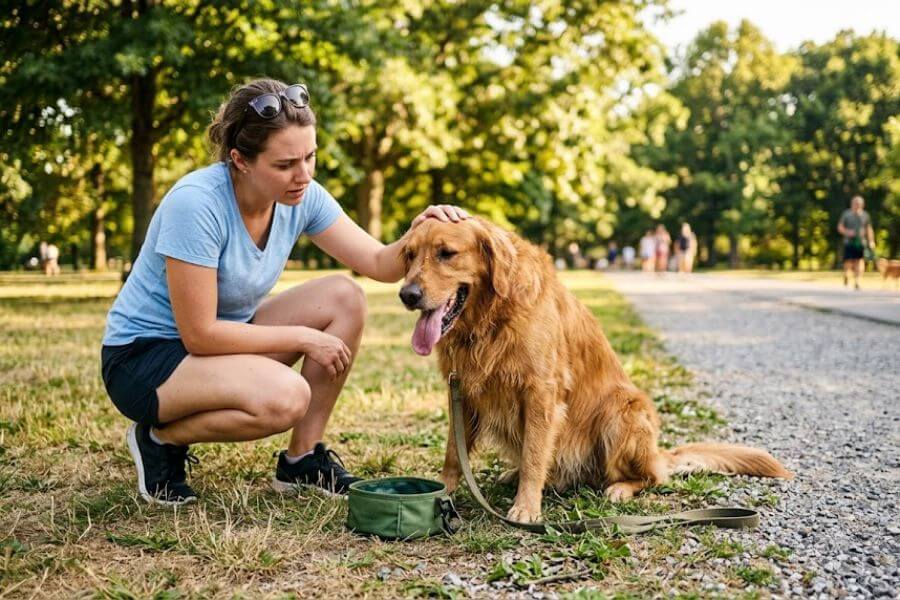
As a loving dog owner, you want your furry friend to be safe and happy, especially when the weather gets hot. Summer fun can quickly turn into a scary situation if your dog gets too hot. Heat stroke in dogs is a life-threatening emergency that happens when their body temperature rises to a dangerous level. You need to know the early signs so you can act fast to protect your companion. In this post, we explore the main warning signs you should look for to keep your pup safe during those sunny days.
Quick Summary of Heat Stroke Signs
| Rank | Warning Sign | Severity |
| 1 | Heavy Panting | High |
| 2 | Excessive Drooling | Moderate |
| 3 | Bright Red Gums | High |
| 4 | Lethargy or Weakness | High |
| 5 | Thick Saliva | Moderate |
| 6 | Rapid Heartbeat | High |
| 7 | Vomiting or Diarrhea | High |
| 8 | Confusion or Collapse | Critical |
How We Ranked These Signs
To help you prioritize what to watch for, we ranked these warning signs based on how easily you can spot them and how urgent the situation is. Here are the key factors we used to determine this list:
- Speed of onset and how quickly a sign shows up after heat exposure.
- The physical danger the sign poses to the dog internal organs.
- How clearly the sign differs from a normal, happy dog behavior.
- Expert recommendations from veterinarians regarding emergency medical intervention.
1. Heavy and Persistent Panting
Panting is the primary way dogs cool themselves down, but there is a big difference between normal panting and heat stroke warning signs. If your dog is breathing much faster than usual, making a loud sound, or cannot seem to stop even after resting in the shade, this is a major red flag. When panting becomes frantic or labored, it means your dog is struggling to regulate their body temperature. Always take excessive, non-stop panting seriously when it is hot outside.
2. Excessive or Abnormal Drooling
A little bit of slobber is normal for many breeds, but a sudden increase in drooling is a common sign of overheating. When a dog reaches a point where they are struggling with heat, their salivary glands often go into overdrive. If you notice your dog is suddenly leaving puddles of saliva or drooling significantly more than they do on a normal day, they might be in the early stages of heat stress. Keep an eye out for this change in behavior, especially if they have been active in the sun.
3. Bright Red or Dark Gums
You can often tell a lot about your dog health by checking their mouth. A healthy dog usually has pink, moist gums. If you lift your dog lip and see that their gums have turned a deep, bright red, or sometimes even purple or gray, it is a sign that their circulation is failing due to heat. This is a very clear physical indicator that your dog is suffering and needs to be moved to a cool area immediately. Do not ignore changes in gum color as it is one of the most reliable visual tests for heat stroke.
4. Extreme Lethargy or Weakness
If your dog is usually energetic but suddenly seems slow, clumsy, or unwilling to move, they may be overheating. Heat stroke drains a dog of their physical strength very quickly. You might notice them stumbling, dragging their feet, or just laying down and refusing to get up when you call them. This is not just them being tired from a walk. It is a sign that their body is shutting down to conserve energy because it is overwhelmed by the high temperature.
5. Thick and Sticky Saliva
Beyond just excessive drooling, the actual texture of your dog saliva can tell you a lot about their hydration and heat levels. As a dog becomes dehydrated and overheated, their saliva often becomes thick, sticky, and ropey. If you look at their mouth and see that the saliva looks more like paste or is stringy, it is a sign that they are severely dehydrated. This is a dangerous stage because it means the body no longer has enough fluids to keep the system running smoothly.
6. Rapid and Racing Heartbeat
You can often feel your dog heart rate by placing your hand gently on their chest. When a dog is suffering from heat stroke, their heart will beat much faster than normal as it works to pump blood to the skin for cooling. If you feel a very fast, pounding heart rate when your dog is at rest, they are likely in distress. A racing heart combined with other symptoms like heavy panting should be treated as an immediate medical emergency.
7. Vomiting or Diarrhea
Heat stroke does not just affect a dog breathing and heart rate, it also wreaks havoc on their digestive system. If your dog starts vomiting or has sudden diarrhea during or shortly after being in the heat, it is a serious warning sign. This indicates that their body is under immense stress and failing to function correctly. These symptoms can also lead to faster dehydration, which makes the heat stroke even more dangerous and difficult to treat.
8. Confusion or Sudden Collapse
The most severe and final signs of heat stroke involve the dog brain and nervous system. If your dog seems disoriented, bumps into things, cannot follow simple commands, or collapses, they are in a life-threatening crisis. This happens when the body temperature rises so high that it damages cells. You must seek veterinary help instantly if your dog shows any signs of losing consciousness or cannot stand up on their own, as every second counts.
Conclusion
Heat stroke is a serious issue, but it is also something that you can often prevent by staying alert and being prepared. By watching for these eight signs, you can catch heat stress before it turns into a medical emergency. Always carry extra water, find shade, and avoid hard exercise during the hottest parts of the day. Your quick actions and careful observation are the best tools you have to keep your dog safe and healthy all summer long.
Frequently Asked Questions
What should I do immediately if I suspect my dog has heat stroke?
The first step is to move your dog to a cool, shaded area or into an air-conditioned room immediately. Offer them small amounts of cool water, but do not force them to drink. You can dampen their fur with cool, not ice-cold, water around the ears, paws, and stomach to help lower their temperature. Most importantly, contact your veterinarian or the nearest animal emergency hospital right away for professional guidance.
Can some dog breeds get heat stroke faster than others?
Yes, certain breeds are at a higher risk. Dogs with flat faces, known as brachycephalic breeds like Pugs, Bulldogs, and French Bulldogs, struggle more with cooling themselves because they cannot pant as efficiently. Dogs with thick, double coats or those that are overweight or elderly are also much more susceptible to heat stroke, even in moderate temperatures.
Is it safe to use ice or ice water to cool down an overheating dog?
It is generally better to use cool water rather than ice or ice water. Applying freezing cold water can cause the blood vessels in the skin to constrict, which can actually trap heat inside the body. Using cool water and placing the dog in front of a fan allows for a safer and more effective way to lower their core body temperature.
How long does it take for a dog to recover from mild heat stress?
If the situation is caught early and the dog is cooled down quickly, many dogs recover within a few hours. However, it is always a good idea to have a veterinarian check them to ensure there is no hidden internal damage. If the heat stress was severe, the recovery process can take days or weeks and may require ongoing medical monitoring.
Can pavement and asphalt contribute to heat stroke?
Absolutely. Pavement absorbs a massive amount of heat from the sun and can become hot enough to burn a dog paws. Beyond the risk of burns, the heat radiating up from the ground is much closer to a dog body than to yours, which can significantly increase their temperature during a walk. Always test the pavement with the back of your hand for five seconds; if it is too hot for you, it is too hot for your dog.