There is nothing quite like waking up before the sun, looking down at your furry best friend, and knowing you both share the same exciting mission. If you have a retriever breed like a Labrador, a Golden Retriever, or a Chesapeake Bay Retriever, you have a dog that was born to work. These dogs have an amazing drive to fetch, swim, and please their human partners. But a great hunting companion is not born overnight. It takes time, patience, and a lot of practice to turn a playful puppy into a focused, safe, and reliable gun dog.
Training a retriever is a journey that will bring you closer to your pet than ever before. When you work together in the backyard or out in the fields, you form a team. This guide will walk you through the essential steps to get your canine partner ready for the field. We will break down the big goals into small, manageable habits so that you and your dog can enjoy every single step of the process.
Understanding Your Retriever Instincts
Before you blow a whistle or throw a single training dummy, you need to understand how your dog thinks. Retrievers are special. For hundreds of years, people bred them to do specific jobs. They needed to watch where a bird fell, remember that spot, swim or run across tough land, pick up the bird gently, and bring it straight back without damaging it.
Your dog already has some of these skills built into its brain. You might notice your puppy naturally carrying slippers around the house or watching birds fly across the sky. This is called natural drive. Your job as a trainer is not to force something new into the dog. Your job is to mold and shape the instincts that are already there.
Every pup develops at a different pace. Some will pick up concepts right away, while others need a few weeks to catch on. The secret is to watch your dog closely. Learn what motivates them. Some dogs love praise and a scratch behind the ears more than any treat. Others are driven entirely by the chance to chase a plastic bumper. Use what your dog loves to help them learn.
Building the Foundation with Puppy Basics
A house cannot stand without a strong foundation, and a gun dog cannot hunt without excellent basic manners. Long before you introduce guns or real birds, your puppy needs to know who is in charge and what the daily rules are. This phase begins the very first day you bring your new friend home.
Socialization and the Big Wide World
Socialization does not just mean letting your pup play with other dogs. It means introducing your dog to all kinds of sights, sounds, surfaces, and smells. You want a dog that is calm and confident anywhere.
- Take your puppy on walks in different neighborhoods.
- Let them walk on grass, gravel, mud, concrete, and wet leaves.
- Expose them to loud noises like lawnmowers, garbage trucks, and clapping hands from a safe distance so they do not get scared.
- Introduce them to different people, including children, adults wearing big hats, and people in heavy winter jackets.
The Power of the Name
Your puppy must learn that their name is the most important word in the world. When they hear their name, they should instantly look at you, expecting something wonderful. Never use your dog’s name when you are angry or punishing them. You always want them to associate their name with positive rewards and focus.
The Big Four Obedience Commands
There are four basic commands that every single gun dog must know completely. In fact, obedience is about ninety percent of gun dog training. A dog that does not listen in the backyard will be dangerous and chaotic in a hunting scenario. You must practice these commands until your dog obeys them immediately, every single time.
Sit
The sit command is the anchor for everything else. A retriever will spend a lot of time sitting quietly in a blind or a boat, waiting for birds to fly over.
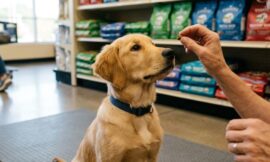
- Start with a small treat in your hand. Hold it right in front of your puppy’s nose.
- Slowly move your hand up and back over the puppy’s head. As their nose goes up to follow the treat, their bottom will naturally go down to the floor.
- The moment their bottom touches the ground, say the word sit in a clear, happy voice and give them the treat.
- Repeat this many times a day. Soon, you can drop the treat reward and use just the verbal command or a hand signal.
Stay
Once your dog can sit, they must learn to remain in that position until you say otherwise. This keeps them safe from running into danger.
- Ask your dog to sit. Hold up your flat palm toward their face and say stay.
- Take just one step backward. Wait two seconds.
- Step back to your dog, praise them warmly, and give them a release word like okay or free.
- Slowly increase the distance you step away and the amount of time they have to wait. Never rush this step.
Heel
Heel means walking calmly right next to your leg, usually on your left side if you are right-handed. A hunting dog cannot be pulling you through the brush or tripping you when you are carrying gear.
- Hold a light leash and walk forward. Keep your dog close to your knee.
- If they pull ahead, change direction immediately. Walk the other way. This teaches the dog that they must pay attention to where you are going.
- Say heel whenever they are walking perfectly by your side. Give them a quick pat on the side to let them know they are doing a great job.
Here or Come
This is the most critical safety command of all. When you say here, your dog must stop whatever they are doing and run straight to you. It can save your dog’s life if they are heading toward a thin patch of ice or a busy road.
- Begin on a long rope, about twenty feet long.
- Let your pup wander a bit, then crouch down low, open your arms, and say here in an excited, welcoming tone.
- Gently pull the rope toward you if they hesitate.
- When they reach you, throw a mini party. Give them tons of praise, belly rubs, and maybe a special treat. They must always feel that coming to you is the best choice they could ever make.
Introduction to the Fetch and Delivery
Now we are getting into the real heart of retriever training. Fetching is fun, but a gun dog needs to do it with structure. A random game of backyard fetch can actually create bad habits if you are not careful. You want your dog to understand that the object belongs to you, and their job is just to deliver it safely to your hand.
Choosing Your Training Tools
You do not need fancy equipment to start. A few simple items will do the trick perfectly.
- Canvas or Plastic Bumpers: These are long, cylindrical dummies made for dog training. Plastic ones work well for water because they float high, while canvas ones are soft and easy for a young dog to hold.
- Paint Rollers: A cheap, regular paint roller from the hardware store is an excellent tool for small puppies. It is soft, light, and fits nicely in a small mouth.
- A Long Line: A long check-cord or light rope helps you guide the dog back to you during the return phase.
The Gentle Mouth and Hold
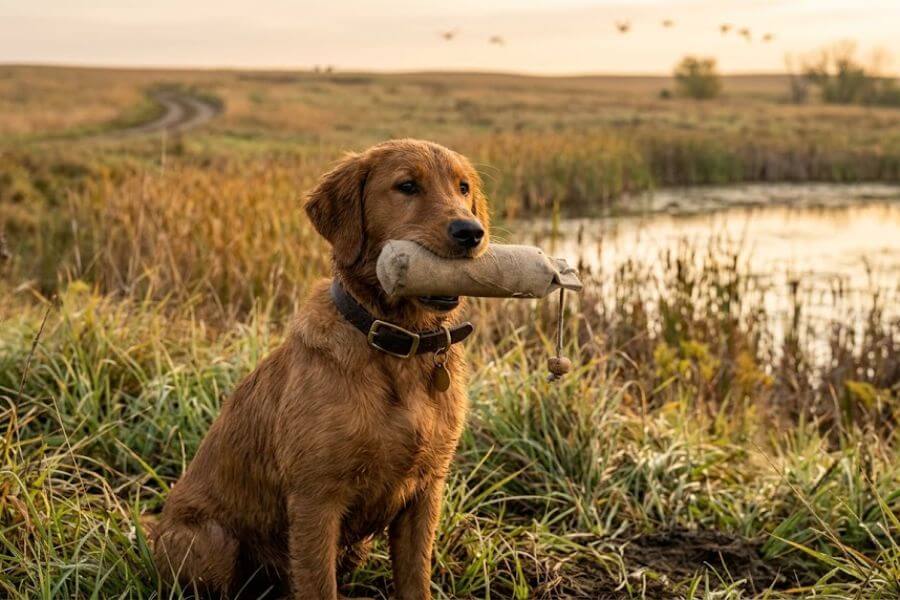
A retriever must never bite down hard or chew on a bird. They need a soft touch. You can teach this by teaching the hold command early on.
- Sit on the floor with your dog. Gently place a small wooden dowel or a soft paint roller into their mouth.
- Place your hand under their chin and say hold.
- Keep them from dropping it for just three seconds, then say drop or give, take the item, and praise them.
- This teaches the dog to hold objects calmly and securely until you ask for them.
Managing the Return
Many young dogs love to chase a thrown bumper, but once they pick it up, they run away to play a game of keep-away. This is where your long line comes in handy.
- Attach the long rope to your dog’s collar before you throw the bumper.
- Throw the bumper just a few feet away. Let the dog rush out and grab it.
- The exact moment they pick it up, turn your body, crouch down, and call here.
- If they try to run past you or chew on the bumper, use the rope to gently guide them straight into your arms. Take the bumper gently from their mouth while praising them.
Steadiness Training: The Art of Waiting
In the hunting world, a steady dog is a dog that sits quietly and does not move when a bird is shot or when a bumper is thrown. They must wait until the handler says their name or gives the release command. A dog that breaks, or breaks out running too early, can scare away other birds, get in the line of fire, or tip over a boat.
Creeping and How to Stop It
Young dogs are bundles of excitement. When they see an object flying through the air, every muscle in their body wants to sprint toward it. You will often see them crawl forward a few inches or feet. This is called creeping.
- To stop creeping, put your dog on a short leash and have them sit by your side.
- Throw a bumper a short distance in front of you. Your dog will likely try to jump forward.
- Hold the leash tight so they cannot move. Correct them back into the sitting position and say sit.
- Walk out yourself, pick up the bumper, and walk back. Do not let the dog have it. This teaches them that just because something falls, it does not automatically mean it belongs to them.
Introducing the Release Word
Your dog needs to know exactly when it is their turn to run. Most trainers use the dog’s name as the ultimate command to go fetch.
- Sit your dog next to you. Throw the bumper.
- Wait for three long seconds while your dog sits perfectly still.
- Tap your dog gently on the shoulder and say their name clearly: Scout! or Max!
- Let them run out and make the fetch. By waiting those few seconds, you are building self-control inside your dog’s mind.
Introduction to Gunfire and Loud Noises
A gun dog cannot be afraid of loud noises. Gun-shyness is a major problem, and it is almost always caused by a human making a mistake during training. If you take a young puppy out to a shooting range and blast a big shotgun right next to their ears, you will likely terrify them forever. You must introduce loud sounds slowly and match them with wonderful experiences.
The Distance Method
This process requires a friend to help you. It takes time, but it ensures your dog feels completely safe around loud cracks.
- Start in a big open field. Have your dog on a leash next to you, playing with their favorite toy or eating yummy treats.
- Have your helper stand far away, at least one hundred yards, with a starter pistol or a loud blank gun.
- Have the helper fire one shot while you are actively feeding your dog a high-value treat like a piece of chicken.
- Watch your dog’s ears. If they look over but keep eating happily, you are in good shape. If they look scared, you need to move your helper even further away.
- Over several weeks, slowly have your helper walk closer, firing shots while you keep things fun and rewarding for your dog. Eventually, the dog will realize that the sound of a gun means something exciting is about to happen.
Water Training and Swimming Confidence
Most waterfowl hunting happens around rivers, marshes, lakes, and ponds. Your retriever needs to love the water. Swimming is not always an automatic skill for every single puppy. Some need a gentle introduction to realize how much fun the water can be.
Choosing the Perfect Spot
Do not throw your puppy into a swimming pool or off a steep dock for their first experience. That can frighten them and ruin their confidence.
- Find a clean, quiet pond or lake bank with a very gradual, sandy slope.
- The water should be warm. Cold water can shock a young pup and make them dislike the experience.
- Ensure there are no sharp rocks, heavy weeds, or fast currents that could endanger your young dog.
Wading Before Swimming
Let your puppy explore the edge at their own pace. Never force them or pull them into the water on a leash.
- Put on some rubber boots or old shoes and walk into the ankle-deep water yourself. Call your puppy out to you.
- Throw a floating toy or a paint roller just a few inches into the shallow water where the puppy only has to get their paws wet.
- Praise them wildly when they splash around.
- Slowly throw the toy a tiny bit deeper until the puppy naturally lifts their back legs off the ground and realizes they are floating and swimming. Once they discover they can swim, you will have a hard time keeping them out of the water.
Introduction to Real Birds and Scent
Plastic and canvas bumpers are great for teaching the mechanics of fetching, but real birds smell, feel, and taste completely different. A dog that is a superstar with plastic dummies might freeze or refuse to pick up a real duck or pheasant because of the feathers. You need to bridge this gap carefully.
Using Scent Blinds and Scents
You can buy liquid bird scents at most outdoor supply stores. Duck scent, pheasant scent, and quail scent are very common.
- Squirt a small amount of liquid bird scent onto a canvas training bumper.
- Let your dog smell it in the yard. Throw it for them so they connect that unique wild smell with the fun game of retrieving.
- Hide the scented bumper in some tall grass where the dog cannot see it. Command them to find it, forcing them to use their nose instead of just their eyes.
The First Fresh Bird
When you are ready to use a real bird, it is best to start with a freshly killed, cold bird like a pigeon or a small teal. Pigeons are small and fit easily into a young dog’s mouth.
- Hold your dog on a leash and let them inspect the bird. They might sniff it thoroughly or lick it. That is completely normal.
- Gently toss the bird a few feet onto smooth grass.
- Encourage your dog to pick it up. If they hesitate because of the feathers, use your hold command that you practiced earlier.
- As soon as they lift it, call them to you and celebrate. Do not let them shake the bird or drop it roughly. Smoothly take it from them and give them a wonderful treat.
Advanced Basics: Marking and Blind Retrieves
Once your dog has mastered obedience, steadiness, gunfire, and real birds, you can begin to teach them advanced field concepts. This is where your dog transitions from a backyard pet to a true hunting partner.
Developing a Good Eye for Marks
A mark is a bird that the dog sees fall through the air. A good retriever watches the sky, tracks the falling bird, and remembers exactly where it landed, even if they have to run through thick brush to get there.
- Have a helper stand fifty yards out in a field.
- The helper should make a noise like a duck call or a loud shout to get the dog’s attention.
- The helper then throws a high-contrast bumper up into the air so the dog can clearly see it fall into the grass.
- Release your dog to fetch. This teaches them to look away from you and focus on the horizon where the action is happening.
Introduction to Hand Signals
Sometimes a dog does not see a bird fall. This requires a blind retrieve. You must guide your dog to an object they cannot see by using whistle blasts and hand signals.
- Start with a game called the baseball diamond. Imagine your dog is sitting in the center of a baseball infield, facing you. You are standing on home plate.
- Place a bumper on first base, second base, and third base while your dog watches.
- Walk back to home plate. Extend your right arm straight out to the side and say over. Your dog should run to first base.
- Extend your left arm straight out to the side and say over to send them to third base.
- Raise your hand straight up over your head to send them back toward second base. This simple game teaches them that your arms act as a steering wheel when they are far away from you.
Keeping the Training Fun and Avoiding Burnout
Training a gun dog is hard work, but it should never feel like a chore for you or your dog. Retrievers work best when they are happy, energetic, and full of desire. If you become strict, angry, or bored, your dog will mirror those emotions immediately.
Keep Training Sessions Short
Dogs have short attention spans, especially puppies. A long, exhausting two-hour training session will only confuse and tire your dog out.
- Limit your formal training sessions to ten or fifteen minutes at a time.
- You can do two or three of these short sessions throughout the day.
- Always stop the session while your dog is still excited and wanting more. If they make a perfect retrieve, praise them, pack up the gear, and go inside. Leave them wishing for one more turn.
End on a High Note
Never end a training session right after a mistake or a correction. If your dog is struggling to learn a tough new concept, drop back to something very easy that they know perfectly, like a simple sit or a short backyard fetch. Let them succeed, reward them heavily, and end the session on a positive, happy note. This keeps their confidence high for the next day.
Frequently Asked Questions
What is the best age to start training a retriever for hunting?
You can start training your retriever the very day you bring them home, which is usually around eight weeks of age. At this stage, training should be informal and focused entirely on bonding, socialization, and simple household rules. Real gun dog training, like introducing gunfire, advanced steady work, and heavy field obedience, usually starts around six months of age when the dog has its adult teeth and a longer attention span.
Can I train an older retriever to be a hunting dog if they missed puppy training?
Yes, you can absolutely train an older retriever to hunt, provided they have a natural drive to fetch and do not have a deep fear of loud noises. The process is exactly the same, but you might need to spend extra time breaking old habits, like pulling on the leash or running off with toys. Older dogs often have better focus than puppies, which can make some parts of the process go quite smoothly.
What should I do if my dog is afraid of water?
If your dog shows fear around water, you must step back and slow down completely. Never force, pull, or throw your dog into the water. Find a very shallow, warm spot and let them explore it at their own pace. You can use a highly favorite toy or even another water-loving dog to show them that swimming is safe and exciting. Walk into the shallow water yourself to give them confidence, rewarding them with treats for every single paw they put into the water.
How do I stop my dog from chewing or ruining the birds we shoot?
Chewing or biting down too hard on birds is called a hard mouth. You can prevent and fix this by spending plenty of time practicing the hold and give commands with training bumpers or wooden dowels in a calm indoor setting. If your dog starts to chew on a real bird in the field, gently hold their muzzle, repeat the give command, and immediately replace the bird with a high-value food treat. Never pull or rip a bird out of a dog’s mouth forcefully, as this can make them clamp down even harder.
My dog retrieves perfectly in the backyard but runs away in the field. How can I fix this?
This is a very common issue known as a lack of generalization. Dogs do not naturally understand that a rule in the backyard also applies in a big wild field. When you move to a new location, you must drop back a few steps in your training. Use a long check-line or rope in the new field so your dog cannot run away or ignore your commands. Once they realize that here means here no matter where you are standing, you can safely remove the rope.
Why does my retriever whine or bark while waiting in the hunting blind?
Whining or barking in the blind is usually caused by pure excitement and anxiety. Your dog knows that fun things are happening, and they want to be part of the action right away. To fix this, you must practice steadiness in exciting environments without letting the dog fetch every time. Take your dog to a park or field, throw bumpers while they sit next to you, and walk out to pick them up yourself. Teach your dog that being quiet and calm is the only way they will ever get a turn to fetch.
How often should I practice these hunting drills with my dog?
Consistency is much more important than duration. You should aim to practice for about ten to fifteen minutes every single day, rather than doing one long session on the weekend. Short, daily sessions keep the commands fresh in your dog’s mind and keep their enthusiasm high. You can mix training into daily life, such as asking for a steady sit before you place their food bowl on the floor or practicing the heel command during your evening walk.