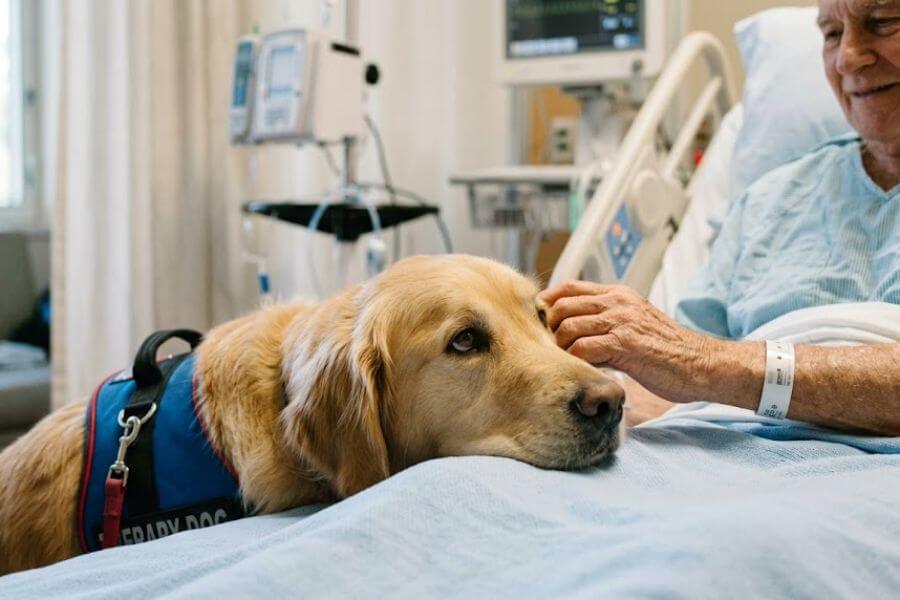
Imagine walking into a quiet hospital room. The lights are dim, the machines are ticking, and a person is lying in bed feeling lonely or tired. Suddenly, a furry face with warm brown eyes peeks around the door. A soft tail starts wagging, and a cold nose gently taps the patient’s hand. In an instant, the heavy mood in the room melts away. Smiles return, and a sense of calm fills the air.
That is the absolute magic of a therapy dog.
If you have a wonderful dog at home, you might have watched them comfort you when you were having a bad day. You might have thought to yourself that your pup has a special gift for making people feel better. Sharing that love with patients, nurses, and families in a hospital is one of the most rewarding things you can ever do.
Training your dog for this journey takes time, patience, and a lot of teamwork. It is a true partnership between you and your best friend. This guide will walk you through every single step of the process, from teaching basic manners to passing your final test and stepping into your very first hospital hallway.
Understanding the True Role of a Therapy Dog
Before you pick up a leash or grab a bag of treats, it is important to know exactly what a therapy dog does. Many people get confused about the differences between different kinds of working dogs, so let us clear that up first.
Therapy Dogs vs Service Dogs vs Emotional Support Animals
A service dog is trained to do specific tasks for one single person with a disability. For example, a guide dog helps a person who cannot see navigate the sidewalk. Service dogs have special legal rights to go anywhere, like restaurants and airplanes, because they are working to keep their handler safe.
An emotional support animal provides comfort to their owner just by being there. They do not need special training to visit public places or hospitals. They are personal pets that help their owners feel peaceful at home.
A therapy dog is entirely different. Your therapy dog will be a personal pet who is highly trained to visit public spaces, especially hospitals, nursing homes, and schools. Their job is not to help you, but to bring comfort, joy, and affection to total strangers. They do not have legal rights to enter everyday stores, but they are invited into medical buildings because they have passed strict safety and behavior tests.
The Everyday Miracles inside a Hospital
When you take your dog into a hospital, you will see how much a simple animal visit can change a person’s day. Doctors and nurses have studied this, and they know that petting a friendly dog can actually make a patient’s body feel better.
- Lowering Stress: Petting soft fur causes the human body to release happy chemicals that lower blood pressure and slow down a racing heart.
- Forgetting Pain: When a patient is focusing on a dog doing a trick or offering a paw, they are not focusing on their pain or their worries.
- Bringing Comfort: Many hospital patients miss their own pets terribly. A visit from your dog feels like a warm piece of home brought right to their bedside.
- Supporting the Staff: Hospital workers have incredibly stressful jobs. A quick break to hug a dog helps nurses and doctors recharge their batteries so they can keep caring for others.
Are You and Your Dog Ready for the Challenge
Being a therapy team is a two-way street. Your dog needs to love people, but you also need to be ready to talk to strangers, follow strict hospital rules, and manage your dog perfectly in crowded spaces. You will be reading your dog’s body language every second to make sure they are happy and not overwhelmed. It is a big responsibility, but the smiles you see will make every single hour of practice worth it.
Evaluating Your Dog’s Natural Personality
Not every wonderful pet is cut out to be a therapy dog, and that is completely fine. Some dogs are amazing athletes who love to chase tennis balls all day, while others are couch potatoes who love to snuggle. To be a great fit for hospital work, a dog needs a very specific type of natural personality.
The Essential Traits of a Hospital Companion
Look closely at how your dog acts on a normal day. A great candidate for hospital visits should show these core qualities naturally.
- True Friendliness: Your dog should genuinely love meeting new people. If a stranger walks up, does your dog wag their tail and look happy, or do they step back and hide behind your legs? A therapy dog must actively enjoy the company of strangers.
- Deep Calmness: Hospitals are full of weird noises, strange smells, and sudden movements. A therapy dog cannot be overly hyper, jumpy, or easily startled. They need to be able to sit quietly even when things are busy around them.
- Amazing Patience: Patients might pet a dog a little too roughly, or they might want to hold a dog’s paw for a long time. Your pup must be incredibly patient and tolerant of different types of handling.
- Solid Resilience: If a metal tray drops and makes a loud clanging sound, a good therapy dog might look up or startle for a brief second, but they should calm down almost immediately. A dog that stays terrified or shakes after a loud noise will find a hospital too stressful.
Signs That Hospital Work Might Not Be Right for Your Dog
It is vital to be completely honest about your dog’s limits. Forcing a dog into a role they do not like is not fair to them or safe for the patients. Your dog might prefer to stay a beloved family pet if they show any of these signs.
- Fear or Shyness: If your dog cowers, tucks their tail, or barks at people they do not know, hospital visits will make them miserable.
- Aggression or Guarding: Any history of growling, snapping, or guarding toys and food means a dog cannot do therapy work. Safety is always the top priority.
- Extreme Hyperactivity: If your dog cannot stop barking, spinning, or jumping when they get excited, they could accidentally knock over a patient or pull out a medical tube.
- Prey Drive: If your dog constantly obsesses over squirrels, birds, or moving objects, they might get distracted by rolling hospital carts or wheelchairs.
Age and Breed Considerations
Any breed of dog can become a therapy dog. You will see tiny Chihuahuas that comfort patients by sitting gently on a towel in their lap, and you will see giant Great Danes that can look a patient right in the eye while standing next to a high bed.
Age matters more than breed. Most therapy organizations require a dog to be at least one year old before they can take the official test. Puppies are simply too unpredictable, hyper, and mouthy. Your dog needs time for their brain to mature so they can handle the quiet, focused environment of a hospital room.
Mastering Basic Manners and Household Obedience
Before you can teach your dog advanced hospital skills, they must have a flawless foundation of basic manners. This means your dog listens to you the very first time you ask, no matter where you are.
Building a Rock Solid Sit and Down
Your dog needs to be able to sit or lie down on command and stay in that position until you give them permission to move. In a small hospital room, you might need your dog to lie down under a table or next to a chair so doctors can walk past.
To practice this, start in a quiet room in your house with no distractions. Use a happy voice and small, delicious treats. Reward your dog for staying in a sit or down position for five seconds, then ten seconds, then thirty seconds.
Once they can do this at home, take the training to your backyard, then to a quiet sidewalk, and eventually to a busy park. Your dog must learn that “sit” means “sit,” whether they are in your kitchen or surrounded by playing children.
Mastering the Loose Leash Walk
A therapy dog should never pull on their leash. Pulling looks unprofessional, and it can be dangerous if you are walking on slick hospital floors. Your dog should walk calmly right by your side, keeping the leash loose like a smiley face.
If your dog starts to pull during a walk, stop moving immediately. Become a human statue. Wait until your dog looks back at you and steps closer, putting slack back into the leash. Reward them with a treat and praise when they walk nicely beside you. This teaches your dog that pulling makes the fun stop, while walking calmly next to you keeps the journey going.
The Most Important Command: Leave It
In a hospital, patients drop things constantly. This could include stray food, tissues, or dropped pills that could be highly toxic to a dog. Your dog must have a lightning-fast “leave it” command. When you say “leave it,” your dog must immediately turn their head away from the tempting item and look at you.
You can teach this by holding a boring treat in your closed fist. Let your dog sniff and lick your hand. Ignore the sniffing. The moment your dog gives up and moves their head back, say “yes!” and give them a much better treat from your other hand.
Eventually, place a treat on the floor and cover it with your foot, saying “leave it.” When your dog looks away, reward them. Practice this until you can drop a piece of hot dog on the ground, say “leave it,” and your dog will not even try to touch it.
Perfecting the Recall: Coming When Called
Your dog must come running to you joyfully every single time you call their name. If a leash ever slips out of your hand by accident, a reliable recall can save your dog’s life.
Never call your dog to punish them or do something they hate, like taking a bath, or they will learn that coming to you leads to bad things. Always make coming to you the best party ever, filled with belly rubs, high-pitched praise, and their absolute favorite snacks.
Advanced Socialization and Environmental Conditioning
Socialization does not mean letting your dog run up and play with every person and animal they see. True socialization means teaching your dog to be calm, neutral, and relaxed when looking at strange new things.
Getting Used to Medical Equipment
Hospitals are full of loud, rolling metallic objects that can terrify a normal dog. You need to teach your dog that medical gear is nothing to fear.
- Wheelchairs and Walkers: Find a friend who has a wheelchair or walker, or see if you can rent one. Set the equipment in your living room and let your dog sniff it while it is completely still, rewarding them with treats. Then, have someone sit in the wheelchair and roll it slowly. Reward your dog for staying calm as the wheels move.
- Crutches and Canes: The thumping sound of crutches can be alarming. Practice walking on crutches around your house, dropping treats on the floor near the crutches so your dog associates the thumping sound with good things.
- Intravenous Poles and Carts: Rolling metal poles that hold medicine bags make distinct clicking and rattling noises. Practice moving similar rolling objects around your home so your dog gets used to things rolling past their vision.
Navigating Different Surfaces and Sounds
Hospital floors can change from room to room. Your dog needs to be completely confident walking on any surface.
- Slippery Floors: Many hospitals have shiny, polished linoleum or tile floors. Some dogs hate the slick feeling under their paws and will freeze up. Find buildings with shiny floors, like pet-friendly home improvement stores, and practice walking on them using lots of encouragement.
- Elevators and Automatic Doors: The sliding motion of automatic doors and the shifting weight of a moving elevator can feel strange to a pup. Ride elevators together, rewarding your dog as the doors open and close.
- Loud Public Sounds: Spend time near busy areas where your dog can hear sirens, crying children, loud laughter, shouting, and overhead announcements. Your dog should notice the sounds but remain relaxed and focused on you.
Teaching Polite Greetings without Jumping
When a patient moves toward your dog, your dog might get super excited and want to jump up to lick their face. In a hospital, jumping is forbidden. A dog jumping on a frail patient or someone recovering from surgery can cause serious injuries.
Teach your dog that they only get affection when all four of their paws are firmly planted on the floor. If your dog lifts their front paws up to jump on someone, the person should turn their back, cross their arms, and look at the ceiling. The very second the dog’s paws touch the ground, shower them with attention. Your dog will quickly learn that keeping their feet on the floor is the secret key to getting love.
Specialized Training Skills for Hospital Visits
Once your dog has master manners and can handle any environment, it is time to teach them the custom skills they will use every day inside a hospital room.
The Gentle Touch and Polite Petting
Hospital patients can have weak arms, tremors, or clumsy movements due to their illness or medications. They might accidentally grab your dog’s ears too tightly, pull their fur, or pat them with a heavy hand.
At home, prepare your dog for this by practicing clumsy petting. Gently tug on their ears, hold their tail, hug them tightly, and pat their head a bit awkwardly. While you do this, feed them amazing treats. This teaches your dog a beautiful lesson: when people touch me in a weird or clumsy way, I get the best snacks in the world. They will learn to look forward to these interactions instead of getting defensive or frightened.
The Visit Command: Resting the Head
One of the most comforting things a therapy dog can do is place their chin gently on a patient’s bed or lap. This allows a bedridden patient to pet the dog easily without having to lean over or strain themselves.
You can teach this skill by using a command like “visit” or “chin.” Hold a treat in your hand and rest your hand on the edge of a chair or bed. Encourage your dog to place their chin on your hand to get the food. Gradually remove your hand and teach them to place their chin directly on the furniture surface. This creates a beautifully quiet, intimate moment between your dog and a patient.
Controlling the Barking completely
A hospital is a quiet zone. A single loud bark can scare a sick patient, wake up someone who finally fell asleep, or disrupt a doctor trying to listen to a heartbeat. Your therapy dog must be completely silent while working.
If your dog is a natural watch-dog who barks at doors or strange noises, you must work hard to redirect that energy. Teach them a command like “quiet.” When they stop barking to look at you, reward that silence immediately. If your dog barks out of excitement during training, pause the activity instantly and wait for them to calm down before moving forward.
Navigating Tight Spaces and Backward Walking
Hospital rooms are often packed with big beds, medical monitors, reclining chairs, and visitor seating. There is not always room for a dog to make a wide circle to turn around.
Teach your dog how to back up on command. Stand directly in front of your dog and take a slow step toward them. Most dogs will naturally take a step backward to keep their personal space. The moment they step back, say “yes!” and give them a treat. Build this up until you can say “back up,” and your dog will neatly walk backward in a straight line out of a narrow space.
Grooming and Cleanliness Standards for Hospital Entry
Hospitals are sterile places where cleanliness keeps patients safe from germs. Even the best-trained dog cannot visit a hospital if they are dirty, smelly, or shedding hair everywhere.
The Strict Pre-Visit Bath Routine
Before every single hospital visit, your dog must be spotlessly clean. This usually means giving them a thorough bath within twenty-four hours of walking into the building.
Use a high-quality dog shampoo that gets rid of dirt and dander. Make sure you dry your dog completely so they do not smell like a wet dog when they arrive. Brush their coat thoroughly to remove any loose hairs that could fly off and land on a patient’s bed or clean medical equipment.
Nail Care and Paw Maintenance
A dog’s claws can be sharp, and if they are too long, they can scratch a patient’s delicate skin or puncture sterile medical gloves. Your dog’s nails must be trimmed short and filed down so there are no sharp edges.
You should also check their paws carefully. Trim away any long hair growing between their toe pads. Long hair can trap dirt from the sidewalk and can also cause your dog to slip and slide on smooth hospital floors. Keeping the paw pads clear gives your dog maximum traction on shiny surfaces.
Oral Hygiene for Fresh Breath and Clean Licks
You will be standing very close to patients, and your dog will be interacting with people at eye level. Bad dog breath can ruin an otherwise lovely visit.
Brush your dog’s teeth regularly with dog-safe toothpaste to keep their mouth fresh and clean. It is also important to note that many hospital health codes do not allow therapy dogs to lick patients, as saliva can carry bacteria into open wounds or scratch sensitive skin. Train your dog to show affection with a gentle touch of their body rather than an eager tongue.
Selecting and Joining a Certified Therapy Dog Organization
You cannot simply show up at a hospital door with your dog and ask to come in. For safety and insurance reasons, hospitals only allow teams that are certified by official, recognized therapy dog organizations.
Top Therapy Organizations in the United States
There are several national groups that test, certify, and provide insurance for therapy dog teams. Research these options to see which group has a strong presence in your local community.
- Alliance of Therapy Dogs: This group focuses on a supportive, friendly testing process. They have local testers who observe you and your dog during real visits to see how you perform as a team in a natural setting.
- Pet Partners: This is a large, highly respected organization with very thorough standards. They place a massive emphasis on the handler’s ability to guide and protect the dog, and they re-test their teams every two years to ensure skills stay sharp.
- Therapy Dogs International: One of the oldest organizations around, they use a testing system based closely on the American Kennel Club Canine Good Citizen test, along with additional hospital-focused challenges.
The Massive Importance of Liability Insurance
When you join a certified therapy organization, your membership fee almost always includes liability insurance. This is absolutely critical.
If your dog accidentally trips a visitor, bumps into an expensive piece of medical gear and breaks it, or causes an accidental scratch that gets infected, this insurance protects you financially. Hospitals will always ask to see proof of this insurance before they sign a volunteer contract with you.
Finding a Local Representative or Class
Look for local dog training centers that offer specialized therapy dog preparation classes. These classes are perfect because the instructors often setup mock hospital rooms, complete with wheelchairs, walkers, and volunteers acting like patients. It gives you a safe space to practice before the real test.
Preparing for and Passing the Official Evaluation Test
The day of the test can feel nerve-wracking, but if you have practiced consistently, it will feel just like another fun training game for your dog. The evaluator is there to make sure you and your dog are safe, happy, and ready for public work.
What Evaluators Are Actively Looking For
During the test, the evaluator is watching your dog’s reactions, but they are watching you just as closely. They want to see a true team.
- Loose Leash and Control: Does your dog walk nicely by your side, or are you constantly yanking the leash to keep them close?
- Response to Crowds: How does your dog handle being surrounded by several people who all want to pet them at the exact same time?
- Reaction to Distractions: If a clipboard drops or someone yells across the room, does your dog stay calm or do they panic?
- The Handler’s Awareness: Are you paying attention to your dog? If your dog looks tired or stressed, do you step in to give them a break? An evaluator loves to see a handler who prioritizes their dog’s well-being above everything else.
Common Testing Pitfalls and How to Avoid Them
Many teams fail their first test for minor reasons that can easily be fixed with extra practice.
- Treat Dependent Behavior: Most official tests do not allow you to hold treats in your hand or feed your dog during the exam. Your dog must listen to you because they respect your voice, not just because you are holding a piece of cheese. Practice phasing out treats during your home training sessions.
- The Vocal Dog: If your dog whines out of excitement or lets out a sharp bark when they see another dog across the room, they will likely be disqualified. Work on total silence during your warm-ups.
- Shyness with the Evaluator: If the evaluator walks up to greet you and your dog backs away or refuses to let the evaluator touch their paws and ears, the dog is not ready. Keep socializing your dog with diverse groups of people.
Handling a Test Failure with Grace and Hope
If you do not pass the test on your first try, do not be discouraged or embarrassed. The evaluator will give you clear notes on exactly what went wrong.
Take it as a helpful roadmap for future training. Go home, spend a few weeks working on those specific weak spots, and sign up to try again. Many wonderful therapy dogs needed a second or third attempt before they passed.
Step-by-Step Guide to Your Very First Hospital Visit
You passed your test, your uniform vest arrived in the mail, and you have your official ID badge. It is time for your grand opening day at the hospital.
Coordinating with the Volunteer Department
Your first step is contacting the hospital’s volunteer coordinator. They will guide you through human resources steps, which often include a background check, a health screening for you, and reviewing your dog’s vaccination records.
Once you are cleared, the coordinator will map out which floors and units are safe for you to visit. You will generally be assigned to general medical floors, rehabilitation wards, or waiting rooms. High-risk areas like intensive care units or surgery recovery rooms are usually off-limits to ensure everything stays perfectly sterile.
The Packing List for a Successful Outing
Before you walk out your front door, double-check your gear bag to make sure you have everything you need for a smooth visit.
- Official Vest and ID Badge: Your dog should wear their clean therapy vest, and you should wear your volunteer badge clearly visible on your shirt.
- Poop Bags and Clean-Up Supplies: Accidents can happen, even to house-trained dogs, due to excitement. Always bring bags, paper towels, and a small disinfectant spray just in case.
- A Clean Hand Towel: Place this on a patient’s bed or lap before your dog rests their chin there. This protects the hospital linens from dog hair and drools.
- A Bowl and Fresh Water: Walking around a warm hospital can make a pup thirsty. Offer them water breaks in quiet hallways away from patients.
Navigating the First Thirty Minutes inside the Building
When you first arrive, do not rush straight to a patient’s room. Give your dog ten to fifteen minutes to go potty outside on the grass. Walk around the exterior of the building to let them burn off any nervous puppy energy.
When you walk through the main sliding doors, find a quiet corner in the lobby. Ask your dog to sit and look at you. Let them adjust to the smells of medicine, rubbing alcohol, and the hum of the ventilation system. Once your dog relaxes their ears and wags their tail, you are ready to head toward your assigned floor.
Navigating the Complex Hospital Environment Safely
Working in a medical facility requires a constant state of high alertness. You must be defensive drivers of the hospital hallways, always looking ahead to keep everyone safe.
Reading Hospital Room Signs and Doorways
Never walk into a patient’s room without checking the door first. Look for warning signs posted by nurses.
If a sign says “Isolation” or “Contact Precautions,” you must keep walking. These signs mean the patient has germs that could be carried on your dog’s fur to other sick people, or that the patient’s immune system is too weak to handle an animal. Always respect these visual warnings.
Interacting Gracefully with Medical Equipment
When you enter an approved room, look around carefully before stepping close to the bed. Make sure your dog’s leash or tail does not get tangled in intravenous lines, oxygen tubes, or monitoring cords.
Keep your dog on a short, secure leash right next to your leg. Never let them wander around the room freely where they could step on a dropped needle or nose through a trash can full of medical waste.
The Art of Entering and Exiting a Patient’s Space
Knock gently on the open door and speak in a warm, polite voice. Say something like, “Hi there, I am with the volunteer therapy dog program. Would you like a short visit with a friendly dog today?”
Always ask first. Some patients might be terrified of dogs, or they might be sleeping, or they might be feeling too sick for visitors. If they say no, smile warmly, wish them a great day, and move to the next room. If they enthusiastically say yes, guide your dog into the room calmly, avoiding sudden movements.
Managing Your Dog’s Stress and Burnout
Therapy dogs give a massive amount of emotional energy during visits. Absorbing the sadness, stress, and pain of humans can tire a dog out completely. You must protect your partner from burnout.
Recognizing Subtle Signs of Canine Stress
Dogs cannot speak words, but they talk to us constantly using their eyes, ears, and body posture. You must learn to spot these subtle distress signals instantly.
- Licking Lips and Yawning: If your dog is yawning repeatedly or flicking their tongue out to lick their lips when they are not looking at food, they are feeling anxious.
- Turning the Head Away: If a patient is trying to pet your dog, and your dog turns their face away repeatedly, they are politely asking for space. Respect their choice.
- Whites of the Eyes Showing: Known as whale eye, if you can see a white crescent shape around your dog’s dark pupils, it means their eyes are wide with tension or fear.
- Panting with Tight Corners: Normal panting from being warm looks loose and happy. Stress panting features tight, pulled-back corners of the mouth and a rigid tongue.
- Low Tail or Tucked Body: A tail held low or tucked completely between the legs is a clear sign that your dog is overwhelmed and wants to leave.
Knowing When to Cut a Visit Short
Never push your dog to finish an assigned shift if they are showing signs of stress. It is far better to leave early with your dog feeling safe than to push them until they make a mistake or shut down.
If you notice your pup flagging, tell the nurses politely, “My dog is getting a bit tired, so we are going to head home now.” Walk out of the building, take off their working vest, and let them know their shift is done. Your dog will trust you completely if they know you will always protect them when they feel tired.
The Importance of Off-Duty Fun and Relaxation
To balance out the quiet, structured work of a hospital, your dog needs plenty of time to just be a goofy dog. Balance every hour of therapy work with fun activities where they can let loose.
Let them run through muddy fields, chase toys in the park, play with dog friends, and enjoy long, undisturbed naps at home. A balanced therapy dog is a happy therapy dog who will look forward to putting their uniform back on for the next adventure.
Frequently Asked Questions
Can a mixed-breed rescue dog become a certified therapy dog?
Absolutely. Mixed-breed rescue dogs make outstanding therapy companions. Evaluators care entirely about a dog’s current behavior, manners, and steady temperament. They do not care about a dog’s family tree or breed paperwork. Many patients love hearing the story of how you rescued your dog from a shelter and helped them train to become a hospital hero.
How often and how long should our hospital visits be?
Most therapy organizations recommend keeping visits to one or two hours at a time, once or twice a week. Hospitals are intense environments filled with heavy emotions, loud noises, and strong scents that tire a dog’s brain quickly. Keeping the sessions short ensures that your dog stays enthusiastic about their work and never views it as a exhausting chore.
What should I do if my dog has an accidental bathroom accident on the hospital floor?
Do not panic or run away in embarrassment. Even the best-trained dogs can have a physical upset due to sudden excitement or a change in routine. Immediately pull your clean-up supplies out of your bag, clean up the solid or liquid waste, and spray the spot with disinfectant. Notify the nearest nurse or janitorial staff member immediately so they can sanitize the area properly with hospital-grade cleaner. Apologize politely, and take your dog outside immediately for a long relief break.
Are children allowed to handle a therapy dog during hospital visits?
Most major therapy dog certification organizations require the primary handler to be at least eighteen years old to sign the insurance paperwork and take full legal responsibility during visits. However, some groups have special youth programs where older children can volunteer alongside an adult guardian. Check the specific rulebook of your chosen organization to see what opportunities exist for younger dog lovers.
What should I do if a patient starts crying heavily during our visit?
Crying is a very natural and healthy emotional release for hospital patients who have been holding in fear and sadness. If a patient starts to cry while petting your dog, stay completely calm and quiet. Let your dog continue to sit gently by their side or rest their chin on the bed. Do not try to give medical advice or ask prying questions. Simply offer a kind smile, hand them a tissue if needed, and let your dog’s quiet presence provide the silent comfort that human words cannot express.