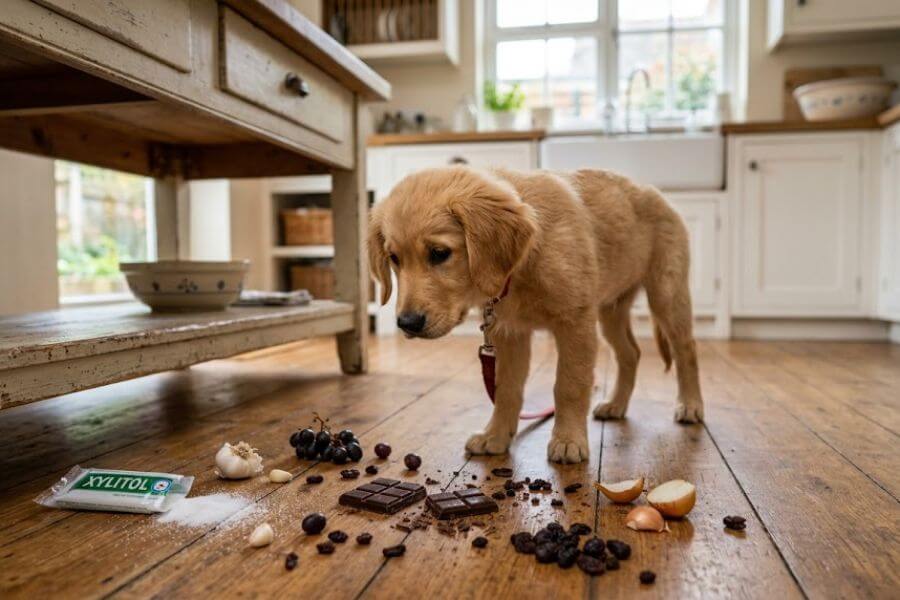
As a dog owner, you want to share everything with your furry best friend, but some human foods can be incredibly dangerous for your pet. Dogs have different digestive systems than humans, and even a small amount of certain common ingredients can lead to severe health issues or life-threatening emergencies. Knowing what your dog can and cannot eat is the most important part of keeping them safe and healthy. Below, we have compiled a list of the most toxic items to keep far away from your pup to ensure they stay happy and out of the vet clinic.
Quick Summary Table
| Food Item | Primary Toxic Component | Potential Severity |
| Chocolate | Theobromine | High |
| Grapes and Raisins | Unknown Toxin | High |
| Onions and Garlic | N-propyl disulfide | Medium to High |
| Xylitol | Sugar Alcohol | Very High |
| Macadamia Nuts | Unknown Toxin | Medium |
| Alcohol | Ethanol | High |
| Caffeine | Methylxanthine | High |
| Avocado | Persin | Low to Medium |
| Yeast Dough | Expanding Alcohol | Medium |
| Cooked Bones | Splinter Risk | Medium |
| Raw Eggs | Salmonella or Biotin Deficiency | Low to Medium |
| Milk and Dairy | Lactose | Low |
How We Ranked These
We determined this list based on the potential danger each food poses to a canine. Here are the key factors we considered:
- The speed at which symptoms develop after ingestion.
- The severity of the internal damage caused to organs like the kidneys and liver.
- The frequency of accidental poisoning cases reported in veterinary clinics.
- The amount of the substance required to cause a toxic reaction in an average dog.
- The availability and commonality of the item in a standard household kitchen.
1. Chocolate
Chocolate contains a substance called theobromine, which dogs cannot metabolize effectively. While white chocolate has very little, dark chocolate and baking chocolate are extremely dangerous and can cause heart palpitations, seizures, and even death. The darker the chocolate, the higher the risk to your pet, so always keep your candy stash tucked away in a high cupboard where no nose can reach it.
2. Grapes and Raisins
Even though scientists have not yet identified the exact toxin in grapes and raisins, it is well documented that they can cause sudden kidney failure in dogs. Some dogs might show no reaction, while others can become violently ill after eating just a few grapes. Because the risk is so unpredictable and potentially fatal, it is best to avoid feeding these to your dog entirely.
3. Onions and Garlic
Onions, garlic, chives, and leeks are all part of the Allium family, and they can cause serious damage to a dog’s red blood cells. This leads to a condition called hemolytic anemia, which makes your dog feel weak, lethargic, and physically ill. These ingredients are dangerous whether they are raw, cooked, or in powdered form, so be cautious with leftovers that might contain them.
4. Xylitol
Xylitol is a sugar substitute commonly found in sugar-free gum, candy, and some peanut butters. It is incredibly toxic because it triggers a massive insulin release in a dog, which causes their blood sugar to drop to dangerously low levels within minutes. This can lead to liver failure, seizures, and it is frequently fatal if not treated by a veterinarian immediately.
5. Macadamia Nuts
Macadamia nuts are known to be one of the most toxic nuts for dogs, causing symptoms like weakness, vomiting, tremors, and hyperthermia. Even a small number of these nuts can make a dog unable to walk or cause them to experience severe pain. If you suspect your dog has eaten any, contact your vet immediately to monitor their recovery.
6. Alcohol
It is never a good idea to let your dog have a taste of your beer, wine, or liquor. Dogs are much more sensitive to alcohol than humans, and even a small amount can cause vomiting, diarrhea, breathing difficulties, and a dangerous drop in blood pressure. In severe cases, it can cause coma or death due to the way it disrupts their central nervous system.
7. Caffeine
Coffee, tea, and energy drinks are all dangerous because they contain high levels of caffeine and other stimulants that are toxic to dogs. Ingesting these can cause your dog to experience an abnormally high heart rate, muscle tremors, and restlessness. Since dogs are more sensitive to these stimulants than we are, even a small amount can lead to serious cardiovascular problems.
8. Avocado
Avocados contain a substance called persin, which is a natural fungicide that can cause vomiting and diarrhea in some dogs. While the fruit flesh is not as dangerous as the pit, the biggest risk is the pit itself, which is a major choking hazard and can cause a blockage in the stomach or intestines. It is safest to keep the entire avocado plant and fruit away from your dog’s reach.
9. Yeast Dough
If a dog eats raw yeast dough, the dough will continue to rise inside their warm stomach, which can cause painful bloating and gas. As the yeast ferments, it also produces alcohol, which can lead to alcohol poisoning in your pet. This is an emergency situation because the physical expansion of the stomach can be life-threatening and requires immediate surgery.
10. Cooked Bones
While dogs love the taste of bones, cooked bones are brittle and prone to splintering into sharp, jagged pieces. These pieces can pierce the lining of your dog’s mouth, esophagus, or stomach, leading to internal bleeding and severe infections. Raw bones are sometimes considered safer, but cooked bones should always be thrown away in a secure trash can.
11. Raw Eggs
Feeding raw eggs to dogs is controversial because of the risk of salmonella or E. coli bacteria, which can make both the pet and the owner sick. Additionally, raw egg whites contain an enzyme that can interfere with the absorption of biotin, a B vitamin that is important for your dog’s skin and coat health. It is much safer to serve eggs fully cooked and plain.
12. Milk and Dairy
Many dogs are actually lactose intolerant, meaning they do not have enough of the enzyme needed to break down the sugar found in dairy products. Giving your dog milk, cheese, or ice cream can lead to an upset stomach, gas, diarrhea, and vomiting. While this is rarely life-threatening, it is very uncomfortable for your dog and causes unnecessary digestive distress.
Conclusion
Protecting your dog from toxic foods is a big part of being a responsible owner. By keeping these twelve items off the menu and away from your pet, you are significantly lowering the risk of a dangerous accident. Always remember to check ingredient labels, especially on human snacks, and keep your trash secure. If you ever suspect your dog has ingested something harmful, reach out to your veterinarian right away, as quick action is often the best way to ensure a full recovery.
Frequently Asked Questions
What should I do if my dog accidentally eats something toxic?
If your dog eats something toxic, you should call your veterinarian or an animal poison control center immediately. Do not wait for symptoms to appear because some toxins cause damage that is hard to reverse once they start. Be prepared to provide the name of the food, the amount eaten, and your dog’s approximate weight.
Can I give my dog peanut butter?
Yes, but you must read the label very carefully first. While plain peanut butter is usually safe, you must ensure it does not contain Xylitol, which is a deadly sweetener. Stick to brands that only contain peanuts or a small amount of salt to be safe.
Is it safe to feed my dog table scraps?
Feeding table scraps is generally discouraged because many human dishes contain hidden ingredients like garlic, onion, or high levels of fat. If you want to give your dog a treat, stick to dog-safe vegetables like carrots or plain, cooked chicken that has no seasonings or sauces.
How do I know if my dog has an upset stomach from food?
Common signs of an upset stomach include vomiting, diarrhea, loss of appetite, and lethargy. If these symptoms last more than 24 hours or if your dog seems to be in pain, you should contact your vet for advice.
Are all fruits bad for dogs?
No, not all fruits are bad for dogs. Fruits like apples (without seeds), blueberries, and bananas are healthy snacks in moderation. However, always remove seeds, pits, and stems, as these parts can often be toxic or cause blockages in the digestive tract.
Why do some dogs seem to eat things they shouldn’t?
Dogs explore the world through their mouths and noses, and they are naturally curious about the smells coming from our food. They often do not understand that something smells good but is actually bad for them, which is why it is our responsibility to keep dangerous items out of reach.
Can a dog recover from eating toxic food?
Yes, many dogs recover fully from eating toxic food if they get medical treatment fast enough. The chances of a good outcome improve greatly when the vet can provide supportive care, such as fluids or medication, before the toxin spreads through the system.
How can I store my food to keep it away from my dog?
The best way to keep food safe is to store it in airtight containers inside high cabinets or a pantry with a secure door. Never leave plates of food unattended on low coffee tables or countertops where your dog can easily jump up and steal a bite.
Is it true that garlic is only toxic in large amounts?
Even small amounts of garlic can cause damage to a dog’s red blood cells over time, and some dogs are more sensitive to it than others. While a tiny speck might not cause an immediate crisis, it is safer to avoid garlic altogether to prevent any long-term issues.
Should I try to make my dog vomit if they eat something toxic?
You should never try to make your dog vomit unless a veterinarian specifically tells you to do so over the phone. Trying to force vomiting can sometimes cause more harm, such as leading to aspiration pneumonia if the dog inhales the material into their lungs. Always follow professional advice during an emergency.