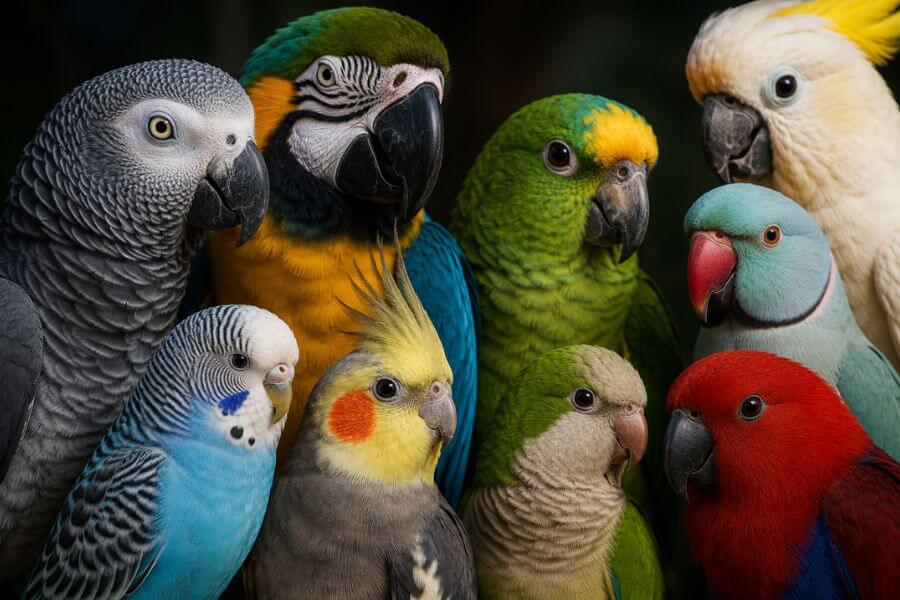
If you want a smart and interactive pet, parrots are some of the best animals you can bring into your home. Many parrots can learn tricks, copy words, respond to commands, and even build strong bonds with you over time. Some species are naturally more intelligent and eager to learn than others, which makes training much easier for beginners and experienced bird owners alike.
The most trainable parrots are usually curious, social, food-motivated, and highly intelligent. With patience and daily interaction, you can teach these birds to step up onto your hand, talk, wave, solve puzzles, and even perform impressive tricks.
In this guide, you will discover the 10 most trainable parrots you can keep as a pet, along with what makes each one special and what you should know before bringing one home.
Quick Summary Table 📋
| Parrot Species | Trainability | Talking Ability | Best For | Noise Level |
|---|---|---|---|---|
| African Grey Parrot | Excellent | Excellent | Advanced owners | Moderate |
| Budgerigar | Very Good | Very Good | Beginners | Low |
| Cockatiel | Very Good | Moderate | Families | Low |
| Amazon Parrot | Excellent | Excellent | Experienced owners | High |
| Macaw | Excellent | Good | Active households | High |
| Indian Ringneck | Very Good | Excellent | Patient trainers | Moderate |
| Quaker Parrot | Very Good | Very Good | Apartment owners | Moderate |
| Eclectus Parrot | Very Good | Good | Calm households | Moderate |
| Conure | Good | Moderate | Playful owners | High |
| Cockatoo | Excellent | Good | Highly dedicated owners | Very High |
How We Ranked These Parrots 🧠
We compared these parrots using several important factors that affect how easy and enjoyable they are to train:
- Intelligence and problem-solving ability
- Willingness to interact with humans
- Ability to learn words and tricks
- Attention span during training
- Friendliness and social behavior
- Consistency in learning commands
- Adaptability to home environments
- Suitability for beginners or experienced owners
- Energy levels and playfulness
- Overall popularity among bird trainers
1. African Grey Parrot 🌟
The African Grey Parrot is often called the smartest parrot in the world. These birds are famous for their incredible talking skills and their ability to understand patterns, routines, and even simple problem-solving tasks.
You can teach an African Grey a huge vocabulary, hand signals, object recognition, and many advanced tricks. Some owners even report that these parrots use words in the correct context.
African Greys love mental stimulation. Puzzle toys, target training, and short daily lessons keep them happy and engaged. They respond best to positive reinforcement such as treats and praise.
However, they are not ideal for everyone. African Greys need a lot of attention and can become stressed or bored if ignored for long periods. They also form strong emotional bonds with their owners.
Why they are easy to train:
- Extremely intelligent
- Excellent memory
- Strong focus during lessons
- Highly motivated by interaction
2. Budgerigar 🐦
Budgies, also known as parakeets, are one of the best parrots for beginners. Even though they are small, they are surprisingly smart and eager to learn.
You can teach a budgie to step onto your finger, fly to you on command, play games, and even speak words clearly. In fact, some budgies develop very large vocabularies.
Budgies are social birds that enjoy attention and daily interaction. Because they are affordable and easier to care for than larger parrots, they are a great starting point if you are new to bird ownership.
Training sessions should stay short because budgies can lose focus quickly. Using millet treats usually works very well.
Why they are easy to train:
- Curious and playful personality
- Learns routines quickly
- Responds well to rewards
- Friendly toward humans
3. Cockatiel 🎵
Cockatiels are gentle, affectionate birds with sweet personalities. They are one of the easiest parrots to bond with, which helps a lot during training.
These birds can learn whistles, simple tricks, and a few words. Many cockatiels love shoulder time and enjoy spending hours near their owners.
Cockatiels are usually calmer than many larger parrots, making them a good choice for families or apartment living. Their relaxed nature makes training feel less stressful for beginners.
Consistency matters with cockatiels. Daily practice helps them become confident and responsive.
Why they are easy to train:
- Friendly and affectionate
- Less aggressive than many parrots
- Enjoys human interaction
- Learns basic tricks quickly
4. Amazon Parrot 🎤
Amazon parrots are energetic, confident, and full of personality. They are among the best talking parrots you can own and often enjoy performing for people.
These birds are highly trainable because they love social interaction and attention. Many Amazons learn songs, phrases, and entertaining tricks.
Training an Amazon parrot requires confidence and patience. They can become stubborn if they are not properly socialized. Early training and boundaries are very important.
Amazon parrots do best in homes where they receive plenty of stimulation and exercise.
Why they are easy to train:
- Loves attention
- Excellent vocal learning ability
- Very social
- Enjoys performing tricks
5. Macaw 🪶
Macaws are large, stunning parrots with strong intelligence and playful behavior. Their ability to form close bonds with humans makes them highly trainable pets.
You can teach macaws to wave, dance, fetch items, solve puzzles, and perform advanced tricks. They often enjoy interactive games and mental challenges.
Macaws require a lot of space, time, and attention. Because of their size and strength, training should begin early and stay consistent.
These parrots thrive in active homes where they can spend plenty of time outside the cage.
Why they are easy to train:
- Highly intelligent
- Strong emotional connection with owners
- Loves interactive play
- Learns through repetition quickly
6. Indian Ringneck 🧩
Indian Ringnecks are known for their sharp intelligence and clear speech. These birds can develop impressive vocabularies and enjoy learning new sounds and commands.
At first, Ringnecks may seem independent compared to other parrots. However, with regular handling and patience, they become wonderful companions.
Training works best when sessions stay calm and positive. Harsh reactions can make these birds nervous or distant.
Indian Ringnecks are ideal for owners who enjoy interactive and mentally stimulating pets.
Why they are easy to train:
- Fast learners
- Excellent talking ability
- Enjoys mental challenges
- Strong memory skills
7. Quaker Parrot 🏡
Quaker parrots are clever, entertaining, and very social birds. They are famous for learning phrases, mimicking sounds, and inventing playful routines.
These parrots love spending time with their owners and often enjoy participating in daily household activities. Quakers usually learn tricks quickly because they are naturally curious.
One interesting trait is their habit of building nests and organizing objects. This intelligence often translates well into training sessions.
They can become noisy at times, but their playful personalities make them extremely lovable.
Why they are easy to train:
- Curious and energetic
- Learns speech clearly
- Enjoys social interaction
- Motivated by treats and praise
8. Eclectus Parrot 🍃
Eclectus parrots are calm, observant, and highly intelligent birds. Unlike some energetic parrot species, they usually prefer a quieter environment.
These parrots learn routines, words, and commands very well when trained consistently. Their calm personalities often make training smoother and less chaotic.
Eclectus parrots need mental stimulation and healthy diets to stay emotionally balanced. Gentle communication works much better than loud or forceful behavior.
They are a good option if you want a smart parrot with a more relaxed personality.
Why they are easy to train:
- Calm and focused
- Strong listening skills
- Learns through repetition
- Less hyperactive than many parrots
9. Conure 🔔
Conures are playful birds that love human attention. They are energetic entertainers and often enjoy learning tricks that involve movement and interaction.
While they may not talk as clearly as some larger parrots, they are still highly trainable. Many conures learn commands like spin, wave, and recall while flying.
Conures thrive when training feels like a game. They respond very well to excitement, praise, and rewards.
These parrots are ideal if you want a fun and active companion.
Why they are easy to train:
- Very playful personality
- Loves social interaction
- Strong bond with owners
- Learns physical tricks quickly
10. Cockatoo 💖
Cockatoos are affectionate parrots that form extremely strong emotional bonds with their owners. They are highly intelligent and capable of learning many tricks and commands.
These birds often crave constant attention and emotional connection. Because of this, they usually become very responsive during training sessions.
Cockatoos can learn dancing, object games, and speech. However, they are also one of the most demanding parrots to own because they need lots of time and companionship.
If properly cared for, a cockatoo can become an incredibly loving and trainable pet.
Why they are easy to train:
- Strong desire to please owners
- Very social
- Emotionally connected to humans
- Learns routines quickly
Conclusion 🎯
Trainable parrots can bring years of fun, companionship, and interaction into your life. Whether you want a talking bird, a playful entertainer, or a highly intelligent companion, there is a parrot species that fits your lifestyle.
If you are a beginner, birds like budgies and cockatiels are usually easier to manage. If you want advanced talking abilities and complex training, African Greys and Amazon parrots are excellent choices.
No matter which parrot you choose, successful training always comes down to patience, consistency, kindness, and daily interaction. A well-trained parrot is not only smarter and happier, but also more connected to you as an owner.
Frequently Asked Questions ❓
What is the easiest parrot to train for beginners?
Budgies and cockatiels are usually the easiest parrots for beginners. They are friendly, affordable, and respond well to simple training methods.
How long does it take to train a parrot?
Basic commands may take a few days or weeks, while advanced tricks and speech can take several months. Every bird learns at a different pace.
Can parrots really understand human words?
Some parrots can associate words with actions, objects, or situations. African Greys are especially known for understanding context better than many other bird species.
What is the best age to start training a parrot?
Young parrots are generally easier to train because they adapt quickly and are naturally curious. However, older parrots can still learn with patience and consistency.
Do parrots need training every day?
Daily interaction is very important. Even short 10 to 15-minute sessions can help your parrot stay mentally active and improve learning over time.