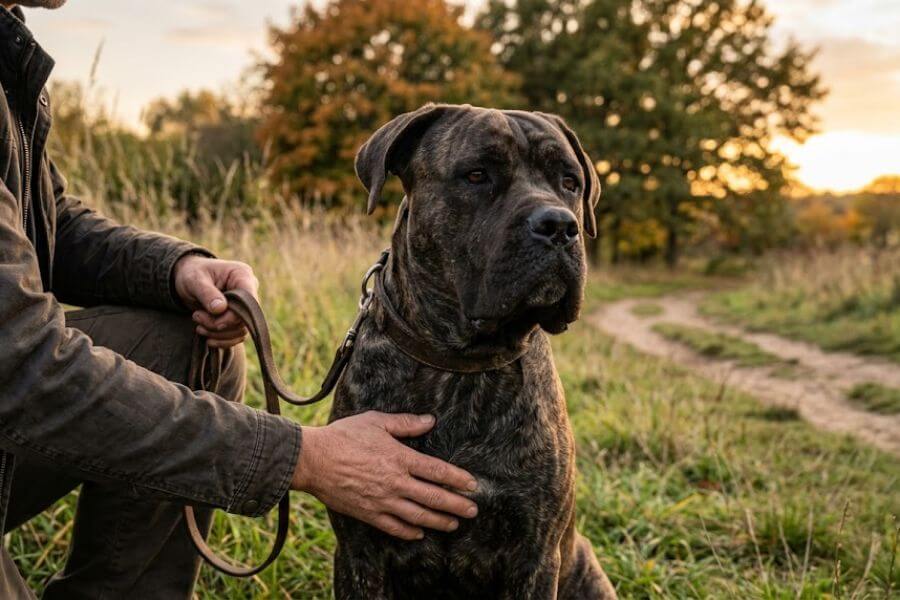
Welcome to the ultimate guide on training your Cane Corso. If you are reading this, you are likely the proud owner of one of the most magnificent, powerful, and loyal dogs on the planet. Or perhaps you are planning to bring one of these gentle giants into your home soon. Either way, you are embarking on an incredible journey. The Cane Corso is not just any dog. This is an ancient Italian mastiff, a breed with a rich history of guarding, working, and protecting. They are large, they are strong, and they possess a natural instinct to lead. Because of these unique traits, raising a Cane Corso requires a specific approach. It takes a blend of love, structure, patience, and clear communication.
In this comprehensive guide, we are going to unlock the top secrets to successfully training a Cane Corso or any large, confident dog breed. We will dive deep into their psychology, look at how the modern world affects their behavior, and provide you with actionable steps you can use right now. Whether you have a brand-new puppy or an older dog that needs a refresher course, this post will give you the tools to build a lifelong bond based on mutual respect. Let us get started on transforming your powerful companion into a well-mannered canine citizen.
Understanding the Cane Corso Mindset
Before you pick up a leash or grab a handful of training treats, you must understand who your dog is at their core. You cannot train a Cane Corso the same way you would train a small toy poodle or a golden retriever. Their minds work differently. They are wired to assess their environment, protect their family, and make independent choices if they feel a situation demands it.
Historically, these dogs were used as catch-dogs for big game, farm guardians, and even companions in battle. This means they are inherently brave and highly observant. They watch everything you do. They read your body language, pick up on your emotional state, and notice changes in your household routines. When we talk about a dominant breed, it does not mean your dog is actively plotting to take over your house or rule the world. Instead, it means they have a strong, self-assured personality. If they see a gap in leadership, they will naturally step up to fill it because they feel it is their duty to keep the pack safe.
Your goal as the owner is to show them that the leadership position is already filled by you. You do not do this through fear, shouting, or physical force. In fact, using harsh methods on a Cane Corso will often backfire completely, leading to a broken bond or defensive behavior. True leadership is quiet, calm, and completely consistent. When your dog realizes that you are capable of handling every situation, they will happily step down from the stress of being the boss and focus on being your loyal friend.
The Foundation of Calm Leadership
To build a great relationship with a confident breed, you must adopt the mindset of a calm leader. Think of yourself as a great teacher or a sports coach. A good coach does not yell constantly or make unfair rules. A good coach sets clear boundaries, rewards great effort, and stays cool under pressure.
Dogs are incredibly sensitive to human energy. If you are stressed, angry, or nervous, your Cane Corso will notice instantly. They might interpret your anxiety as a sign of danger, which can cause them to become hyper-vigilant or overprotective. When you approach a training session, take a deep breath and leave the stress of your day behind. Speak in a firm, quiet voice.
Consistency is your superpower here. If a rule applies on Monday, it must apply on Sunday. For example, if your dog is not allowed on the living room sofa, they can never be allowed on the sofa, even if it is a rainy day and you feel like cuddling. If you change the rules based on your mood, your dog will become confused. Confusion leads to anxiety, and anxiety can lead to a dog trying to make up their own rules. By keeping your expectations exactly the same every day, you create a safe, predictable world for your pet.
Puppyhood Priorities and Early Habits
If you are starting with a young Cane Corso puppy, you have a golden opportunity. The things a puppy learns during their first few months will shape their entire adult life. During this early stage, their brain is like a sponge, absorbing experiences and deciding what is safe and what is scary.
Your number-one priority with a young puppy is building a strong bond of trust while establishing simple household routines. Start by teaching them where to sleep, where to go to the bathroom, and when it is time to eat. A structured schedule helps a puppy feel secure. It also prevents common behavior problems before they even have a chance to start.
Pay close attention to how your puppy interacts with your hands and clothing. It might look adorable when a ten-pound puppy nips at your shoelaces or chews on your fingers, but remember that this little puppy will soon weigh over one hundred pounds. Never allow a puppy to do anything that would be dangerous or annoying if an adult dog did it. If the puppy tries to bite your hand during play, gently redirect their mouth to an appropriate chew-toy. This teaches them early on that human skin is sensitive and that teeth belong on toys, not people.
Critical Socialization Strategies
Socialization is perhaps the single most important aspect of raising a well-adjusted Cane Corso. Because this breed possesses a natural guarding instinct, they are naturally suspicious of new people, strange animals, and unfamiliar places. Without proper socialization, that natural suspicion can easily turn into fear or aggression as the dog grows up.
True socialization does not mean forcing your dog to meet every single person or dog they see. In fact, that can overwhelm them. Instead, socialization is about creating positive or neutral experiences in a variety of environments. You want your Cane Corso to look at a strange object or a busy street and think, “I see that, but it is no big deal.”
Take your dog to different locations. Walk past local schools, stroll near busy shopping plazas, and let them stand on different surfaces like gravel, grass, concrete, and shiny tile floors. Bring plenty of high-value treats with you. Every time your dog observes something new without overreacting, give them a reward. If they see a person riding a bicycle or a delivery truck driving past, feed them a treat. You are teaching their brain to connect new sights and sounds with wonderful things.
Avoid crowded dog-parks during this process. A single bad experience, such as being bullied by an untrained dog, can leave a lasting negative impression on a young Cane Corso. Focus on controlled environments where you can guarantee your dog feels safe and successful.
Mastering Basic Obedience Commands
Every large dog must master the basic obedience commands: sit, down, stay, come, and leave-it. These are not just party tricks to show off to your friends. These commands are essential tools that ensure your dog’s safety and allow you to manage their massive physical strength in everyday situations.
When teaching these commands, use a method called positive reinforcement. This means you reward the behaviors you want to see, making it more likely that your dog will repeat them. Start in a quiet room inside your house where there are no distractions. Use a small piece of tasty food to lure your dog into the correct position. For a sit, hold the treat just above their nose and move it slowly backward over their head. Their nose will go up, and their bottom will naturally go down. The moment their rear hits the floor, say a reward-word like “yes” or click a training clicker, and give them the treat.
Repeat this process several times before adding the verbal word “sit.” Dogs learn through physical actions first, so make sure they are doing the behavior reliably before you expect them to understand the spoken command. Once they master a command in the quiet living room, move to the backyard, then to the front porch, and eventually to a park. This gradual increase in distractions is called proofing the behavior, and it is the secret to getting your dog to listen to you anywhere, even when a squirrel runs past.
Advanced Boundary Training
Once your Cane Corso understands the basics, it is time to introduce boundary training. This means teaching your dog where they are allowed to go and when they need to wait for your permission to cross a certain line. This is incredibly important for door safety and preventing a large dog from rushing out into the street.
Start at your front door. Put your dog on a leash and walk toward the door. Command them to sit and stay a few feet away from the exit. Slowly reach for the doorknob. If your dog gets up, immediately stop, close your hand, and place them back in the sit position. Try again. Turn the knob. If they stay seated, praise them. Open the door just an inch. If they move, close the door.
You are teaching your dog that their movement does not open the door; rather, their calm patience is what gets them what they want. Eventually, you will be able to open the door completely while your dog waits calmly inside. They should only cross the threshold when you give them a specific release-word, such as “okay” or “let us go.” You can use this exact same training method for car doors, garden gates, and the boundaries of your kitchen.
Perfecting the Loose-Leash Walk
Walking a one-hundred-and-twenty-pound dog that pulls on the leash is miserable, and it can even be dangerous. You must teach your Cane Corso that pulling will get them absolutely nowhere. A walk should be an enjoyable experience for both of you, with the leash remaining slack like a loose smile between your hand and their collar.
To achieve a perfect walk, start training inside your house or in your enclosed backyard. Attach the leash and begin walking. The moment your dog steps ahead and puts tension on the leash, stop walking completely. Do not yank the leash back. Just become a stone statue. Stand perfectly still and wait.
Your dog will wonder why the forward movement has stopped. Eventually, they will look back at you or step back toward you to see what is going on. The moment they take a step back and the leash goes slack, praise them enthusiastically and move forward again. You are teaching them a simple cause-and-effect rule: pulling makes the world stop, while a loose leash keeps the fun walk going. In the beginning, you might only be able to take two steps before stopping. That is perfectly normal. Stay patient, stay consistent, and do not give up. Within a few days, your dog will realize that walking by your side is the fastest way to get where they want to go.
Managing the Guarding Instinct
The guarding instinct is deeply embedded in the DNA of a Cane Corso. They love their family fiercely, and they naturally want to protect their home from intruders. While this trait can be valuable, it must be carefully managed so that your dog does not become a danger to welcome guests, mail carriers, or repair workers.
The key to managing this instinct is teaching your dog that you are the one in charge of security, not them. When someone knocks on your front door, it is normal for your Cane Corso to bark a few times to alert you. Acknowledge their alert by saying a calm “thank you.” Then, direct them to a specific place, like a dog-bed or a crate that is located away from the entryway.
Command them to stay on their bed while you open the door to greet the visitor. By giving your dog a specific job to do, which is staying on their bed, you take the pressure off them to defend the entrance. It also shows the visitor that you have full control over your powerful pet. Never allow your dog to rush the door or crowd a guest as they enter your home. Your dog should only be allowed to approach and greet the guest once the guest is comfortably seated and you have given your dog permission to say hello.
Crate Training and Independence
Many people think that using a dog-crate is unkind, but when done correctly, a crate becomes a wonderful tool for your dog’s safety and peace of mind. In the wild, dogs are den-animals. They naturally seek out small, dark, enclosed spaces where they can sleep soundly without worrying about threats. A crate provides this exact same feeling of security inside your modern home.
Crate training is also a powerful way to prevent separation anxiety. Because the Cane Corso forms such a deep connection with their human owners, they can sometimes become overly distressed when left alone. This distress can lead to destructive behaviors, like chewing through drywall or destroying furniture.
To make the crate a happy place, never use it as a punishment. If your dog misbehaves, do not angry-shout and throw them in the crate. Instead, make the crate a land of rewards. Feed them their meals inside the crate with the door open. Toss high-value treats and favorite toys inside for them to find. Introduce a special chew-toy, like a rubber toy stuffed with peanut butter, that they only get to enjoy when they are resting quietly inside the crate with the door closed. Start with very short periods, like two minutes while you step into another room, and slowly build up to longer periods as your dog becomes completely comfortable.
Food Manners and Resource Guarding
Resource guarding happens when a dog becomes overly possessive of their food, toys, or favorite sleeping spots. They might growl, stiffen their body, or even snap if a person or another animal gets too close to their prized possession. With a small dog, this is a nuisance. With a large mastiff breed, it is a serious issue that must be addressed immediately.
The best way to prevent resource guarding is to teach your Cane Corso that human hands around their stuff always bring good things, never bad things. When your puppy is eating their dinner, walk past their bowl and drop a piece of delicious roasted chicken right into the bowl, then keep walking. Do not disturb them or take the bowl away. Just add something better to it.
By doing this repeatedly, your dog learns to think, “Wow, when a human approaches my food bowl, my dinner actually gets better!” They will begin to look forward to your approach instead of feeling the need to guard their meal. If you ever need to take a toy or an object away from your dog, never just rip it out of their mouth. Always trade them for something of equal or greater value. If they have a tennis ball, show them a tasty piece of cheese. When they drop the ball to get the cheese, praise them and take the ball. This builds a cooperative relationship based on fair trades rather than theft.
The Power of Mental Stimulation
When people think about exercising a large, active dog, they usually think about long runs or endless games of fetch. While physical exercise is certainly important, physical activity alone is not enough to keep a Cane Corso truly happy and well-behaved. In fact, if you only focus on physical workouts, you will simply build a super-athlete dog with endless stamina and a bored mind. A bored Cane Corso is a creative Cane Corso, and you probably will not like what they choose to create with their boredom.
Mental stimulation is just as tiring as a long walk, and it does wonders for a dog’s emotional health. You can stimulate your dog’s mind by feeding them their meals through puzzle-toys instead of a standard bowl. These toys require the dog to slide panels, flip lids, or roll a ball around to get their kibble.
Another fantastic option is scent-work games. A dog’s sense of smell is incredibly powerful, and using their nose takes an immense amount of brainpower. Hide some smelly treats around your living room while your dog waits in another area. Then, give them a command like “find it” and watch them go to work. Tracking down the hidden treasures will leave your dog feeling deeply satisfied and ready for a long, peaceful nap.
Dealing with Adolescence and Testing Boundaries
Just like human teenagers, dogs go through a challenging adolescent phase. For a Cane Corso, this usually happens between the ages of eight months and two years. During this time, their bodies are flooded with hormones, their adult teeth are fully settled in, and they are trying to figure out where they fit into the world.
You might notice that your previously perfect puppy suddenly forgets their commands, pretends not to hear you when you call them, or starts testing the house rules. They might look directly at you when you say “sit” and choose to remain standing. Do not panic, and do not take this behavior personally. Your dog is not trying to spite you; they are simply exploring their independence.
When your adolescent dog tests a boundary, you must remain completely patient and firm. If you call your dog and they refuse to come to you, do not start chasing them around the yard, as this turns disobedience into a fun game of tag. Instead, go back to basics. Put them back on a long training leash so that you can gently guide them to you when you give the command. Reinforce all the basic rules of the house as if they were a brand-new puppy. This adolescent phase can be frustrating, but if you stay consistent and refuse to let them slide on their manners, they will emerge from this period as a stable, wonderful adult.
Grooming and Handling Desensitization
Because an adult Cane Corso is so large and powerful, you must be able to handle every part of their body without any resistance. Imagine trying to clip the nails of a giant dog that is thrashing around or trying to bite the clippers. It is an impossible and unsafe task. You need to prepare your dog for grooming and veterinary visits from day one.
Make body-handling a regular part of your daily routine. When your dog is relaxing next to you, gently touch their paws. Hold a single paw in your hand, massage the toes, and look closely at the nails. If your dog remains calm, give them a treat. Move on to their ears. Look inside, gently wipe them with a cloth, and reward them. Inspect their teeth by gently lifting their lips.
Introduce grooming tools slowly. Let your dog look at the nail clippers or the brush while it sits on the floor. Let them sniff it, and give them a treat for showing curiosity. Touch the tool gently to their leg without actually clipping or brushing, and reward them again. By breaking the process down into tiny, stress-free steps, you remove the fear. Your veterinarian and your local groomer will thank you for raising a dog that stands calmly and cooperatively during examinations and grooming sessions.
Understanding Vocalizations and Body Language
Cane Corsos are surprisingly expressive dogs. They do not just bark; they snort, grunt, whine, and make a unique “woo-woo” sound to communicate their feelings to you. Learning to read your dog’s subtle body language will help you understand what they are trying to tell you, allowing you to prevent problems before they start.
A happy, relaxed Cane Corso will have soft, loose muscles. Their ears will be in a natural position, their eyes will be relaxed, and their tail might wag in a slow, wide motion. However, if your dog becomes uncomfortable or alert, their body language changes dramatically. Their muscles will stiffen, their ears will flip forward, and their tail might stand straight up or tuck tightly between their legs.
Pay close attention to a sign called the freeze. If your dog is interacting with a person or another animal and suddenly goes completely still and rigid, this is a clear warning sign. It means they are feeling highly stressed and are deciding whether to run away or fight. If you ever notice your dog freezing, immediately step in, calmly remove them from the situation, and give them some space to decompress. Understanding these silent signals ensures you can protect your dog from reaching their breaking point.
Training for the Real World
It is one thing to have a dog that listens perfectly in your quiet backyard, but it is a completely different story when you take them out into the real world. Real-world training requires you to gradually introduce your dog to unpredictable situations while maintaining their focus on you.
One of the best skills you can teach your Cane Corso for real-world outings is the “watch me” or “focus” command. This command tells your dog to look directly into your eyes, blocking out whatever distractions are happening around them. To teach this, hold a treat near your dog’s nose, and then pull it up toward your own eyes. The moment your dog makes eye-contact with you, say your reward-word and give them the treat.
Practice this until your dog can hold your gaze for several seconds. When you are out on a walk and you see a potential distraction approaching, like a noisy group of kids or another dog on a leash, command your Cane Corso to “watch me.” By keeping their focus locked onto you, you prevent them from locking their eyes onto the distraction. You become the most interesting thing in their world, allowing you to guide them past any obstacle safely and smoothly.
Advanced Off-Leash Reliability
Achieving off-leash reliability with a large, powerful breed is the ultimate goal for many owners, but it requires an immense amount of work and extreme caution. You should never let your Cane Corso off a leash in an un-fenced public area unless their recall command is one hundred percent perfect. A perfect recall means that when you call your dog’s name, they drop whatever they are doing and run straight back to you every single time.
To build an amazing recall, use a long training leash that is fifteen to thirty feet long. Let your dog wander around a park on the long line. When they are not paying attention to you, call them in a cheerful, exciting voice: “Corso, come!”
As they turn and start running toward you, run backward a few steps to make yourself look like an exciting target. When they reach you, throw a huge praise-party. Give them multiple high-value treats, scratch their favorite spots, and let them know they just did the best thing ever. Never call your dog to you to punish them or to do something they dislike, like taking a bath or leaving a fun play session. If you do that, they will quickly connect the command “come” with the end of the fun, and they will stop listening to you. The recall must always mean that wonderful things happen when they return to your side.
Correcting Mistakes Without Force
Every dog owner will make mistakes, and every dog will have bad days. When your Cane Corso misbehaves, how you react matters immensely. As we discussed earlier, using physical violence, hitting, or heavy leash-corrections is dangerous and ineffective. It destroys the trust you have worked so hard to build, and it teaches a powerful dog that physical force is an acceptable way to solve problems.
Instead of focusing on how to punish a bad behavior, focus on how to redirect that energy into a good behavior. Dogs cannot do two things at once. For example, a dog cannot jump up on your house guests if they are currently sitting down on their bed.
If your dog is engaging in an unwanted behavior, give them an alternative command that is incompatible with the mistake. If they are barking out the window, call them away and ask them to perform a sit-stay in the center of the room. If they are chewing on a shoe, replace it with an approved chew-toy. If they are pulling on the leash, stop moving. By consistently showing your dog what they should be doing instead of simply screaming “no,” you guide them toward success without ever creating a fearful or tense environment.
Maintaining the Bond for Life
Training is not a project that has a clear ending date. You do not just train your Cane Corso for a few months, check a box, and declare that you are done forever. Training is a lifelong lifestyle. It is an ongoing conversation between you and your canine companion that continues every single day of their life.
As your Cane Corso matures into a dignified adult and eventually into a gentle senior dog, keep reviewing their commands and playing brain-games together. Keep taking them on walks to new places, even if it is just a short trip around a new neighborhood block. The more time you invest in keeping their mind sharp and their boundaries clear, the stronger your lifelong bond will become.
Raising a Cane Corso is an immense responsibility, but it is also one of the most rewarding experiences a dog lover can ever have. When you look into the eyes of a well-trained, loyal Cane Corso, you see a majestic protector that would give everything for you, yet gentle enough to rest their massive head quietly on your knee. By applying these secrets of calm leadership, consistent boundaries, and positive reinforcement, you will ensure that your powerful companion is a source of pride, joy, and safety for many years to come.
Frequently Asked Questions
Are Cane Corsos good family dogs for households with young children?
Yes, a Cane Corso can be an absolutely spectacular family dog, but this relationship requires strict supervision and proper training. These dogs possess a deeply rooted affection for their human pack, and they are famously gentle and protective with the children inside their own family. However, because of their massive physical size and heavy weight, an untrained Cane Corso can easily knock a small child over completely by accident during an excited game of play. It is vital that you teach your dog appropriate house manners and never allow rough games around small kids. Additionally, you must teach your children how to treat a large dog with respect. Children should never climb on the dog, pull their ears, or disturb them while they are eating or sleeping. Whenever your dog is interacting with children, an adult must be in the room watching closely to ensure everyone stays safe and calm.
How much physical exercise does an adult Cane Corso need every day?
An adult Cane Corso typically requires a minimum of one to two hours of physical exercise every day to stay physically healthy and emotionally content. This requirement cannot be met by simply letting them out into a fenced-in backyard by themselves, as they will often just sit by the back door and wait for you to come back out. Instead, they need active workouts with you. This can include brisk walks, long hikes, jogging, or structured games of fetch. It is best to break this exercise down into two separate sessions, such as a morning walk and an evening game of fetch, to keep their day balanced. Always remember to pair this physical activity with mental stimulation, like puzzle-toys or scent-work, to fully tire out their powerful brains.
At what age should I begin professional training or socialization classes?
You should begin training and socialization the very day you bring your Cane Corso home, which is usually around eight weeks of age. Do not wait until they are six months old or weigh eighty pounds to start teaching them manners. You can begin teaching simple concepts like their name, the sit command, and house-training right away in short training sessions that last just three to five minutes each. For formal puppy socialization classes, you can usually enroll them as soon as your veterinarian confirms they have received their initial rounds of vaccines, which is often around ten to twelve weeks of age. Joining a well-regulated puppy class is a fantastic way to expose your young dog to other puppies and strange people in a safe, controlled environment.
Can a Cane Corso live comfortably inside a small apartment?
While it is technically possible for a Cane Corso to live in a small apartment, it is a significant challenge that requires a massive commitment from the owner. These are large animals that take up a lot of physical space, and they are much happier when they have access to a large house with a securely fenced yard. If you do raise a Cane Corso in an apartment, you must be completely dedicated to taking them out for multiple long walks and exercise sessions every single day, rain or shine. You must also ensure they are thoroughly crate-trained and mentally stimulated so they do not develop destructive habits inside a tight living space. Additionally, keep in mind that many apartment complexes have strict weight limits or breed restrictions that may prohibit large working dogs.
Why does my Cane Corso growl when I try to move them off my bed?
If your Cane Corso growls when you try to move them off a sleeping spot, they are displaying a behavior known as resource guarding. In this situation, your dog has decided that the bed is a highly valuable prize, and they are using a growl to tell you, “This is my spot, and I do not want to give it up.” This is a serious boundary issue that must be addressed calmly and immediately. Never try to physically drag or push a growling mastiff off the bed, as this can provoke a dangerous defensive bite. Instead, use a high-value treat to lure them off the bed willingly. Once their feet hit the floor, praise them and give them the treat. To fix this long-term, create a strict new rule: your dog is no longer allowed onto any furniture or beds until this behavior is completely resolved. They should sleep on their own dedicated dog-bed on the floor where they can feel safe without claiming ownership over your space.