Bringing a dachshund puppy into your life means welcoming a tiny bundle of joy with a huge personality. Those big puppy eyes and floppy ears can melt anyone’s heart. However, these long-bodied dogs also come with a famous trait: they are incredibly independent and can be very stubborn.
When you start crate training, your little pup might look at you like you are asking them to climb a mountain. Dachshunds were originally bred to hunt tunnels independently, so they have a strong mind of their own. Getting them to love an enclosed space takes patience, but it is entirely possible. This guide will show you how to successfully crate train your strong-willed puppy step-by-step.
Why Dachshunds Struggle with Crates
To solve the problem, you first need to understand your pup. Dachshunds are sensitive hounds that love comfort and closeness. They are natural burrowers who love to dig under blankets, which actually makes them great candidates for a cozy crate. However, they also hate being left out of the action.
Your puppy sees the crate as a barrier between them and you. When you close the door, their first response is often to protest with surprisingly loud barks. They are not trying to be bad; they are just expressing their desire to be right by your side. Recognizing this helps you stay calm and gentle during the process.
Picking the Perfect Crate
The wrong crate can ruin your training before you even start. For a dachshund, the crate needs to be a safe, small den. If the crate is too big, your puppy might use one corner as a bedroom and the other corner as a bathroom. If it is too small, they will feel cramped and uncomfortable.
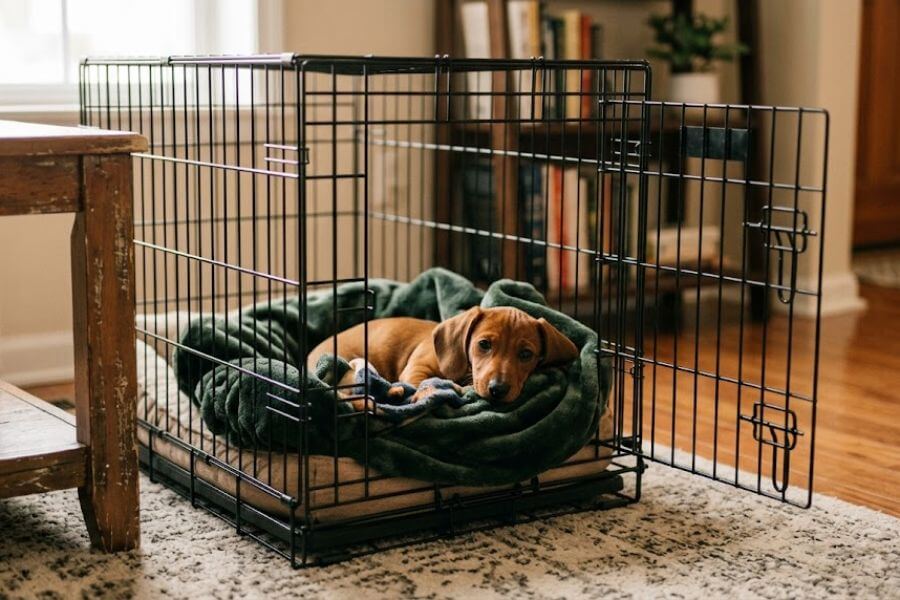
A wire crate with a divider panel is usually the top choice. This allows you to adjust the size as your puppy grows from a tiny baby into a full-grown dog. Make sure the crate is long enough for them to stretch out without hitting their nose or tail, but cozy enough to feel secure.
Setting Up a Cozy Burrow
Since dachshunds love to burrow, the inside of the crate should feel like a warm nest. Place a soft bed or a few fleece blankets inside. Avoid towels with loose loops because puppy nails can get stuck in them.
You can also drape a dark sheet or a blanket over the top and sides of a wire crate. This creates a dark, cave-like atmosphere that helps puppies settle down. Leave the front open so they can still see out, which prevents them from feeling completely trapped.
Creating a Positive Association
Never force your puppy into the crate when they are awake and nervous. The goal is to make them think the crate is the most magical place on earth. Start by tossing high-value treats inside with the door wide open. Let your puppy walk in, grab the treat, and walk right back out.
Do not rush to close the door yet. Feed your puppy their regular meals inside the crate with the door open. You want them to connect the crate with their absolute favorite things, like breakfast, dinner, and delicious snacks.
The Slow Door Method
Once your puppy is happily eating inside the crate, you can start testing the door. While they are busy eating their meal, gently swing the door shut for just a few seconds. Open it before they finish eating and before they have a chance to whine.
Gradually increase the time the door stays closed. Start with five seconds, then move to ten seconds, and then a minute. Always praise your pup when they stay calm. If they start to fuss, it means you moved too fast, so go back to a shorter time for the next practice session.
Dealing with the Crying
It is bound to happen at some point. Your puppy will realize the door is locked, and they will start to cry, whine, or howl. This is the hardest part for human parents, but your reaction is critical. If you let the puppy out while they are crying, you teach them that crying gets them freedom.
Wait for a brief moment of silence, even if it is just a two-second pause to take a breath. The moment they go quiet, open the door and reward them. This teaches them that quiet behavior opens the door, not loud barking.
Nighttime Training Success
Nighttime can be scary for a young puppy who is used to sleeping with their littermates. For the first few weeks, keep the crate right next to your bed. Your puppy will feel better knowing you are close by, and you can hear them if they need a middle-of-the-night bathroom break.
If they cry in the middle of the night, take them out calmly on a leash. Keep the lights low, do not play with them, and do not speak in an excited voice. Carry them to their potty spot, wait for them to do their business, and put them straight back into the crate. This shows them that nighttime wake-up calls are strictly for business, not for playtime.
Frequently Asked Questions
How long does it take to crate train a dachshund puppy?
Every puppy is different, but for a stubborn breed like a dachshund, it usually takes anywhere from a few weeks to a couple of months. Consistency is the secret ingredient. If you practice every single day without skipping, your puppy will understand the routine much faster.
Should I put water inside the puppy crate?
It is generally better to avoid putting a water bowl inside the crate during the initial training stages, especially at night. Young puppies have very small bladders and will need to go to the bathroom shortly after drinking. Giving them free access to water in the crate often leads to nighttime accidents.
What should I do if my puppy soils their crate?
If your puppy has an accident, clean it up immediately using an enzymatic cleaner that removes odors completely. Do not punish your puppy, because they will not understand why you are angry. Instead, think about whether you left them inside for too long or if the crate is simply too big for them.
Can I use the crate as a place for time-outs?
You should never use the crate as a punishment. If you send your puppy to the crate when you are angry, they will start to associate the space with negative feelings and fear. The crate must always remain a happy, peaceful sanctuary where they feel safe and relaxed.