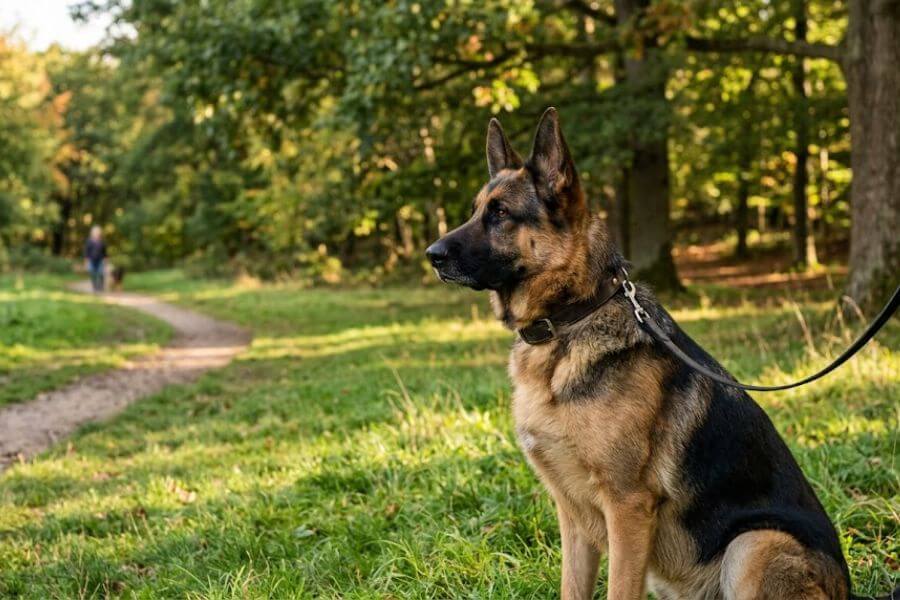
Owning a German Shepherd feels like having a loyal shadow that would do anything to keep you safe. You probably notice how your dog stays alert when you walk through the neighborhood or how they watch the front door with intensity when a delivery arrives. This behavior comes from their history as working dogs. German Shepherds were bred to guard, herd, and protect. They have a natural desire to look after their pack, which in this case, is you and your family. Because this trait is so deeply rooted in their DNA, it is not something you want to completely remove. Instead, your goal is to guide that protective energy so your dog knows the difference between a normal visitor and a real threat.
When a German Shepherd displays protective behavior, it usually happens because they feel the need to manage their environment. They take their job as your guardian very seriously. If they see someone walking past your yard or hear a strange noise, their first instinct is to alert you and potentially intervene. This is helpful when you are truly in danger, but it can be stressful when your dog reacts to a friendly neighbor or a mail carrier. Understanding that this behavior comes from love and loyalty is the first step toward managing it. Your dog is not trying to be difficult or aggressive; they are simply trying to do the job they think they were born to do.
Creating a Strong Foundation Through Trust
Before you can manage your dog’s protective tendencies, you must establish a clear dynamic where you are the leader of the pack. When a German Shepherd trusts that you are in control of the situation, they feel less pressure to take charge themselves. This shift in responsibility is vital. If your dog believes you are not paying attention to potential threats, they will feel obligated to handle those threats on their own. By showing your dog that you are aware of your surroundings and that you have a plan for every encounter, you allow them to relax and step back from their guard duty.
Building this trust happens through daily interactions. Consistent training sessions, calm leadership during walks, and clear expectations help your dog understand that you are the decision-maker. When you are out on a walk and encounter a distraction, stay calm. If you become tense or start pulling on the leash, your dog will interpret that as a signal that something is wrong. By remaining composed and using steady, firm commands, you teach your dog that you have everything under control. This builds confidence in your leadership, which significantly lowers your dog’s urge to react.
The Importance of Early Socialization
Socialization is the secret to a well-adjusted German Shepherd. Many people think socialization just means letting their dog play with other dogs, but it is actually much more than that. It is about exposing your German Shepherd to a wide variety of people, environments, sounds, and situations in a positive way. When a dog has seen many different types of people—tall people, short people, people wearing hats, people using umbrellas, and children—they are less likely to perceive someone new as an automatic threat.
Start this process as early as possible. If you have a puppy, take them on calm outings where they can observe the world from a safe distance. Let them see traffic, hear the sounds of a park, and watch people moving about. If your dog is older, it is never too late to start, but you must move at a pace that keeps them comfortable. The goal is to show your dog that the world is filled with interesting things that are not dangerous. When they encounter new experiences without feeling threatened, they learn that they do not need to stand on high alert every time something changes in their environment.
Mastering Basic Commands for Better Control
Basic obedience is the bedrock of managing protective behaviors. You need commands that work instantly, even when your dog is feeling excited or alert. The most important commands for a protective German Shepherd are focus, sit, stay, and a reliable recall. When your dog starts to fixate on something, you need a way to break that focus and bring their attention back to you.
The command to look at you, often called watch me, is a lifesaver. Practice this indoors first, where there are few distractions. Reward your dog immediately when they make eye contact with you. Once they have mastered this, move to your backyard, and eventually to the street. When you see your dog beginning to stiffen up or stare at a passerby, give the command. If they look at you, reward them heavily. You are teaching them that ignoring the stranger and looking at you is far more rewarding than fixating on the person outside. This creates a new habit of turning to you for direction instead of taking matters into their own paws.
Managing Reactions on Walks
Walking a German Shepherd with a strong protective drive can be a challenge. You might find yourself dreading the moment a jogger runs by or another dog appears on the trail. The key here is to control the environment as much as possible and anticipate your dog’s reactions. Always stay alert and scan the area ahead of you. If you see a potential trigger, change your path or increase the distance between you and the person before your dog has a chance to fixate.
If your dog does start to react, do not pull back on the leash in a way that creates tension. Tight leashes often make a dog feel more restricted and aggressive. Instead, use a calm, firm verbal correction and move in the opposite direction. Keep moving. Keep your energy calm and confident. You want to show your dog that the person passing by is irrelevant and that you have already decided to move on. With enough practice, your German Shepherd will realize that they do not need to defend you on every sidewalk. They will start to view these encounters as normal parts of a walk rather than tests of their protective skills.
Handling Visitors at Your Home
The front door is often the primary stage for a protective German Shepherd. To them, the doorbell or a knock is a direct invitation for an intruder to enter their territory. You can manage this by creating a specific routine for visitors. First, designate a spot in the house where your dog should go when people arrive. This could be a bed or a rug, and you should teach them to stay there until you release them.
Use positive reinforcement to make this spot a happy place. Give them a special toy or a long-lasting treat when they go to their place. When someone knocks, calmly lead your dog to their spot and give the command. If they stay, they get the treat. Do not let your dog rush to the door. You should be the one to open the door, not the dog. By controlling who enters and how, you show your dog that you are the one managing the household security. Over time, the routine becomes predictable, and your dog will feel less urgency to jump up and confront the guest.
Understanding Body Language
Your German Shepherd communicates a great deal through their body language. Learning to read these signals will help you intervene before a protective behavior escalates. A relaxed dog has soft eyes, a loose tail, and a balanced posture. A dog that is becoming protective will stiffen, raise their hackles, point their ears forward, and lock their eyes onto a target. You might notice their mouth closes tightly, or they might let out a low, rumbling growl.
When you see these signs, you have a small window of opportunity to intervene. Do not wait for the dog to bark or lunge. As soon as you notice the physical change, redirect your dog. Use a calm tone of voice. If you start yelling or panicking, you will only confirm your dog’s suspicion that there is something to worry about. Stay cool, move your dog away from the target, and give them a job to do, such as sit or focus. By identifying the early stages of tension, you prevent the behavior from reaching a point where your dog feels they must act.
The Role of Exercise and Mental Stimulation
A bored German Shepherd is often an overprotective German Shepherd. These dogs are highly intelligent and need a job to do. If they do not have a productive outlet for their energy and mental capacity, they will invent their own job, which is often guarding the house or yard. Providing plenty of physical exercise is important, but mental stimulation is just as vital.
Spend time teaching your dog new tricks, playing hide-and-seek, or using puzzle toys that challenge their brain. A tired dog is a calm dog. When their minds are exhausted from a good training session or a game of fetch, they have much less energy to spend on worrying about what the neighbor is doing or whether the wind blowing against the fence is an intruder. Integrate training into your daily life so that your dog is constantly learning and working with you. This partnership keeps them mentally satisfied and much less likely to seek out opportunities to guard you.
Using Positive Reinforcement Effectively
Training a protective German Shepherd should always rely on positive reinforcement. Harsh punishments can cause your dog to become fearful or more aggressive. If you punish your dog for barking at a stranger, they might start to associate the presence of strangers with pain or fear, which actually makes the protective behavior worse. Instead, focus on rewarding the behaviors you want to see.
When your dog sees a stranger and remains calm, praise them and give them a reward. This teaches them that being calm in the presence of others leads to good things. Be consistent with your rewards. If you sometimes ignore the behavior and other times get frustrated, your dog will be confused. Clarity is key. When your dog sees you as a source of rewards and positive experiences, they will be more focused on you and less focused on guarding the environment. This shift turns your dog from a hyper-vigilant guard into a focused, well-behaved companion.
Patience and Consistency
Managing protective behaviors is a marathon, not a sprint. There will be days when your dog is perfect, and there will be days when they seem to regress. This is completely normal. Do not get discouraged. Keep up with your training, keep your routines consistent, and always stay calm. Your dog looks to you for guidance every single day. If you remain a steady leader, your dog will slowly learn to trust your judgment.
It is helpful to keep a journal of your progress. Note down what situations triggered your dog and how they responded. This helps you track improvements over time, which can be very encouraging when you feel like you are not making progress. Remember to celebrate the small wins. If your dog stayed quiet while someone walked by today, that is a victory. The more small wins you have, the more confidence your dog will gain in your leadership.
Frequently Asked Questions
How do I know if my German Shepherd is being protective or aggressive?
Protective behavior is often driven by a sense of duty to guard you or your home, while aggressive behavior is usually rooted in fear, possessiveness, or territorial dominance that goes beyond safety. A protective dog usually tries to alert you and create space, whereas an aggressive dog may show signs of extreme hostility, such as snapping or biting without provocation. If you are unsure, it is always a good idea to consult with a professional dog trainer who understands the breed. They can help you identify if your dog is acting out of a need for control or if there is an underlying issue that needs specialized attention.
Can I ever train a German Shepherd to stop being protective entirely?
You generally do not want to remove the protective instinct entirely because it is a core part of the German Shepherd’s personality. These dogs are naturally alert. The goal is not to turn your dog into a mindless pet that ignores everything, but to teach them to defer to you when it comes to assessing threats. You want a dog that is alert but not reactive. By teaching them to look to you for guidance, you satisfy their need to be helpful while ensuring they remain calm and manageable in public spaces.
What should I do if my dog is protective of me but not of other family members?
Sometimes, a German Shepherd forms a very strong bond with one specific person and feels a stronger need to protect them. This is common with this breed. To help your dog distribute their focus, encourage other family members to take part in training sessions, feedings, and walks. This helps the dog build a sense of partnership with everyone in the house. When the dog learns that other family members are also capable of leading and providing rewards, the pressure on them to act as your personal bodyguard often decreases.
Should I use a muzzle if my German Shepherd shows strong protective signs?
A muzzle can be a safe tool to use while you are in the middle of a training program, especially if you are concerned about your dog’s behavior in public. It does not punish the dog, but it does prevent accidents while you work on building their confidence and obedience. Make sure to properly introduce the muzzle so that it is a positive experience for your dog. Use it as a safety measure while you continue your training, not as a permanent solution to the underlying behavioral issues.
Is it normal for my German Shepherd to bark at every noise?
It is very common, but that does not mean you have to accept it. German Shepherds have very sensitive hearing and are naturally reactive to changes in their environment. While a short alert bark is often just them doing their job, constant barking at every leaf that blows by is a sign of over-vigilance. You can manage this by acknowledging the noise yourself and then giving a command like quiet or go to your place. By showing your dog that you have heard the noise and that it is not a threat, you give them permission to stop barking and relax.