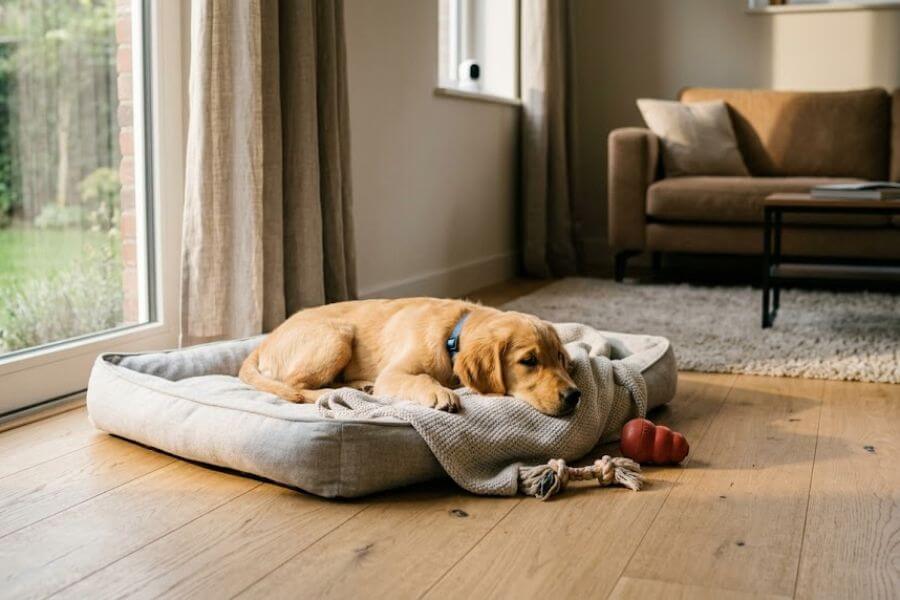
Bringing a new puppy home is an exciting milestone, but it often comes with the challenge of separation anxiety. You might notice your little friend whining, pacing, or causing mischief the moment you step out the door. It is completely natural for a puppy to feel stressed when separated from their new “pack.” The good news is that with a bit of patience and consistent practice, you can help your puppy learn that being alone is safe, calm, and even rewarding. By teaching them independence early on, you are setting the foundation for a confident, well-adjusted adult dog.
Summary of Training Strategies
| Category | Key Strategy | Goal |
| Environment | Create a Safe Zone | Reduce environmental stress |
| Routine | Predictable Schedules | Build a sense of security |
| Desensitization | Gradual Departures | Lower reaction to triggers |
| Enrichment | Mental Stimulation | Redirect nervous energy |
How We Ranked These Methods
We have curated these fifteen strategies based on veterinary behaviorist standards and practical effectiveness. The rankings are determined by these key factors:
- Simplicity of implementation for new owners.
- The speed at which puppies typically show positive behavior changes.
- Positive reinforcement techniques that build trust rather than fear.
- Sustainability for long-term daily routines.
1. Create a Dedicated Safe Space
Designating a specific area like a crate or a puppy-proofed playpen provides your dog with a “den” where they feel secure. When you make this space cozy with blankets and familiar scents, it becomes their personal sanctuary. By using this spot consistently, your puppy learns that this is a place for resting, which helps them feel less vulnerable when you are not in the room.
2. Practice Very Short Departures
You should start by leaving your puppy alone for just a few seconds and gradually increasing the duration. The goal is to return before your puppy starts to panic, showing them that you always come back. By keeping these initial separations incredibly brief, you prevent the anxiety from escalating and build their confidence in short, manageable bursts.
3. Keep Goodbyes Low-Key
It is tempting to shower your puppy with affection before heading out, but high-energy goodbyes can actually heighten their anxiety. By ignoring your puppy for a few minutes before you leave and keeping your exit calm and quiet, you signal that leaving is a normal, non-eventful part of the day. A calm departure helps your puppy remain in a relaxed state of mind.
4. Maintain a Consistent Routine
Puppies thrive on predictability, so feeding, walking, and playing at the same times each day can do wonders. When a puppy knows exactly when to expect meals and exercise, their overall stress levels decrease significantly. A structured day gives them a sense of control, which makes the times you are absent feel less disruptive to their world.
5. Use Interactive Toys
Providing high-value toys, such as puzzles filled with treats, can keep your puppy’s mind occupied while you are away. When they are focused on solving a challenge to get a snack, they have less time to worry about your absence. Over time, they start to associate your departure with the arrival of a fun, tasty activity.
6. Increase Physical Exercise
A tired puppy is generally a calm puppy, so ensure your dog gets plenty of physical activity before you plan to leave them alone. A long game of fetch or a brisk walk burns off excess energy that might otherwise manifest as nervous pacing or destruction. When their body is satisfied and tired, they are much more likely to settle down for a nap while you are away.
7. Provide Mental Stimulation
Mental exercise is just as important as physical play, so incorporate training sessions into your daily schedule. Practicing basic commands like “sit” or “stay” exhausts a puppy’s brain and encourages them to focus on you. A mentally tired puppy is far more likely to relax and drift off to sleep when you leave, rather than searching for ways to get into trouble.
8. Use Background Noise
Total silence in a house can sometimes be unsettling for a puppy, especially if they are used to a busy home. Leaving on a radio, soft music, or even a white noise machine can provide a comforting sound buffer. These consistent noises can mask outside triggers, like a car door slamming, that might otherwise cause your puppy to become alert and anxious.
9. Practice “Stay” Exercises
Training your puppy to stay in one place while you walk into another room is a simple way to build their independence. Start by staying within their line of sight, then gradually move behind a door or out of view. By rewarding them for staying calm while you are briefly out of sight, you are teaching them that you are still nearby even when they cannot see you.
10. Avoid Punishing Anxious Behavior
It is important to remember that destruction or accidents caused by anxiety are not done out of spite. If you come home to a mess, scolding your puppy will only make them associate your return with anger and fear, which worsens their anxiety. Instead, stay neutral and focus your efforts on prevention and positive reinforcement training.
11. Utilize Calming Pheromones
Some owners find success using synthetic pheromone diffusers designed specifically for dogs. These products mimic the natural scents mother dogs release to comfort their puppies, creating a soothing atmosphere in your home. It can be a gentle, invisible way to help take the edge off your puppy’s nerves during those first few months of training.
12. Vary Your Departure Cues
If you always put on your coat and grab your keys before leaving, your puppy will quickly learn to recognize these as “leaving triggers” and start worrying. Try putting on your shoes or picking up your keys and then just sitting on the couch to read a book. By breaking the connection between these actions and your departure, you desensitize your puppy to the cues that trigger their stress.
13. Implement Ditching the Bowl
Instead of feeding your puppy out of a standard bowl, use puzzle feeders or scatter feeding to make mealtime a game. This forces them to forage for their food, which is a natural, calming behavior for dogs. When you offer these challenges while you are away, your departure becomes an opportunity for them to hunt and snack, rather than an opportunity for stress.
14. Keep Your Return Calm
Just as with your departure, try to keep your homecoming as low-key as possible. If you walk in the door and immediately engage in high-energy play, you are rewarding your puppy for being overly excited. By ignoring your puppy until they are calm and then calmly greeting them, you reinforce the idea that being alone and being reunited are both peaceful experiences.
15. Seek Professional Help if Needed
If your puppy’s anxiety is severe, such as causing self-injury or extreme vocalization that does not improve with training, do not hesitate to reach out to a professional. A certified dog trainer or a veterinary behaviorist can provide a tailored plan that addresses your specific situation. Sometimes, professional guidance is the missing piece to helping your puppy find their confidence.
Conclusion
Reducing separation anxiety in puppies is a journey that requires patience, consistency, and a lot of kindness. By focusing on gradual steps and creating a secure environment, you are giving your puppy the best possible start in life. Remember that every small victory is progress, and with time, your puppy will learn to enjoy their own company as much as they enjoy being with you. Stay positive, keep practicing these simple steps, and you will soon see your puppy turn into a confident, independent companion.
Frequently Asked Questions
Can I leave the television on to help my puppy feel less lonely?
Yes, many owners find that a television playing at a low volume provides a sense of companionship. It mimics the sounds of a household, which can be comforting, but make sure it is not at a volume that might startle your puppy.
Should I get another dog to help with my puppy’s anxiety?
Getting another dog is generally not recommended as a “cure” for separation anxiety. Often, you may simply end up with two anxious dogs, and it is better to resolve the current puppy’s behavioral needs first before considering adding another pet to your family.
Is it normal for my puppy to whine for a few minutes after I leave?
A little bit of whining when you first walk out the door is often just a protest, but it should be brief. If the whining continues for a long time or is accompanied by pacing or scratching at the door, it indicates true distress that requires training intervention.
Can crate training make separation anxiety worse?
When done correctly with positive reinforcement, crate training should make a puppy feel safer, not worse. However, if a puppy is forced into a crate before they are ready or is left in there for too long, it can increase their stress, so always move at the puppy’s pace.
How do I know if my puppy has grown out of their anxiety?
You will know they are doing better when they stop exhibiting signs of distress—such as chewing, barking, or pacing—the moment you leave. A confident puppy will typically settle down, take a nap, or play quietly with a toy, appearing relaxed even when they know you are gone.