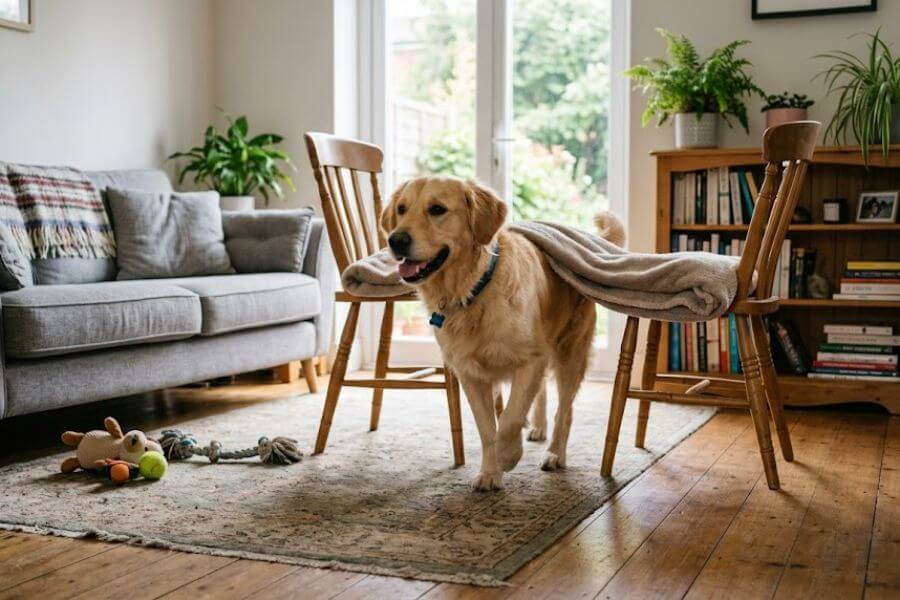
When your dog has endless energy, rainy days or small living spaces can feel like a major challenge. You want your furry friend to be happy and calm, but sometimes a walk just is not enough to burn off that extra zoomie energy. The good news is that you do not need a massive backyard to help your dog settle down. By using their brain and body in short, focused bursts right in your living room, you can help them feel relaxed and content without leaving your house.
Quick Summary of Indoor Exercises
| Exercise | Primary Benefit | Skill Level |
| Hide and Seek | Mental Stimulation | Easy |
| Tug of War | Physical Strength | Easy |
| Indoor Fetch | Physical Cardio | Easy |
| Scent Work | Focus and Calm | Medium |
| Trick Training | Mental Engagement | Medium |
| Flirt Pole | Impulse Control | Medium |
| Obstacle Course | Coordination | Hard |
How We Ranked These
We chose these activities based on how well they balance physical effort with mental work, which is the fastest way to tire out a high-energy dog.
- Effectiveness in burning physical energy in small spaces.
- Level of mental stimulation provided to exhaust the brain.
- Simplicity of setup using common household items.
- Suitability for different dog sizes and temperaments.
1. Hide and Seek
Hide and seek is one of the easiest ways to burn energy because it forces your dog to use their nose and their brain. You can ask your dog to stay in one room while you hide in another, or you can hide their favorite toy or treats around the house. When you call them, they will be excited to hunt you down, and the constant sniffing and searching will tire them out much faster than just running around. This game is great because it builds a stronger bond between you and your dog while keeping them focused on a specific task.
2. Tug of War
Tug of war is a fantastic physical workout that uses your dog’s natural desire to pull and shake. It is a misconception that this game makes dogs aggressive, as long as you follow a few simple rules like teaching a drop it command. When playing, try to keep the toy low to the ground to avoid putting too much strain on your dog’s neck, and let them win occasionally to keep them motivated. This high-intensity activity can quickly drain a hyperactive dog’s battery in just a few minutes of play.
3. Indoor Fetch
If you have a hallway or a clear space in your living room, indoor fetch is a simple way to get your dog moving. To keep things safe for your home, use a soft plush toy or a fabric ball instead of a hard rubber one that might damage your floors or furniture. You can make it more challenging by bouncing the toy off walls or throwing it under furniture so your dog has to maneuver around obstacles to retrieve it. This keeps their heart rate up and ensures they are getting the physical exercise they crave.
4. Scent Work
Scent work games are secret weapons for tired dogs because mental fatigue is just as exhausting as physical exercise. You can easily set this up by hiding high-value treats under blankets, inside cardboard boxes, or in different corners of a room. Tell your dog to find them and watch them work their nose and brain to solve the puzzle. This activity naturally slows down a hyperactive dog and forces them to focus, making it a perfect option for a rainy afternoon when you need them to settle down quickly.
5. Trick Training
Training sessions require an immense amount of focus, which is why even ten minutes of practice can be more tiring than a long walk. Work on teaching new tricks like spin, rollover, or balancing a treat on their nose, or simply reinforce old commands to keep their brain sharp. Because your dog has to think about what you want and how to move their body to get a reward, they will often finish a session feeling much more relaxed. It also gives you a great chance to reward calm behavior and build better communication.
6. Flirt Pole
A flirt pole is essentially a giant cat toy for dogs, consisting of a pole with a rope and a lure attached to the end. It is excellent for dogs with a high prey drive because it mimics the movement of small animals and encourages your dog to chase, pounce, and turn. You can use this to teach your dog impulse control by asking them to sit and wait before they are allowed to chase the lure. It is a highly effective way to burn energy in a confined space since you can control the speed and direction of the movement.
7. DIY Obstacle Course
You do not need fancy equipment to create an agility course in your home. Use cushions as hurdles, create a tunnel out of chairs and a blanket, or have them weave through objects placed in a line. Guiding your dog through these obstacles requires physical coordination and mental focus as they figure out where to place their paws. This activity is particularly good for hyperactive dogs because it requires them to move slowly and carefully, which can help them practice patience and body awareness.
Conclusion
Managing a hyperactive dog indoors does not have to be a struggle if you know how to engage their mind and body. By rotating through these seven exercises, you can provide enough variety to keep your dog interested and busy even when the weather prevents outdoor play. Remember that the goal is to make these activities fun for both of you, which will not only tire your dog out but also make your time together more rewarding. Consistency is key, so try incorporating a few of these games into your daily routine to see the best results for your dog’s energy levels.
Frequently Asked Questions
What should I do if my dog gets too excited during these games?
If your dog starts jumping or getting too rough, take a break immediately by stopping the play and asking them to sit or lay down. Wait until they are calm and focused again before you continue the activity to show them that being calm is the key to keeping the game going.
Can these exercises help with destructive behavior?
Yes, often destructive behavior is caused by boredom and excess energy. By providing regular mental and physical outlets like these, you can reduce the urge for your dog to chew on furniture or pace around the house.
How much time should I spend on these exercises each day?
It depends on your dog’s age and breed, but aiming for three to four short sessions of ten to fifteen minutes throughout the day is often better than one long hour-long session. Watch your dog for signs of tiredness, like slowing down or panting heavily, and let them rest when they need to.
Are these games safe for puppies or senior dogs?
These games can be adapted for any age, but you should adjust the intensity. For puppies, keep physical jumping low to protect their developing joints, and for seniors, focus more on slow scent games that do not require too much running.
Do I need to buy expensive equipment to make this work?
Not at all, as most of these games can be played with items you already have at home. Blankets, pillows, cardboard boxes, and their favorite toys are perfectly fine for keeping your dog entertained and active.