You look out your back window, expecting to see a beautiful green lawn. Instead, your backyard looks like a miniature war zone. There are dirt piles everywhere, deep craters near the fence, and your prized flower beds are completely ruined. In the middle of it all stands your tiny, dirt-covered partner in crime. Your Jack Russell Terrier is looking up at you with a wagging tail and a muddy nose, completely proud of their latest masterpiece.
If this scene sounds familiar, you are definitely not alone. Jack Russell Terriers are famous for their high energy, their big personalities, and their absolute love for digging. It can be incredibly frustrating to watch your hard work in the garden disappear in a matter of minutes. You might feel like throwing your hands up in the air and giving up. But do not worry. Your yard can be saved, and your relationship with your furry friend can remain completely intact.
Training a Jack Russell Terrier to stop digging is not about changing who they are. It is about understanding their natural traits and guiding that amazing energy into better activities. With patience, consistency, and the right plan, you can transform your little excavator into a well-behaved companion who prefers playing fetch over digging holes. Let us dive into the ultimate guide to solving this muddy problem together.
Understanding the Mind of a Jack Russell Terrier
To solve a problem, you first have to understand why it is happening. Your Jack Russell Terrier is not digging your yard because they are angry with you, and they are not doing it to be mean. They are doing it because it is deeply written into their DNA.
The History of the Breed
Jack Russell Terriers were originally bred in England during the nineteenth century. Their primary job was to hunt foxes. When a fox ran underground into a den, it was the Jack Russell’s job to go down into the earth after it. They had to be brave, independent, and incredibly good at clearing away dirt.
Because of this history, the urge to dig is an actual instinct for your dog. It is a natural behavior that makes them feel successful and happy. Expecting a Jack Russell to never want to dig is like expecting a fish to never want to swim. However, while you cannot erase the instinct, you can absolutely control when, where, and how they use it.
High Energy and High Intelligence
These dogs are small, but they possess the energy level of a giant working animal. They are also incredibly smart. When you combine massive amounts of energy with a sharp mind, you get a dog that needs constant mental and physical activity.
If a Jack Russell gets bored, they will find their own ways to stay entertained. To a bored dog, an empty yard is a giant playground waiting to be explored. Digging becomes a fun game that burns off extra energy and keeps their brain busy. If you do not give them a job to do, they will choose the job of yard landscaping.
The Power of Drive
Jack Russells have what dog trainers call a high prey drive. This means they are highly motivated by sights, sounds, and smells of smaller animals. If a mole, a mouse, or a lizard crawls under your grass, your dog will instantly know.
Their internal drive tells them to catch that creature at all costs. They will scratch and dig furiously until they reach the source of the scent. Understanding that this drive is a powerful force helps you realize that screaming or scolding will not work. You have to use smarter strategies to outthink their hunting instincts.
The Main Reasons Your Dog Is Digging
Before you can pick the right training strategy, you need to figure out the exact reason behind your dog’s digging habit. Different types of digging require different solutions. Take some time to observe your dog when they are outside and see which of these categories fits best.
Searching for Backyard Pests
If your Jack Russell is digging along specific paths, near the roots of trees, or in random spots that change every day, they might be hunting. Earthworms, grubs, moles, and mice live right under the surface of your lawn.
Your dog has a sense of hearing and smell that is vastly superior to yours. They can hear small creatures moving beneath the dirt. When they pinpoint the location, they start digging to catch the prize. This type of digging is usually very focused, fast, and intense.
Escaping the Yard
Does your dog focus their digging energy right along the fence line? If you notice deep holes right next to the wood or metal boundaries of your yard, your dog is likely trying to escape.
This behavior can happen for a few reasons. They might see a neighbor’s cat or a squirrel across the street and want to chase it. They might also feel lonely and want to find a way out to look for adventure or find you. Escape digging can be dangerous, so it is a behavior that needs immediate attention.
Looking for Comfort and Cooling
Dogs do not sweat through their skin the way humans do. On a warm summer day, the top layer of grass and dirt gets very hot. However, if you dig down just a few inches, the earth underneath is cool and damp.
If your Jack Russell digs a wide, shallow hole and then immediately lies down inside it, they are simply trying to cool off. They are building a natural air-conditioned bed. You will usually see this happen under shade trees, next to the porch, or in the corners of the yard during midday heat.
Pure Boredom and Attention Seeking
Sometimes, a hole is just a sign of a bored puppy. If your dog is left alone in the yard for hours with nothing to do, they will start digging just to pass the time. It feels good to them, it burns energy, and it passes the hours until you come home.
Additionally, your dog might learn that digging gets a reaction from you. If they dig a hole and you instantly run outside, yell at them, and chase them around, your dog might view that as a fantastic game. To a lonely dog, even negative attention is better than no attention at all.
Physical Exercise Is Your First Line of Defense
The easiest way to stop an unwanted behavior is to tire your dog out completely. A tired Jack Russell Terrier is a well-behaved Jack Russell Terrier. If your dog uses all their energy during structured exercise with you, they will not have any energy left for destroying the lawn.
Long Walks and Jogging
A quick five-minute walk around the block is not nearly enough for this breed. Your Jack Russell needs significant daily movement.
- Aim for at least two long walks every day, lasting thirty to forty-five minutes each.
- Change your walking routes often to give your dog new sights and smells to process.
- If you are a runner, consider letting your adult Jack Russell join you on your jogs. They have amazing endurance and love keeping up with a fast pace.
- Allow your dog some time during the walk to just stop and sniff. Sniffing actually burns a lot of mental energy for a dog.
Playing Fetch and Frisbee
Jack Russells love to chase things. Playing fetch is a wonderful way to wear them out in a short amount of time without tiring yourself out.
- Use a ball launcher to throw the ball extra far across a park or a large field.
- Teach your dog to catch a soft dog-friendly Frisbee mid-air.
- Make the game harder by playing fetch on an uphill slope so they have to run harder to get the ball.
- Keep the game going until your dog starts to slow down and pant happily, showing they are truly tired.
Flirt Poles and Agility Games
A flirt pole is a long stick with a rope attached, and a toy tied to the end of the rope. It looks like a giant cat toy, but it is made for dogs.
- You can swing the flirt pole around in a circle while your dog chases the toy on the ground.
- This game taps into their natural predatory instincts and forces them to change directions quickly, which uses up lots of physical energy.
- Set up a simple agility course in your yard using low hurdles, cones to weave through, and open boxes to run through.
- Teaching them to navigate a course builds their coordination and tires out their muscles efficiently.
Mental Stimulation Beats Boredom
Physical exercise is only half of the puzzle. You also have to give your Jack Russell’s powerful brain a workout. If their mind is busy with a puzzle, they will not be thinking about digging up your favorite roses.
Food Puzzles and Enrichment Toys
Instead of putting your dog’s meals in a standard bowl, make them work for their food. This simulates the natural hunting and foraging behaviors that Jack Russells love.
- Use puzzle toys where your dog has to slide panels, flip lids, or turn wheels to find hidden pieces of kibble.
- Stuff a sturdy rubber toy with peanut butter, wet food, or plain yogurt, and freeze it overnight. Licking the frozen treat will keep your dog busy for an hour or more.
- Scatter their dry food across the lawn in the tall grass, forcing them to use their nose to find every single piece.
- Use a rolling treat dispenser ball that drops pieces of food only when your dog pushes it around the room with their paws.
Brain Games and Scent Work
Since Jack Russells were bred to track scents underground, scent games are an amazing way to satisfy their natural desires in a controlled way.
- Hide their favorite toy in another room and tell them to go find it. Start with easy hiding spots and make them harder as your dog gets better.
- Play the shell game by hiding a high-value treat under one of three plastic cups, scrambling the cups, and letting your dog sniff out the right one.
- Teach your dog the names of different toys, then ask them to bring you specific items like “Bring me the blue ball” or “Find the squeaky duck.”
- Take a scent training class together to learn how to track specific smells across fields and trails.
Obedience Training Sessions
Daily training sessions are a fantastic way to bond with your dog and tire out their brain. Just fifteen minutes of focused training can be more exhausting for a dog than a one-hour walk.
- Practice basic manners like sit, stay, down, and come every single day in different rooms of the house.
- Teach fun trick commands like roll over, spin in a circle, shake paws, or play dead.
- Use positive reinforcement, which means rewarding your dog with small, tasty treats and lots of praise the exact second they do what you ask.
- Keep training sessions short, positive, and fun so your dog stays excited to learn.
Creating a Designated Digging Zone
For many Jack Russells, the urge to dig is simply too strong to eliminate completely. If you try to stop it entirely, you might end up causing your dog stress. A brilliant alternative is to compromise with your dog. Give them a special spot where they are allowed to dig as much as they want.
Building the Perfect Sandbox
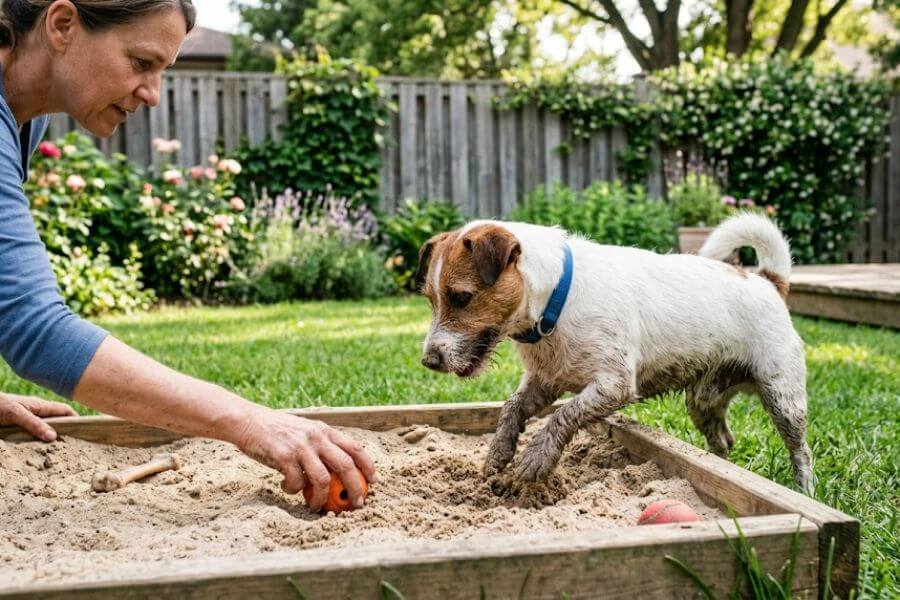
You can create a designated digging area right in your backyard. This satisfies your dog’s instincts while keeping the rest of your lawn beautiful.
- Buy a hard plastic children’s kiddie pool or build a wooden sandbox frame that is roughly four feet by four feet.
- Fill the box with clean play sand, which you can find at any local home improvement store. Sand is great because it brushes off your dog easily and does not create mud when it gets wet.
- Place the sandbox in a shaded area of the yard so the sand stays cool and inviting.
- Make sure the sandbox is easily accessible to your dog whenever they are outside.
Training Your Dog to Use the Sandbox
Your dog will not automatically know that the new sandbox is theirs. You have to teach them that this specific spot is a magical place where great things happen.
- While your dog is watching, bury some of their favorite toys or smelly dog treats just slightly under the surface of the sand.
- Encourage your dog to find them by pointing at the sand and saying an exciting phrase like “Find it!”
- When your dog starts scratching at the sand and uncovers the toy, throw a huge praise party. Give them extra treats and tell them how amazing they are.
- Gradually bury the toys deeper into the sand so your dog has to work harder to get them out. They will quickly learn that digging in the sandbox rewards them, while digging in the lawn does not.
Managing Mistakes Professionally
If you see your dog start to dig in a forbidden area of the lawn, do not yell or chase them. Use the moment as a teaching opportunity.
- Interrupt the behavior calmly by making a gentle sound like “Oops!” or clapping your hands once to get their attention.
- Walk over to your dog, gently guide them by their collar or a leash, and bring them straight to their designated sandbox.
- Encourage them to dig in the sand instead. When they take even one scratch at the sand, praise them warmly.
- Consistency is key. Every single time they dig in the wrong spot, redirect them to the right spot without exception.
Fixing Environmental Triggers in Your Yard
Sometimes the secret to stopping a digging dog lies in changing the backyard environment itself. By making the yard less tempting or more comfortable, you can remove the reasons that cause your dog to dig in the first place.
Dealing with Underground Pests
If your dog is hunting creatures under the lawn, you need to address the pest problem to stop the digging problem.
- Inspect your yard for signs of moles, gophers, or large insect populations like grubs.
- Use dog-safe, non-toxic pest control methods to remove these animals from your property. Avoid using harsh chemical poisons that could harm your pet.
- Keep your lawn mowed short so it is less attractive to small rodents and insects.
- Consider using ultrasonic pest repellers that emit a sound underground to drive small animals away from your yard perimeter.
Making the Fence Line Secure
If your Jack Russell is an escape artist who tries to dig under the fence, you need to make the boundaries physical barriers they cannot cross.
- Bury chicken wire or hardware cloth flat along the base of your fence line, covering the dirt where your dog likes to dig. Cover the wire with dirt or gravel so it does not hurt your dog’s paws.
- Place large, heavy landscaping rocks along the bottom of the fence to block access to the soil.
- Extend your fence panels a foot into the ground when building a new fence, creating an underground wall.
- If your dog is trying to escape to see things on the other side, install privacy screens or fence slats so they cannot see outside distractions.
Providing Shelter and Cool Spots
If your dog is digging holes to escape the heat, you must provide better options for them to stay comfortable outdoors.
- Ensure your dog always has access to a covered porch, a well-insulated dog house, or a shady tree canopy.
- Keep a large bowl of fresh, ice-cold water outside at all times.
- Buy an elevated dog bed made of breathable mesh fabric. These beds allow air to circulate underneath your dog, keeping them much cooler than the ground.
- On hot days, set up a small wading pool with an inch or two of cool water for your dog to splash around in.
Step-by-Step Training Plan for Real Results
Now it is time to put all of these concepts into a clear, daily routine. Follow this structured training plan consistently, and you will see major changes in your dog’s behavior over the coming weeks.
Phase One: Supervision and Prevention
The first step in changing any habit is preventing your dog from practicing the bad behavior when you are not looking. Every time your dog digs a hole without being corrected, the habit grows stronger.
- Never leave your Jack Russell Terrier outside in the yard unsupervised during the early stages of training. If you cannot watch them, they should be inside the house with you.
- When your dog goes out into the yard, keep a long light training leash attached to their collar. This allows you to guide them away from trouble without having to chase them.
- Walk around the yard with your dog, turning outdoor time into an active interaction between the two of you rather than solo time for your pet.
- If you must leave the house, keep your dog inside in a secure crate, a safe room, or a dog-friendly indoor playpen loaded with puzzle toys.
Phase Two: Creating the Alternative Habit
Once you have stopped the unsupervised digging, you can focus on building the positive behaviors you actually want to see.
- Set up your designated sandbox area as described earlier and spend ten minutes every morning practicing the hiding and finding game with their toys.
- Establish a strict daily exercise schedule. A thirty-minute walk in the morning and a vigorous game of fetch in the afternoon should become non-negotiable parts of your day.
- Rotate your dog’s indoor and outdoor toys every few days. If they see the same toys all the time, they get bored. Rotating keeps the items feeling brand new and exciting.
- Praise your dog anytime they choose a good outdoor behavior on their own, such as resting calmly on the grass or chewing on an approved rubber bone.
Phase Three: Consistent Redirection
This phase is all about teaching your dog boundaries through calm, clear feedback.
- Stay alert when your dog is in the yard. Look for the warning signs that they are about to dig, such as intense sniffing in one spot, scratching lightly at the grass, or pacing focused along a wall.
- The exact millisecond your dog starts to scratch the earth, say a clear word like “No” or “Uh-oh” in a calm, firm voice.
- Gently use the training leash to guide them away from that specific spot. Do not pull hard or jerk their neck; simply guide their body direction.
- Bring them straight to their sandbox or give them a favorite toy to play with instead. When they focus on the new, approved activity, reward them with a treat.
Phase Four: Gradually Adding Freedom
As your dog becomes more reliable and stops trying to dig the lawn, you can slowly give them more trust and independence.
- Start by letting your dog drop the training leash on the ground while you watch them from a short distance away, like sitting on your porch.
- If they move toward an old digging spot, use your voice command to stop them. If they listen, reward them immediately.
- Slowly increase the distance between you and your dog. Try stepping inside the house for just thirty seconds, then looking out the window to check on them.
- If they are behaving well, go back out and praise them. If you catch them digging, instantly go back to phase one supervision. Build trust slowly over several weeks.
Common Mistakes Owners Make and How to Avoid Them
Training a dog takes time, and it is very easy to make mistakes along the way. By learning about these common pitfalls, you can avoid making them yourself and speed up your dog’s progress.
Screaming or Scolding After the Fact
One of the biggest mistakes owners make is punishing their dog for a hole that was dug hours ago. You come home from work, see a giant crater in the lawn, drag your dog over to the hole, and yell at them.
Dogs live completely in the present moment. They cannot connect your current anger with an action they did three hours ago. When you yell at them next to a hole, your dog does not think “I am being scolded for digging.” They think “My owner is scary and unpredictable when we stand near this patch of dirt.” This causes fear and confusion, which can actually make behavior problems worse. Only correct your dog if you catch them in the exact act of digging.
Filling the Holes Without a Plan
Simply shoveling dirt back into a hole will not solve the problem. To your Jack Russell, a freshly filled hole is filled with soft, loose, easy-to-dig soil. It is actually more tempting than the hard packed dirt around it.
If you just fill the hole, your dog will likely dig it right back out the next time they go outside. When you fill a hole, you need to use deterrents to make that spot unpleasant for them.
- Place flat, heavy patio stones over the filled hole so your dog cannot scratch the same dirt.
- Bury a small piece of their own safe dog feces inside the hole before covering it with dirt. Dogs naturally dislike messing with areas containing waste, and this will instantly discourage them from digging there again.
- Blow up a few small balloons and bury them shallowly under the loose dirt of the filled hole. When your dog tries to dig there, their claws will pop the balloon. The sudden noise will startle them and teach them that digging that spot leads to unpleasant surprises.
Using Dangerous Deterrents
In a state of frustration, some owners turn to internet advice that recommends using harsh ingredients to stop dogs from digging.
Never put toxic chemicals, mothballs, or large amounts of spicy cayenne pepper into your dog’s digging holes. Cayenne pepper can get into your dog’s sensitive eyes and nose, causing severe pain, inflammation, and medical issues. Mothballs are highly toxic to pets if swallowed or sniffed closely. Always stick to safe, humane, and professional training techniques that protect your dog’s health and happiness.
Staying Patient and Consistent
Changing a natural behavior pattern takes time. There will be days when your training goes perfectly, and there might be days when your dog has a setback and digs a new hole.
Do not get discouraged. Consistency is the magic ingredient in dog training. If you follow your plan every single day without exception, your Jack Russell Terrier will eventually learn the new rules. Celebrate the small victories, like a whole week passing without a single new crater in your lawn. Remember that your dog is a loving family member who just happens to have a passion for engineering. With your guidance, you can enjoy both a wonderful pet and a beautiful, green backyard.
Frequently Asked Questions
Is my Jack Russell Terrier digging because they hate being alone?
Yes, it is highly possible. Jack Russell Terriers are extremely social animals that form deep bonds with their human families. If they are left alone in a backyard for long periods, they can develop separation anxiety or intense loneliness. Digging becomes a coping mechanism for them. It is a frantic activity that helps pass the time and distracts them from their anxiety. If you suspect your dog is lonely, try reducing their solo outdoor time, creating a consistent routine, and making sure they spend plenty of quality time inside the house with you.
Can I use a citrus spray to keep my dog away from my garden beds?
Yes, citrus is a safe and natural deterrent that you can use around your prized plants. Most dogs naturally dislike the strong scent of citrus fruits like lemons, limes, and oranges. You can create a safe homemade spray by boiling lemon peels in water, letting the mixture cool completely, and straining it into a clean spray bottle. Spray this liquid around the edges of your garden beds every few days. You can also scatter fresh orange and lemon peels directly into the soil. This creates a scent barrier that smells wonderful to you but tells your dog to keep away.
Will getting a second dog stop my Jack Russell from digging the yard?
Not necessarily, and it can sometimes backfire completely. While a second dog can provide companionship, it does not automatically solve behavioral issues like digging. If both dogs are high-energy breeds, they might actually team up and dig even larger holes together. One dog might start the project, and the other might join in for fun, leaving you with double the trouble. It is always best to fully train and solve the digging habit with your current Jack Russell Terrier before you consider bringing a new pet into your home environment.
How long does it usually take to train a dog to stop digging completely?
There is no single answer to this question because every dog is completely unique. For some Jack Russells, you might see massive improvements within two to three weeks of starting a consistent training schedule and setting up a sandbox. For other dogs with deeply ingrained habits, it might take a few months of daily supervision and redirection to completely reshape their behavior. The timeline depends entirely on your level of consistency, how well you meet their exercise needs, and how strictly you prevent them from practicing the bad habit unsupervised.
Is it safe to let my dog dig in the sand if they have long nails?
It is generally safe, but you must maintain your dog’s paw health properly. Digging in clean play sand can actually act as a natural emery board, helping to wear down the tips of their claws over time. However, if your dog’s nails are already way too long, the pressure of digging into the ground can cause the nails to crack, split, or tear away from the paw, which is very painful and can lead to infections. Make sure to trim your Jack Russell’s nails regularly or visit a professional groomer so their paws stay strong and ready for safe sandbox fun.
Should I punish my dog if I find a hole after they have finished digging?
No, you should never punish your dog after the action is already completed. As discussed earlier, dogs do not have the ability to connect a current punishment with something they did in the past. If you point at a hole and scold them, they will only see that you are upset in the present moment, which creates fear and harms your bond with your pet. Only use redirection and verbal corrections if you catch your dog with their paws actively moving the dirt. If you find a hole later, simply fill it up quietly when your dog is not looking and vow to supervise them closer next time.