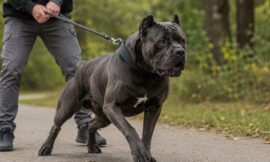
Cane Corso vs. Presa Canario Quick Summary
| Feature | Cane Corso | Presa Canario |
| Origin Country | Italy | Canary Islands (Spain) |
| Average Weight | 90 to 110 pounds | 85 to 130 pounds |
| Main Historical Job | All-around farm dog, guard dog, hunter | Cattle herder, guard dog, catch dog |
| Coat and Texture | Short, thick, double coat (rough feel) | Short, single coat (coarse feel) |
| Common Colors | Black, gray, fawn, red, brindle | Various shades of brindle, fawn |
| Energy Level | High (needs a job to do) | Moderate to high (explosive power) |
| Head Shape | Square, deep muzzle, distinct stop | Massive, cube-like head, long muzzle |
| Temperament Style | Very loyal, attaches to one family | Independent, highly territorial |
| Best For | Active owners who want a working partner | Experienced owners who need a serious guard |
How We Ranked These
To find the biggest differences between these two powerful dogs, we looked at several key parts of their lives. We did not just look at how they look. We looked at how they behave every day. Here are the key factors we used to make this list:
- Physical traits: We compared their height, weight, body shape, and head structure.
- Historical purpose: We looked at what jobs these dogs did in the past because history shapes how a dog acts today.
- Temperament and drive: We studied their natural instincts, how they react to strangers, and their overall energy levels.
- Grooming and care: We evaluated their coat types and daily maintenance needs.
- Training needs: We looked at how easy or hard they are to train for a normal homeowner.
1. Country of Origin and History
The first major difference lies in where these dogs came from and why people bred them. The Cane Corso is an ancient breed from Italy. Its ancestors were Roman war dogs called Molossian hounds. When the Roman Empire fell, the people of Italy changed the breed into an all-around farm worker. They used the Cane Corso to guard property, herd cattle, and hunt wild boars. The name itself comes from Latin words that mean body-guard dog or protector of the courtyard.
The Presa Canario comes from a completely different place. This dog was developed in the Canary Islands, a group of Spanish islands near the coast of Africa. In the 1800s and 1900s, farmers mixed local island dogs with mastiffs and bulldogs that visitors brought from Europe. The goal was to create a large dog that could handle tough cattle and protect farms from predators. The word “Presa” means to hold or catch, which describes how the dog grabs onto large animals.
Because of these different backgrounds, the dogs view their surroundings differently. The Cane Corso is used to working closely with human partners on a farm. The Presa Canario is used to working more independently on rough island terrain.
2. Head Shape and Facial Expressions
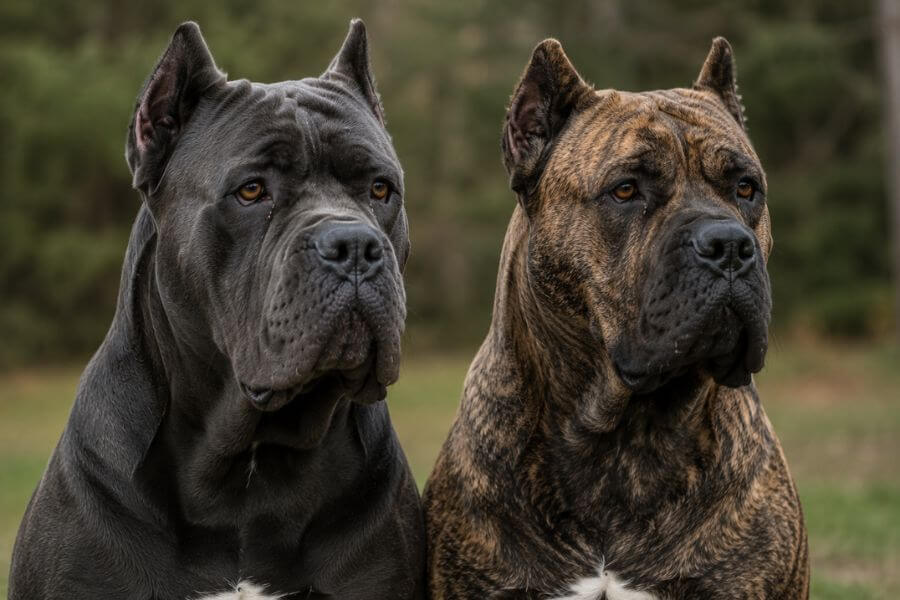
When you look at these dogs face-to-face, you will see clear differences in their head shapes. The Cane Corso has a very large, square head. The muzzle is broad and deep, and it is almost as wide as it is long. If you look at a Cane Corso from the side, you will see a very distinct forehead drop, which dog experts call a stop. Their eyes are medium-sized and almond-shaped, giving them an alert, intelligent expression.
The Presa Canario has a head that looks like a massive cube. Its skull is very wide, and the muzzle is long and powerful. The stop on a Presa Canario is much flatter and less noticeable than the stop on a Cane Corso. The skin on a Presa Canario’s face is also looser. When the dog is alert, this loose skin forms deep wrinkles on the forehead, which gives the dog a severe, intense expression.
Their ears also add to their expressions. In the United States, owners often crop the ears of both breeds. However, if left natural, the Cane Corso has triangular ears that drop forward next to the cheeks. The Presa Canario has medium-sized ears that fall flat against the side of the head, but they rise slightly at the base when the dog hears a sound.
3. Body Shape and Overall Build
Both dogs are large and muscular, but their body structures follow different designs. The Cane Corso is an athletic, elegant animal. Its body is slightly longer than its height at the shoulders, but it looks very balanced. The muscles are long and lean, similar to the muscles of a human sprinter. The Cane Corso has a deep chest that goes down to its elbows, but its waist tucks up cleanly. This build makes the Cane Corso look graceful and quick when it moves.
The Presa Canario has a much heavier, stockier build. Its body is long and low to the ground compared to the Cane Corso. The bones of a Presa Canario are thicker and heavier, and its chest is exceptionally wide. Instead of a tucked-up waist, the Presa Canario maintains a thick, cylindrical body shape from the chest to the hindquarters.
When a Presa Canario walks, it has a unique movement. It moves with a rolling gait that looks a bit like a big cat, such as a lion or a tiger. It keeps its head low when walking, which makes it look like it is stalking something. The Cane Corso walks with a more upright, proud posture.
4. Coat Texture and Color Options
The fur on these dogs might look the same from a distance, but they feel very different when you pet them. The Cane Corso has a double coat. This means it has a soft undercoat that grows thicker in cold weather, and a short, shiny outer coat. The outer coat feels quite rough and stiff.
The Cane Corso comes in several colors. You can find them in solid black, lighter gray, dark slate gray, fawn, and red. They also come in a pattern called brindle, which looks like dark tiger stripes on a lighter background.
The Presa Canario has a single coat with no undercoat at all. The fur is very short, flat, and feels harsh or coarse to the touch. Because they do not have an undercoat, they do not handle freezing winter weather as well as the Cane Corso does.
The color options for the Presa Canario are also more limited by official breed standards. They must always have a brindle pattern or a fawn color. Black Presa Canario dogs do exist, but many dog clubs do not accept them as official show dogs. Also, a true Presa Canario must always have a black mask on its face that does not go past its eyes.
5. Size and Weight Differences
Weight is a major factor that separates these two breeds. The Cane Corso is a tall dog, but it carries less heavy bulk. A male Cane Corso usually stands between 25 and 27 inches tall at the shoulder, while females stand between 23 and 25 inches. Males usually weigh between 90 and 110 pounds, and females weigh between 85 and 100 pounds. They stay lean because they burn a lot of energy.
The Presa Canario is often shorter than the Cane Corso, but it weighs significantly more. A male Presa Canario stands between 24 and 26 inches tall, and females stand between 22 and 24 inches. However, a male Presa Canario can easily weigh between 110 and 130 pounds, and some can grow even larger. Females usually weigh between 85 and 110 pounds.
This means that a Presa Canario carries more mass per inch of height. They are built for raw, crushing power, while the Cane Corso is built for agility and speed.
6. Energy Levels and Exercise Needs
The way these dogs use their energy is very different. The Cane Corso is a high-energy dog that needs constant activity. It acts like a true working breed. If you do not give a Cane Corso a specific job to do, it will become bored and frustrated. It needs at least one to two hours of intense exercise every single day. This can include running, hiking, fetching a ball, or practicing advanced obedience skills. A Cane Corso loves to run across large fields and jump over obstacles.
The Presa Canario has a moderate to high energy level, but it uses its energy differently. It does not need to run constantly like a Cane Corso. Instead, it is a calm, quiet watcher inside the home. It prefers to sit in a central spot where it can view the entire property.
However, the Presa Canario possesses explosive power. When it sees a threat or a reason to move, it goes from totally still to maximum speed in a single second. For daily exercise, a Presa Canario prefers long, slow walks where it can patrol its neighborhood rather than high-intensity sports.
7. Natural Temperament and Guarding Styles
Both of these breeds are natural guard dogs, but they protect their homes in distinct ways. The Cane Corso is a highly visual protector. It pays close attention to its owner’s body language and emotions. If a stranger approaches, the Cane Corso will usually step between the stranger and the owner. It will watch the stranger intensely, waiting to see if the owner welcomes the person. The Cane Corso wants to work as a team with its human leader.
The Presa Canario is a highly independent protector. It does not wait to see how its owner feels about a situation. It trusts its own instincts above all else. The Presa Canario is naturally suspicious of all strangers and does not tolerate people it does not know entering its property.
While a Cane Corso might bark to warn an intruder, a Presa Canario is often silent. It will stare down a threat without making a sound, using its massive physical presence to stop an intruder. If the intruder keeps coming, the Presa Canario will act on its own initiative to defend its territory.
8. Training and Willingness to Please
Training these dogs requires different amounts of effort because of their mindsets. The Cane Corso has a strong desire to please its human owner. It is an intelligent dog that enjoys learning new commands, trick training, and obedience games. Because it forms a deep bond with its handler, it responds well to positive rewards like treats and praise. However, it is still a large, strong-willed dog, so the owner must remain consistent and confident.
The Presa Canario is a much bigger challenge for trainers. It is not a dog that lives to please humans. It is independent, stubborn, and highly self-confident. A Presa Canario will constantly evaluate its owner to see if the owner is a strong leader. If the owner shows any weakness or hesitation, the Presa Canario will take control of the household.
Training a Presa Canario requires a firm, calm, and highly experienced handler who understands how to manage dominant breeds. They do not care about pleasing you just for praise, so training sessions must be short, clear, and highly rewarding.
9. Socialization Needs and Tolerance
Socialization means introducing a puppy to new people, animals, and places so they grow up to be calm and safe adults. The Cane Corso needs an enormous amount of socialization, but it generally accepts new situations more easily than the Presa Canario. With proper training, a Cane Corso can learn to tolerate guests in the home, walk peacefully through busy parks, and even live with other pets like cats or smaller dogs.
The Presa Canario requires extreme, lifelong socialization, and even then, it will likely never be a social butterfly. This breed has a very low tolerance for other dogs, especially dogs of the same sex. It also has a very high prey drive, which means its instinct is to chase and catch small animals that run away.
A Presa Canario is happiest when it stays at home with its immediate family. It does not enjoy dog parks, crowded public events, or meeting new people. Owners must accept that a Presa Canario is a serious guard dog that prefers a quiet, controlled life with people it already knows and trusts.
Frequently Asked Questions
Which breed has a longer average lifespan?
The Cane Corso generally has a slightly longer lifespan than the Presa Canario. On average, a Cane Corso lives between 9 and 12 years. The Presa Canario has an average lifespan of 9 to 11 years. Because the Presa Canario carries more heavy bone mass and a thicker body structure, its joints and internal organs experience more physical stress over time, which can slightly shorten its life compared to the leaner Cane Corso.
Are there any specific differences in how much these two breeds drool?
Yes, the Cane Corso typically drools more than the Presa Canario. The Cane Corso has heavy, loose upper lips called flews that hang down over the lower jaw. These loose skin folds trap saliva, which flies out when the dog shakes its head. The Presa Canario also drools, especially after drinking water or when smelling food, but its lips are usually tighter against the jaw line, which keeps saliva inside the mouth better during regular daily activities.
How do their barking habits compare when they are home alone?
The Cane Corso is generally more vocal than the Presa Canario. A Cane Corso will often use its voice to communicate with its family, making low grunting sounds, whines, or loud alarm barks when it hears something outside. The Presa Canario is a very quiet dog that rarely barks without a major reason. If a Presa Canario barks while home alone, it usually means there is an immediate, serious threat to the property line.
Which dog is more likely to suffer from separation anxiety?
The Cane Corso is significantly more prone to separation anxiety than the Presa Canario. Because the Cane Corso forms a very intense, close bond with its human family, it thrives on constant human companionship. If left alone for long hours without exercise or mental stimulation, a Cane Corso can become stressed and destroy furniture or chew on walls. The Presa Canario possesses an independent nature, which allows it to handle being alone during the workday much better, as long as it has a secure yard to watch.
How do their exercise needs change during hot summer months?
The Presa Canario struggles much more in hot summer weather than the Cane Corso. The Presa Canario has a thicker, heavier body build and a dark brindle coat in most cases, which absorbs heat quickly. Since they originated in an island climate with constant ocean breezes, they do not handle stagnant, humid heat well. The Cane Corso possesses a leaner, more athletic build and a double coat that helps regulate its body temperature, allowing it to remain active in warmer temperatures for longer periods, though both breeds still need plenty of shade and water.