Imagine walking down a dark street at night. The wind whispers through the trees, and the shadows seem just a bit too long. Suddenly, you hear footsteps behind you. Your heart starts to race, your palms sweat, and you feel a surge of fear. But then, you look down at your side. Walking calmly next to you is a powerful, alert, and deeply loyal companion. With a single soft word from you, this furry family member is ready to step between you and any danger. That is the incredible reality of owning a personal protection dog.
For centuries, guard breeds like German Shepherds, Rottweilers, Doberman Pinschers, and Boxers have worked alongside humans as ultimate defenders. They are not just pets; they are living, breathing home security systems with beating hearts and unmatched loyalty. However, a great protection dog is not born overnight. It is the result of deep bonding, serious commitment, and structured guidance.
If you have ever wondered what it takes to transform a natural guardian breed into a reliable personal protector, you are in the right place. This guide will walk you through the essential foundations of protection training, designed for everyday dog lovers and family protectors alike.
Understanding the True Meaning of Protection Training
Before diving into commands and exercises, we need to clear up a massive misunderstanding. A real personal protection dog is not a mean, aggressive, or vicious animal that bites everything that moves. In fact, it is quite the opposite. A well-trained protector is a calm, confident, and gentle family pet that only activates its defensive skills when a real threat appears and when you give the explicit command to do so.
Think of a protection dog like a highly trained martial artist. A master of karate or judo does not walk around picking fights or hurting random people on the street. Instead, they are peaceful and disciplined, but they possess the power and knowledge to defend themselves and others if a dangerous situation unfolds.
In the canine world, true protection training focuses heavily on control. It teaches a dog how to manage its natural protective instincts so that it remains a safe, trustworthy member of society while still possessing the skills to keep you safe when it matters most.
Choosing the Right Guard Breed for Your Family
Every dog is an individual, but certain breeds have genetic traits that make them naturally suited for protection work. These breeds have been developed over hundreds of years to watch, herd, defend, and work closely with human partners. Let us look at some of the top guard breeds and what makes them unique.
The Versatile German Shepherd Dog
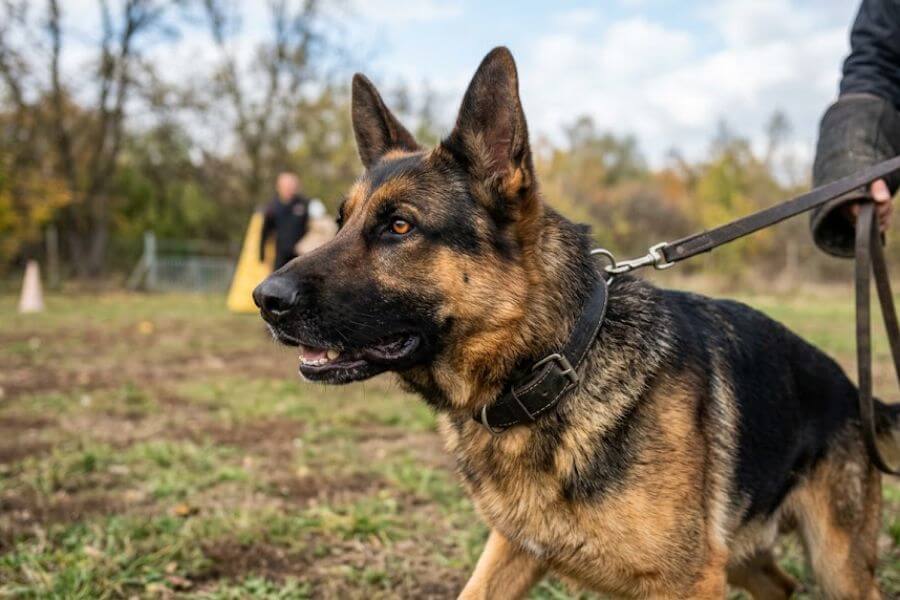
German Shepherds are the gold standard for police, military, and protection work worldwide. They are famous for their high intelligence, eager-to-please attitude, and incredible adaptability. A German Shepherd loves having a job to do and bonds deeply with its entire human family. They are fast learners, meaning they can grasp complex protection concepts quickly, and they have the physical agility to handle demanding defensive tasks.
The Powerful and Loyal Rottweiler
Rottweilers are muscular, calm, and deeply devoted giants. Historically used to herd cattle and pull carts, their natural instinct is to guard their home and pack. A Rottweiler tends to be a bit more reserved and quiet than a German Shepherd, often watching a situation calmly before taking action. Their sheer physical presence alone is often enough to scare away any bad guy, but underneath that tough exterior, they are incredibly loving family dogs.
The Swift and Alert Doberman Pinscher
Dobermans were specifically bred in Germany by a tax collector named Louis Dobermann who needed a loyal defender for his dangerous daily rounds. These dogs are sleek, incredibly fast, and highly alert. Dobermans are often called “velcro dogs” because they stick right by their owner’s side at all times. They are highly sensitive to their owner’s emotions, making them exceptionally good at sensing when you feel threatened or uncomfortable.
The Energetic and Brave Boxer
Boxers are playful, energetic, and filled with courage. While they are often known for being the clowns of the dog world due to their silly antics at home, they take their guarding duties very seriously when a threat appears. Boxers use their front paws skillfully when playing or defending, which is actually how they got their name. They are fantastic options for families with children because they have a natural love for kids and an inherent desire to look out for the little ones.
Evaluating the Ideal Protection Candidate
Just because a dog belongs to a guard breed does not automatically mean they have what it takes to be a personal protection animal. Protection work requires a very specific set of personality traits, often referred to as a dog’s “drive.” If a dog lacks the right mental foundation, forcing them into protection training can be dangerous or unfair to the animal. Here are the core traits trainers look for in a puppy or adult dog.
High Confidence and Emotional Stability
A great protection candidate must be completely fearless in everyday situations. This does not mean they are looking for a fight; it means they do not get scared by strange noises, sudden movements, weird surfaces, or crowded places. A dog that snaps or growls out of fear is not a protection dog; they are a fearful dog, and fear leads to unpredictable behavior. A true guardian looks at the world with a calm, curious, and stable attitude.
Strong Prey and Defense Drives
Trainers look closely at a dog’s inner motivations, which are divided into different drives.
- Prey Drive: This is the desire to chase, catch, and grab moving objects, like a tennis ball or a tug toy. High prey drive is essential because trainers use toys to teach the dog how to bite and hold onto targets safely during training games.
- Defense Drive: This is the natural instinct to protect themselves and their pack from a perceived threat. A good protection dog balances both drives perfectly, using prey drive to learn the physical skills and defense drive to understand the seriousness of a real-world encounter.
Willingness to Cooperate and Work With Humans
A protection dog must want to work as a team with its handler. Some dogs are highly independent and prefer to do their own thing, which makes them very difficult to control in high-stress moments. Trainers look for dogs that constantly check in with their owners, look them in the eye, and show a strong desire to earn praise, food, or toys. This cooperative spirit ensures the dog will listen to your voice even when their adrenaline is pumping.
The Critical Importance of Early Socialization
Socialization is the process of exposing your young puppy to a wide variety of people, animals, environments, sounds, and objects in a positive way. For a standard pet, socialization is important. For a future protection dog, it is absolutely non-negotiable.
Many people mistakenly believe that if they want a dog to guard the house, they should keep it away from strangers and isolate it at home. This is a massive mistake that almost always results in a dangerous, unstable animal.
An isolated dog grows up to be terrified of the unknown. Because everything outside their house feels scary, they view every single person they meet as a threat. They might bite the mail carrier, the delivery driver, or a visiting family member.
Proper socialization teaches your guard breed dog what is normal so that they can easily identify what is abnormal. When your dog knows that standard human behavior involves walking by calmly, laughing, carrying grocery bags, or jogging, they will not react to those everyday events. Then, if someone approaches you with a strange, aggressive posture or sneaky movements, your dog will instantly recognize that this behavior is not normal and will alert you to the potential danger.
How to Properly Socialize a Future Protector
- Visit Diverse Locations: Take your puppy to parks, outdoor shopping centers, busy streets, and hardware stores that allow pets. Let them experience different sights and sounds.
- Meet Diverse People: Introduce your dog to people of all shapes, sizes, ages, and ethnicities. Expose them to individuals wearing hats, sunglasses, heavy winter coats, or uniforms.
- Walk on Different Surfaces: Encourage your puppy to walk on concrete, grass, gravel, shiny tile floors, metal grates, and crinkly plastic tarps to build physical confidence.
- Keep Experiences Positive: Always bring high-value treats and favorite toys along. If your puppy encounters something startling, reward them generously when they look at the object calmly, turning the scary event into a fun game.
Mastering Advanced Obedience Foundations
You cannot build a house without a strong foundation, and you cannot train a protection dog without flawless obedience. Before your dog ever learns a single defensive skill, they must obey every standard command instantly, every single time, regardless of what distractions are happening around them.
When a dog is in a defensive state, their excitement and adrenaline levels are through the roof. If they do not listen to you when they are calm in the living room, they definitely will not listen to you when they are trying to protect you from an intruder. You must have total verbal control over your dog at all times.
The Ultimate Recall Command
The recall command, commonly known as “come,” is the most vital safety command you can teach. Your dog must drop whatever they are doing and run directly to your side the moment you call them. This command must be practiced around chasing squirrels, playing dogs, and rolling balls until it becomes an automatic reflex for your guard breed companion.
The Solid Long Stay
A protection dog needs to be able to stay in a designated spot for extended periods, whether sitting or lying down. This is incredibly useful when you have guests entering your home or when you need your dog to remain in a specific position while you assess a strange situation outside. The dog should not move from their spot until you give them a specific release word, like “okay” or “free.”
Precision Heel Walking
Heeling means your dog walks directly next to your left or right leg, matching your pace exactly. Their shoulder should line up with your knee, and the leash should always remain loose and relaxed. A perfect heel ensures that you can guide your dog safely through crowded spaces without them pulling you or lunging toward distractions. It also positions the dog perfectly at your side, ready to step forward into a defensive stance if needed.
Instant Emergency Drop
An emergency drop means your dog immediately drops their belly to the floor into a “down” position, even if they are far away from you or running at full speed. This is a supreme test of control. If your dog is moving toward a threat and you realize the situation is safe, the emergency drop command allows you to stop your dog in their tracks instantly with a single shout.
The Art of Reward-Based Motivation
Modern protection training relies heavily on positive reinforcement and motivational techniques. In the past, some trainers used fear, pain, and harsh corrections to force dogs into a defensive state. Thankfully, we now know that those outdated methods create anxious, untrustworthy animals that obey out of fear rather than loyalty and respect.
By using rewards like delicious food treats, enthusiastic verbal praise, and high-energy toy play, you build a dog that genuinely loves training. When a guard breed views training as the most exciting part of their day, they give you their full focus and effort.
Finding Your Dog’s Ultimate Currency
To train effectively, you need to find out what motivates your specific dog the most. For many puppies, high-quality meats or smelly cheese work best. For older, high-drive guard breeds, a special toy like a thick rubber ball on a rope or a tough braided tug toy is the ultimate reward. Keep this special training reward hidden away and only bring it out during your structured practice sessions. This makes the reward incredibly valuable and keeps your dog eager to work for it.
Introducing Alert Training and the Vocal Watch Command
Once your dog has master-level obedience and a rock-solid, confident personality, you can begin the very first steps of actual protection work: alert training. The goal of alert training is to teach your dog to give a strong, deep, and continuous bark at a potential threat upon your command, and to stop barking the very millisecond you tell them to.
This initial phase focuses purely on psychological deterrence. In the real world, the vast majority of criminals are looking for an easy target. If they approach a person whose dog instantly steps forward, stares them down, and lets out a ferocious, confident bark, the criminal will almost always turn around and run away. You have won the battle without anyone or any animal ever getting hurt.
Step-by-Step Guide to Teaching the Alert Command
To teach this safely, you will use a specific trigger word, such as “watch,” “alert,” or “guard.”
- Create Mild Frustration: Tie your dog’s leash securely to a sturdy post or have a partner hold the leash. Stand just a few feet out of your dog’s reach while holding their absolute favorite tug toy or a piece of food.
- Encourage Vocalization: Move the toy around excitedly, calling your dog’s name in an upbeat voice. Your dog will want to get to the toy, and because they cannot reach it, they will eventually let out a small bark of frustration.
- Mark and Reward: The exact millisecond your dog lets out a bark, shout your chosen alert word, like “watch!” and immediately run to them, giving them the toy or treat along with massive praise.
- Build Consistency: Repeat this exercise daily. Soon, your dog will connect the word “watch” with the action of barking confidently.
- Add the Quiet Command: Once your dog barks reliably on command, you must introduce the shutdown word, such as “quiet,” “out,” or “enough.” While your dog is barking, say “quiet” and hold a piece of incredibly delicious food right in front of their nose. To sniff the food, they have to stop barking. As soon as they are silent for two seconds, give them the food and praise them calmly. This teaches them that shutting up is just as rewarding as barking.
Developing the Controlled Grip and Bite Mechanics
This is the phase of training that most people picture when they think about protection dogs: biting a padded sleeve or a full body suit. However, this step must be handled with extreme caution and should always be guided by a certified professional helper or decoy. A helper is a trained individual who wears protective gear and acts as the “bad guy” during training scenarios.
In a safe personal protection program, biting is taught as a highly controlled game of tug-of-war. The dog does not look at the helper as a person they hate; instead, they view the helper’s padded sleeve as the ultimate prize toy that they want to capture.
The Importance of a Full, Deep Grip
When a protection dog is commanded to bite a threat, they must do so with a full mouth grip. This means they open their jaws wide and hold the target with their back molars, rather than just nipping or pinching with their front teeth. A shallow, front-tooth nip is weak, easy for a criminal to shake off, and dangerous for the dog because their teeth can easily break. A deep, full-mouth grip ensures a secure hold that completely stops a criminal’s movement.
Teaching the Bite on a Tug Toy
Before moving to a padded sleeve, the dog learns the proper biting technique on a soft canvas or leather tug toy. The handler holds the tug horizontally, encouraging the dog to jump up and grab the center of the toy. Once the dog catches it with a full grip, the handler gently creates tension, letting the dog pull back and feel their own strength. Winning the toy builds immense confidence in a young guard breed.
The Supreme Law of the Out Command
If you take only one lesson from this comprehensive guide, let it be this: the “out” command is the absolute absolute most critical part of protection training. “Out” means the dog must immediately release whatever they are biting, opening their mouth instantly and stepping back into a watchful heel position.
A protection dog that will not release its bite on command is an extreme liability and a danger to everyone. You must have one hundred percent reliability with this command before your dog ever progresses past basic toy games.
Training a Reliable Out
To train a clean release, play an energetic game of tug with your dog. While they are pulling hard on the toy, suddenly freeze your body completely and bring the toy tight against your thighs. Stop all movement. A moving toy is exciting prey; a dead, stationary toy is boring.
At the same time, give a calm, firm command: “out.” Do not pull or yank the toy. Just hold it perfectly still. After a few moments of confusion, your dog will naturally loosen their jaw and let go. The instant they release the toy, praise them wildly and immediately restart the game of tug as their reward. This teaches the dog that letting go does not mean the fun is over; in fact, letting go is what makes the fun start all over again.
Creating Real-World Protection Scenarios
Once your guard breed dog has mastered obedience, alerts perfectly on command, bites protective gear safely, and lets go instantly, it is time to move out of the regular training field. Criminals do not attack in wide-open, empty fields under perfect sunny skies. They attack in parking lots, dark alleys, home doorways, and vehicles.
Real-world scenario training helps your dog generalize their skills so they know how to protect you anywhere, at any time. This requires creative staging with your professional training helper.
Home Invasion Defense Simulation
In this scenario, you and your dog are relaxing inside your house or living room. The helper approaches the front door quietly and attempts to force their way inside, making strange scratching or banging noises. Your dog must learn to alert loudly at the door to warn you. If the helper breaches the doorway and acts aggressively toward you, your dog must step forward into a defensive block, ready to engage if you give the command.
Vehicle Protection Scenarios
Cars are common targets for carjackings and robberies. Guard breeds can be trained to watch out the windows while you are driving or parked. If someone approaches your vehicle window aggressively or tries to open your car door without permission, your dog learns to let out a ferocious verbal alert from the back seat, creating a powerful wall of defense inside the cabin.
Hidden Sleeve Training
To ensure your dog is truly protecting you and not just playing a game with visible training gear, advanced trainers use a hidden sleeve. This is a thin, specialized protective arm guard made of high-tech puncture-resistant materials that fits entirely underneath a normal winter coat or jacket.
When the helper wears a hidden sleeve, they look like an ordinary person in regular clothes. If the dog only bites when they see a big, bright, puffy training sleeve, they are sport-trained, not protection-trained. Hidden sleeve work teaches the dog to focus on the human threat and their aggressive body language, rather than just looking for a specific piece of training equipment.
The Lifelong Commitment to Maintenance and Polish
Personal protection training is not a course that your dog completes once and then remembers forever without practice. It is a perishable skill, much like playing an instrument or speaking a foreign language. If you do not use it, you lose it.
Owning a trained protection dog means committing to a lifelong journey of regular practice, sharpening, and maintenance. You must weave obedience and alert drills into your daily routine for the rest of your dog’s life.
Sample Weekly Training Checklist
To keep your guard breed companion sharp, balanced, and safe, aim to practice different elements of training throughout the week. You do not need hours of free time; short, intense sessions lasting just five to ten minutes are incredibly effective.
- Monday: Practice precision heel walking through a busy local park with lots of distracting joggers and strollers.
- Tuesday: Conduct three high-energy “watch” and “quiet” alert drills in your front yard or driveway.
- Wednesday: Focus entirely on rapid, long-distance recalls and emergency drops at a fenced-in baseball field.
- Thursday: Practice a solid ten-minute long stay while you move around the house, out of your dog’s line of sight.
- Friday: Meet with a professional helper for controlled bite-and-release maintenance work using proper safety gear.
- Saturday: Simulate an evening walk scenario in a dimly lit neighborhood, practicing calm observation and instant focusing commands.
- Sunday: Give your dog a well-deserved rest day filled with standard family play, belly rubs, and casual bonding.
Common Mistakes to Avoid at All Costs
Because protection training involves teaching a large, powerful animal how to use its jaws defensively, mistakes can have serious consequences. Being aware of these common pitfalls will keep your family, your community, and your dog safe.
Starting Defensive Training Too Early
Many owners are eager to see their young puppy protect the house, so they try to start bite work or threat scenarios when the puppy is only a few months old. This is incredibly harmful. Young puppies do not have the mental maturity or confidence to handle threats.
If you scare a young puppy with an aggressive helper, you can permanently traumatize them, turning them into a fear-biter or a permanently anxious dog. Keep everything light, happy, and focused on pure obedience and basic toy games until your dog is mentally mature, usually around twelve to eighteen months old depending on the specific breed.
Allowing Your Dog to Make Decisions Independently
A protection dog should never be allowed to decide who is a bad guy on their own. Human social situations are far too complex for a dog’s brain to analyze perfectly without guidance.
For example, if a friend runs up to you excitedly and gives you a big, sudden bear hug, your dog might perceive that sudden movement as an attack and react defensively. You must always be the leader who decides when protection is necessary. Your dog should look to you for permission before taking any defensive action, unless you are completely incapacitated and unable to give a command.
Neglecting Physical Health and Joint Care
Protection work is physically demanding, involving sprinting, jumping, pivoting, and absorbing impact during a bite. Guard breeds like German Shepherds and Rottweilers are prone to joint issues such as hip dysplasia and elbow dysplasia.
Never push a dog into intense physical protection work without having your veterinarian perform a full physical checkup, including joint X-rays once the dog reaches adulthood. Additionally, keeping your dog at a lean, healthy weight and feeding them high-quality nutrition will protect their joints and keep them in peak athletic condition for years to come.
Frequently Asked Questions
Can any dog breed become a personal protection dog?
No. While many breeds can make excellent watchdogs that bark to alert you when someone is at the door, true personal protection work requires a specific combination of physical strength, genetic drive, confidence, and size. Smaller breeds or breeds bred purely for companionship lack the physical capability and inherent instincts required to stop a human attacker safely. Guard breeds are uniquely engineered for this demanding job.
Is protection training safe for a household with young children?
Yes, but only if the training is done correctly using positive reinforcement and total control methods. A properly trained protection dog is actually safer around children than an untrained pet because their obedience level is so incredibly high. They view the children as part of their pack to be cherished and guarded. However, children should never be allowed to give the protection commands, and adult supervision is always mandatory when dogs and kids interact.
How is a protection dog different from a guard dog?
The difference comes down to where the dog works and who they are protecting. A guard dog is typically an animal that lives alone on a property, such as a commercial warehouse, junkyard, or fenced construction site. Their job is to guard an area from any intruder when no humans are around. A personal protection dog lives inside the home as a family member and travels with you. Their job is to protect you, the person, wherever you happen to be.
Will protection training make my dog aggressive at the veterinary clinic?
Not if your dog is properly socialized. A well-trained protector understands that a veterinary office is a safe, normal environment and that the veterinarian is a friend helping them feel their best. Because protection dogs possess immense confidence, they do not bite out of fear during standard medical handling or exams. They remain calm and relaxed, only activating their defensive skills when a genuine, aggressive threat presents itself.
How long does it take to fully train a personal protection dog?
Transforming a young guard breed puppy into a fully trained, reliable personal protection dog is a multi-year journey. Basic obedience and socialization take up the entire first year of life. Advanced obedience, alert training, and bite mechanics typically require another one to two years of consistent, structured practice. You should expect the entire process to take at least two to three years of dedicated, ongoing teamwork.
Can I train my dog for protection work completely on my own?
While you can easily train the flawless obedience foundations, socialization exercises, and verbal alert commands by yourself at home, you should never attempt to teach bite work or scenario training without a certified professional helper. It is impossible to safely play the role of the attacker while handling your own dog. A professional provides the necessary safety gear, understands canine body language perfectly, and ensures the training remains safe and successful for everyone involved.